Our research
Access all our publications and columns. Use the filters to easily find what content you are looking for.
Filters
All publications
75 results
Offshore wind energy is growing rapidly, but the business case remains a challenge
- Macro economy
-
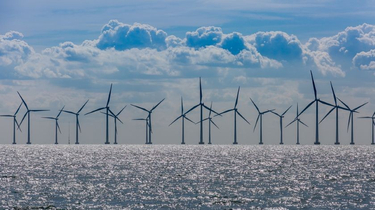
Offshore wind energy has grown rapidly over the past ten years. For example, global capacity has increased by 671% since 2015. At the same time, the average cost of electricity from wind energy has fallen by almost 57%. These are impressive figures, but pressure on the sector is mounting. Material and project costs are rising, interest rates remain relatively high, and the supply chain is facing increasing geopolitical instability. Meanwhile, the EU’s targets for offshore wind energy remain ambitious for the coming years. In this analysis, we examine the growth in offshore wind energy in greater depth, including the key challenges, and assess whether the EU targets are still achievable. The potential for growth in offshore wind is high globally. However, the feasibility of projects depends on cost trends, grid infrastructure, financing conditions and policy certainty. These issues are explored in further detail in this analysis.
Spotlight - A perfect storm for food inflation?
- Macro economy
-
Food inflation remained contained in recent quarters, but leading indicators suggest upward pressures are building and we expect food inflation to start rising again towards the end of 2026 and into 2027. Heat and drought records were once again broken across the EU and the US, which is expected to put upward pressure on European food price. The impact of El Niño is likely to be more mixed. Our base case sees food price rises adding 0.5pp to eurozone HICP inflation at its peak by Q3 2027.

US - A race against the clock
- Macro economy
-
Warsh’s Jackson Hole speech increased the perceived odds of a September hike. The broader FOMC still seems divided. The speed of progress on the disinflation process is key. The labour market muddles along, with weak hiring and employment caught by dwindling supply.

The Netherlands - Resilient in an uncertain world
- Macro economy
-
In the first half of this year, the Dutch economy grew stronger than previously expected; growth will slow in the second half. We expect growth of 1.3% in 2026 and 1.1% in 2027. The minority government has reached an agreement, and will introduce purchasing power support. Given its minority status, the budget will likely still be amended.

Germany - Cautious optimism
- Macro economy
-
Economic output is rising, but no decisive breakthrough is in sight. Still, we are raising our GDP growth forecast for 2026. The inflation rate is likely to hover just below 3.0% over the coming months.

Location choice datacenters constrained by power, water, space and public support
- Macro economy
-
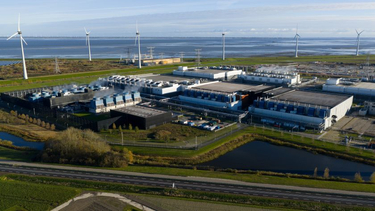
Data centers are an indispensable pillar of the digital economy, but their rapid growth also raises questions. And this growth continues, including in the EU. This analysis shows which European countries are best positioned to attract new data centers. To that end, we examine both current and future data center capacity. We address the challenges, both in terms of power grids and investments and costs. This analysis shows how the AI boom, high costs, fragmented EU regulations, and increasingly scarce space are making the choice of location for data centers increasingly complex. We provide insight into the factors that determine data center developers’ site selection, and which EU member states are relatively well-positioned based on these criteria.
Carbon Market Strategist - EU ETS review signals less scarcity and more industrial policy
- Natural resources
-
The EU ETS review reduces long-term allowance scarcity while EU's climate targets remain unchanged. Supply-side reforms dominate the package, with changes to the cap trajectory and Market Stability Reserve potentially adding nearly 2 billion allowances by 2040. New sectors and activities increase EUA demand, but their impact is gradual and outweighed by additional supply flexibility. Energy-intensive industries, removals developers and Article 6 projects stand to benefit, while long EUA scarcity positions face pressure. We expect EUA prices to be at a lower level but remain structurally elevated with an upward trajectory if the review to be fully adopted. Prices are expected to reach 91 EUR/tCO₂ in 2030 and 164 EUR/tCO₂ in 2035 under the review scenario.

ESG Economist - EU remains vulnerable in supply of critical materials
- Natural resources
-
The EU remains heavily dependent on imports of critical materials, despite efforts at diversification and strategic partnerships with resource-rich countries. Dependence on resource-rich countries increases the EU’s vulnerability to supply chain disruptions. The EU aims to increase mining, processing, and recycling by 2030, but long lead times and high costs make achieving these goals uncertain. The Netherlands plays a central role in the EU trade of critical raw materials, primarily through transit via ports without significant added value. The EU faces technological and economic challenges in effectively recycling critical materials, particularly rare earth metals.

ESG Economist - Europe’s path to energy security
- Natural resources
-
Expanding renewable energy sources, alongside investments in grids, storage, and supply chains, creates a sustainable and affordable energy system while reducing import dependency. Despite progress, projections show a significant gap between the current trajectory and the 2030 targets, prolonging reliance on imported fossil fuels and increasing geopolitical risks. Reducing energy intensity and improving efficiency decouples economic growth from energy consumption, strengthening competitiveness and lowering exposure to volatile energy markets. The expansion of electrification, based on the expansion of renewable energy, is crucial to safeguarding the EU’s energy security. Energy efficiency, innovation and the reuse of raw materials make countries less dependent on volatile energy markets and imports. Expanding storage capacity, refining facilities, and grid infrastructure ensures stability during energy crises and supports the transition to renewables. Integration of cross-border energy systems, aligned policies, and collaborative strategies strengthen resilience and reduce dependencies on external suppliers.
Carbon Market Strategist - Revised outlook amid anticipated structural shifts
- Sustainability
-
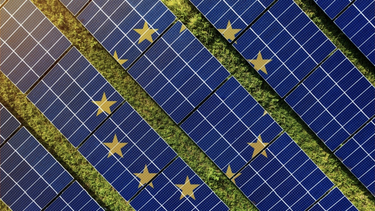
The initial surge in EUA prices in 2026 is reversed as sentiment shifted due to the upcoming ETS review and geopolitical tensions. We revise our Baseline long term outlook downward to 138 EUR/tCO2 by 2030 and 191 EUR/tCO2 by 2035 due to weaker demand and heightened geopolitical uncertainty. Linking the EU and UK ETS in 2028 would slightly lower prices, while carbon removals inclusion in 2031 would trigger a sharp drop in prices before recovering by 2035. EUA prices for 2026 are revised downward, to an average of 82 EUR/tCO2, reflecting weaker demand, geopolitical volatility, and policy-driven market uncertainty.