No major tax changes for the Dutch residential property market in 2015
- Housing Market

Peter Pleijsant
Tax Law Specialist
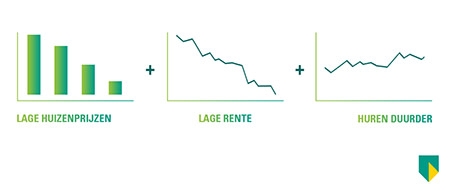
In the Netherlands, no major fiscal changes are on the drawing board for the residential property market in 2015. This doesn’t really come as a surprise, as both 2013 and 2014 saw major upheavals in the tax treatment of owner-occupied properties, such as the new repayment obligation for new mortgage loans to which no transitional arrangements apply and the restrictions on tax deductions in the highest tax band. Although fairly complicated, tax rules governing owner-occupied properties are at least clear now, which might encourage a further recovery of the residential property market, also aided by low house prices, low interest rates and rising rents. In addition, 2015 should see a set of relatively minor but interesting changes.
“"Dutch residential property scheduled for a number of small but interesting changes next year"”
Peter Pleijsant
Tax Law SpecialistLow VAT rates on renovation and refurbishing extended until 1 July 2015
Labour costs related to house renovation are subject to a temporary VAT rate of 6%, which was to stay in force until the end of this year but which the Dutch government is now planning to extend to 1 July 2015 – after which VAT will go back to its usual high rate of 21%. To be eligible, a property needs to be more than two years old and there is no requirement for the owner to have been resident for those two years. The low VAT rate also applies to gardening and a second home, provided that this has the potential to be lived in permanently. Building materials are not charged at the favourable VAT rate.
Two-mortgage rules extended
Owner-occupiers who moved house in 2012 but have been unable to sell their old home can still tax-deduct the mortgage interest paid on both their old and current homes, with the old home required to be ‘empty’ or let temporarily. Previously, interest relief continued to apply for two calendar years after the owners left their old homes, and this will be extended to three years from 2015. In this particular example – of owners moving in 2012 – the property will move to Box 3 of taxation on income and savings after 2015, and mortgage relief will cease.
Mortgage interest relief at a maximum of 51%
For those able to tax-deduct their mortgage interest rates in the highest tax band, a maximum of 51% will apply in 2015, compared with 51.5% for 2014. This ceiling will be cut by annual increments of 0.5% over the next few years, to end up at 38% in 2042. Affected taxpayers will face €50 more in income tax than in the previous calendar year for every €10,000 of mortgage interest.
Mortgages capped at 103%
In 2015, owner-occupiers will be able to mortgage their property up to a ceiling of 103% of its value, including 2% in property transfer tax, and this ceiling will come down incrementally to 100% over the next few years. It will still be possible to take out a higher mortgage to cover the cost of renovations or energy-saving measures, such as roof insulation, solar boilers and energy-efficient window frames and doors.
Increase in imputed rent
In 2015, the imputed rent for properties with values exceeding around one million euros – also known as ‘villa tax’ in the Netherlands – will go up further. Owner-occupiers now have to add the imputed rent to their taxable income in Box 1. Percentages and values above which this will apply are not yet known.
For homes valued at €1,040,000 or over, imputed rents are currently set at 1.8%, with the figure at 0.7% up to that point. The 1.8% charge is slated to increase in 2015, as recent laws envisage a staged increase to 2.35% in 2016. Mortgage-free owners – or those with very small mortgages – will be unaffected by these measures.