Why an integrated approach to the sustainability transition is so crucial
- Sustainability
Headlines about extreme weather in Europe and beyond have kept piling up over the past few months. In the face of these alarming developments, voices from across society calling for measures to counter climate change are rightly getting louder. Not only governments, but also companies are being called to account on their responsibility to green their operations. Banks have a major task on their hands in this context.
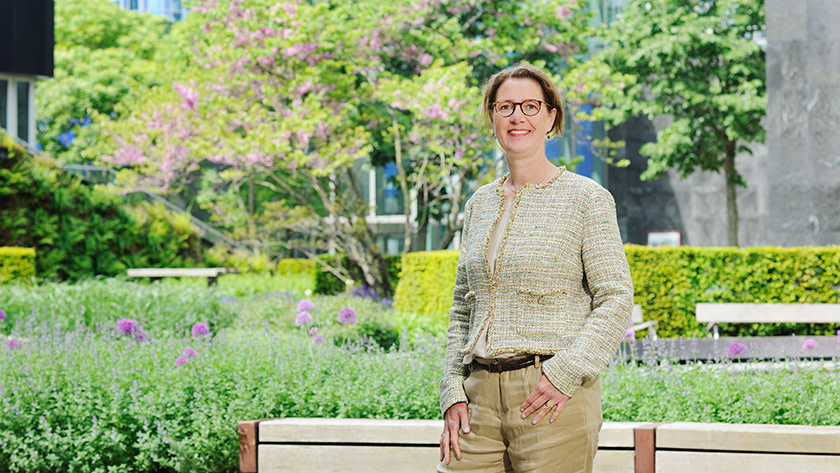
As ABN AMRO’s Chief Sustainability Officer (CSO), I am responsible for the transition towards greater sustainability that we want to make together with our clients over the coming years. In this role, I am regularly asked to explain what task ABN AMRO sees for itself in this transition. And I’m always happy to do so. For ABN AMRO, sustainability is not only about our climate, but also about social justice, circularity, nature and human rights. Climate change is an important topic that requires urgent action, but it also brings up the question of how to maintain broad prosperity within the boundaries of what our planet can handle. In my opinion, this transition requires companies and the financial industry to adopt a new mindset. Looking at ABN AMRO first, I think we have been focusing mainly on financial figures, profits and shareholder value for too long in how we run our business, while it is becoming increasingly important that we also look at the impact our operations are having on the environment, nature and society. Luckily, we have already made great strides over the past few years, but we are really going to have to pick up the pace further.
“Looking at ABN AMRO first, I think we have been focusing mainly on financial figures, profits and shareholder value for too long in how we run our business, while it is becoming increasingly important that we also look at the impact our operations are having on the environment, nature and society.”
We are living in an era of drastic changes to the fabric of our society, and these changes are interrelated, mutually reinforcing, and affect all facets of society. One of these changes is the energy transition that we are currently living through. Fossil fuels pollute and have great impact on temperatures on Earth, and so we have to switch to energy from renewable sources to be able to keep meeting our energy needs. At the same time, we are transitioning towards a circular economy, which requires us to switch to new consumption and production patterns that do not harm nature and the environment. And then there are also two further transitions that are key, namely the transition towards new forms of mobility and the transition towards nature-inclusive agriculture, which offers farmers prospects for the future within nature’s limits. The fact that we face several transitions is why it’s so important that we make an overall strategy where all these different transitions are inseparably interconnected and reinforce each other. Having a single overall strategy will also help forge support across our society, a society where people seem increasingly entrenched in contradictory beliefs. If we want this transition to succeed and ensure that it is social and just, it is more important than ever that we engage in dialogue and collaboration.
“If we want this transition to succeed and ensure that it is social and just, it is more important than ever that we engage in dialogue and collaboration. ”
This is also ABN AMRO’s baseline position. We want to be a pioneer and we consider climate change one of the biggest challenges of our time. With the publication of our Climate Plan at the end of last year, we took a new step on this path. This is a transition we want to make together with our clients. After all, being a bank means that our commitment to our consumer and business clients is fundamental in supporting and facilitating their transition through our expertise and capital, so that we can make a difference together. We are not only aiming for a transition that is smooth and fair, we also want to help ensure security of energy supply and keep energy affordable for all, i.e. regardless of earnings. We are looking to do so not by excluding parts of the economy, but rather by accelerating the energy transition, together with our clients and with an eye for society.
Needless to say, I agree that we have to take a critical look at what activities we finance directly and indirectly. Today’s intractable reality is that while targeting significant carbon reduction, we will still, in the short term, depend on fossil fuels: not only to meet our energy needs, but also as a raw material for numerous products that we use in our day-to-day lives. We are fully aware of the disruptions that await us if we drag our heels or fail to take action altogether. As a bank, we try to maintain a careful balancing act between accelerating the transition and at the same time preventing major disruptions in our society. At the end of the day, this transition is primarily about people. And this is why I firmly believe that the transition can only be successful if it is integrated, just and fair.