Eurozone - Inflation is probably peaking
Eurozone inflation almost reached double digit numbers in September, but is likely to be peaking and should decline in the coming months. The ECB has stepped up the pace of rate hikes. We expect another 75bp hike in October, followed by a 50bp step in December.

This publication is part of the Global Monthly of October 2022
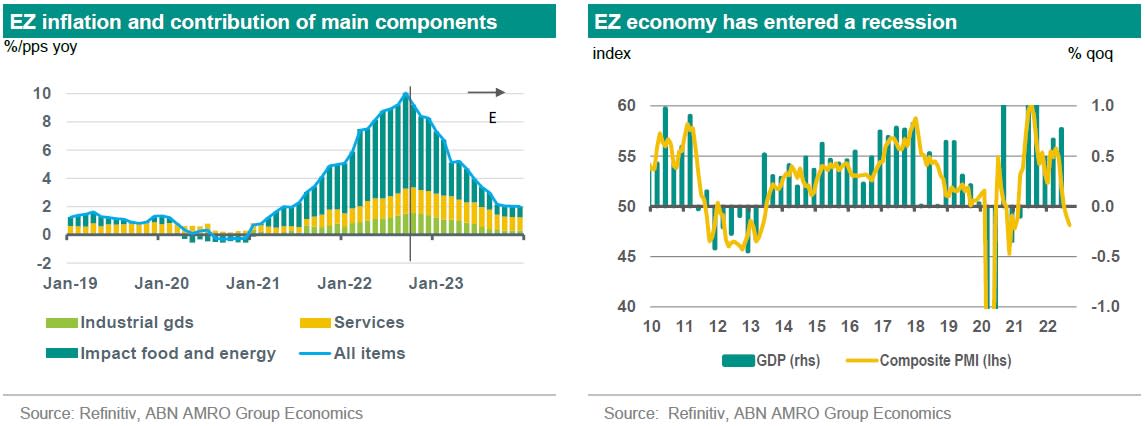
Eurozone inflation increased to a new record high in September, climbing to 9.9% yoy, up from 9.1% in August. Core inflation rose by 0.5 percentage points (pps) to 4.8%. The breakdown of the main components shows that energy and food price inflation increased the most between August and September (energy by 2.1pps to 40.7% and food by 1.2pps to 13.6%). The contribution of the two individual components to total inflation remained also the highest (4.3pps for energy and 2.3pps for food in September). Still, seasonally adjusted data from the ECB revealed that services price inflation staged its highest monthly increase (+0.9% mom in September) since the start of the series in 1996. This jump in services inflation was concentrated in transport services, which jumped higher due to the abolition of the temporary ultra-cheap public transportation tickets in Germany that were introduced in June and lasted until end-August. That said, services inflation is also being lifted by pass-through of past rises in food and energy price inflation into goods and services (e.g. transport by air is around 30% more expensive than a year ago, and by sea 11% higher; restaurants and hotels are about 8.5% more expensive). This pass-through of food and energy prices to industrial goods and services tends to be sluggish and will continue for a while after food and energy price inflation has peaked and starts falling. Nevertheless, the recent drop in food and energy commodity prices (including the drop in natural gas prices) should result in a noticeable decline in headline inflation in the coming months.
Besides the pass-through of high food and energy price inflation into core inflation, we do not expect a significant rise in longer-term underlying inflationary pressures, as the eurozone economy has moved into recession and labour market conditions should deteriorate towards the end of the year. Besides the hit to household disposable income and corporate profitability from high energy bills, the economy will be hit by tightening financial conditions and a slowdown in world trade on the back of aggressive central bank rate hikes. Looking ahead, we expect GDP to contract modestly in 2022Q3 and more sharply in 2022Q4 and 2023Q1.
The ECB raised its key policy rates by 75bp at its September meeting. We expect another 75bp hike in October, which is already fully priced in by financial markets. Subsequently, we expect a 50bp step in December. The policy rate then settles at 2% through 2023, as the economic slowdown and decline in inflation should convince the central bank that rates can stay on hold after the aggressive hikes of 2022. However, based on communication by ECB officials, the risks look skewed towards some further modest rate hikes in the first months of next year.