“We have created a solid base for our 2028 ambitions”
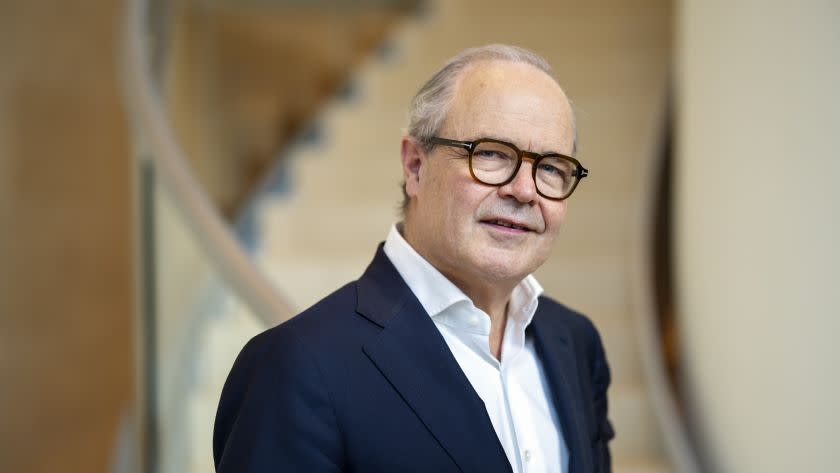
Interview with our Chief Financial Officer
Ferdinand Vaandrager looks back on 2025 as a year of delivery for ABN AMRO. The bank already made progress on its three new priorities – right-sizing costs, optimising capital allocation and growing profitably – while preparing for the next strategic phase. “We did what we said we would do, and we have laid a solid base for the coming three years.”
The bank performed well in 2025. What was the highlight for you?
“Whether you look at profitable growth, cost management or optimising our capital allocation, we delivered on our promises. In the Netherlands, the strong labour market, relatively low interest rates and a positive housing market all supported demand for our mortgages. Fee income increased strongly and we reduced costs by simplifying the bank. We also made good progress on reshaping our balance sheet, so we can grow in a more capital-efficient way.”
Another highlight is the intended takeover of NIBC. How do you view this deal?
“The acquisition of NIBC Bank is a unique and very attractive opportunity to further strengthen our position in the Dutch retail market. We expect a return on invested capital of around 18% by 2029, and it will enhance our profitability. The combination strengthens our position in the Dutch mortgage and savings markets. It means welcoming about 325,000 new savers and 200,000 new mortgage clients. It also offers us a scalable platform for issuing mortgages that do not remain on our balance sheet. Under this ‘originate-tomanage’ model, we provide Dutch mortgages, sell them to institutional investors and manage these loans for them in return for a fee. It fits perfectly with our strategy of growing in a way that uses less of our own capital and makes the bank less dependent on net interest income.
Where the NIBC deal will help us grow our Dutch mortgage volumes, the acquisition of Hauck Aufhäuser Lampe (HAL) plays a different but very complementary role. It boosts our fee income and expands our wealth management footprint in Germany, which really supports the strong fee momentum we’re seeing across the bank. Excluding HAL, which we consolidated as at 1 July, our total fee income grew by 6% in 2025. That’s well above the growth ambition we had set of 3% to 5%, and all three client units played a part in driving this growth. We saw strong results in payment services, asset management, investment products, and advisory fees at our corporate bank. Clearing also continued to perform well, adding more fees and helping us further diversify our income.”
How did reducing risk-weighted assets help optimise capital allocation?
“In 2025, we implemented the Basel IV capital rules, simplified our credit risk models and improved the quality of our loan data. As part of our strategy, we are reducing capital that is tied up in non-core activities and lower yielding loans so that we can redirect it to areas where we can grow profitably. We optimised our balance sheet through significant risk transfers, shifting part of our credit risk on loan portfolios to investors or other financial institutions. Together, these measures lowered our risk-weighted assets (RWA). In simple terms, RWA reflects the risk level of each loan and determines how much capital the bank must hold to absorb potential losses on those loans. Total RWA decreased from EUR 140.9 billion to EUR 135.4 billion in 2025. This enables us to fund attractive growth opportunities while simultaneously returning capital to our shareholders.”
Cost discipline has been a focus for years. How do you view the progress made in 2025?
“One of our strategic priorities is to right-size our cost base, adjusting it in line with our relatively straightforward business model. We are focusing on lowering our cost-to-income ratio from over 60% to below 55% by 2028 to match that of comparable banks. I can confidently say that 2025 marked a real turning point. We implemented strict hiring controls and announced a workforce reduction of 5,200 fulltime equivalents by 2028. We are very aware of the impact on our people, but this is a necessary step to align staff levels with the bank’s size and needs.
Our cost-efficiency effort is also driving positive cultural shifts. Internal mobility is rising and cost awareness is improving. Colleagues are enthusiastically sharing ideas to eliminate structural inefficiencies, stop activities that add limited value, and streamline processes. A good example is Lenny, our GenAI-powered lending assistant. Lenny helps us quickly find optimal loan solutions for corporate clients, improving service and reducing costs.”
What’s the role of data, technology and Generative AI in all of this?
“In recent years we have invested heavily in our data: improving quality, setting clear rules and building a strong architecture with one ‘golden source’ of truth. This is enabling us to lower the cost of reports, automate processes and apply GenAI at scale. Every AI use case, for instance in risk, in operations or involving clients, depends on the quality of our underlying data. Ultimately, these investments do more than meet compliance requirements: they enable automation, simplify the organisation and reduce costs over time.”
What are your priorities for 2026?
“For 2026, the message is simple: it continues to be all about delivery. We aim to finalise the legal merger of HAL and expect to close the intended NIBC acquisition in the second half of the year. Getting these integrations right –for clients, colleagues and shareholders – is a top priority. Beyond that, we will work towards the targets we announced in November: gaining market share in selected segments, increasing fee income, keeping a tight grip on costs and executing the business cases that support our financial targets.”
How did you personally experience the past year?
“It made me proud. Proud of our people, who have dealt with tough choices but still maintained the energy to push growth initiatives and improve client service. I am also proud that investors are starting to recognise our progress after years of hard work on data, regulation and simplification. As the Dutch State continues to reduce its stake in the bank, we are seeing growing interest from long-only investors, who typically buy and hold shares for the long term. This shows their confidence in our ability to deliver on the priorities that we have set: right-sizing our cost base, optimising capital allocation and growing profitably. With our rich 200-year history, strong market positions and the energy of our people, we have a solid foundation for realising our 2028 ambitions.”


