Eurozone inflation drops lower on most components
Eurozone headline HICP inflation dropped from 6.1% in May to 5.5% in June, although the core inflation rate increased from 5.3% to 5.4%. The breakdown in main components showed that the inflation rate of all components but one dropped lower in June.

Drop in headline inflation driven by all components but one
Eurozone headline HICP inflation dropped from 6.1% in May to 5.5% in June, although the core inflation rate increased from 5.3% to 5.4%. The breakdown in main components showed that the inflation rate of all components but one dropped lower in June. Indeed, energy price inflation moved further into negative territory, falling from -1.8% to -5.6%, while the inflation rate of food, alcohol and tobacco declined from 12.5% to 11.7%. Changes in wholesale and commodity prices suggest that the decline in food and energy inflation has further to go.
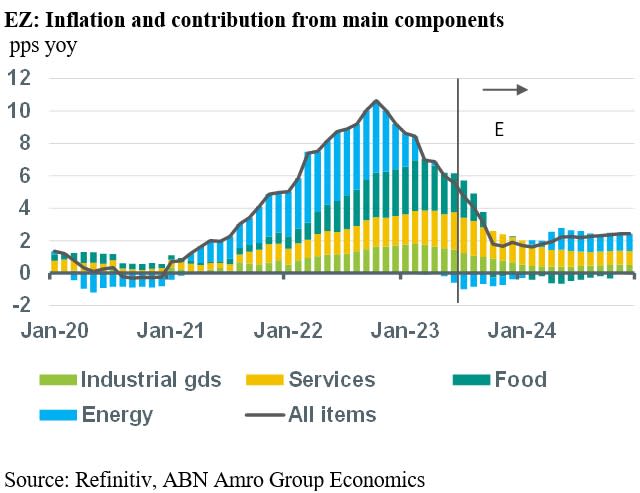
Turning to the components of core inflation, the inflation rate of non-energy industrial goods declined from 5.8% to 5.5%, but the inflation rate of services increased from 5.0% to 5.4%. Still, the detailed inflation reports that have been published by the biggest eurozone member states clearly illustrate that the rise in services inflation was completely due to the upward base effects from the introduction of the 9-euro public transportation ticket in Germany in June 2022. For instance, services inflation in France declined from 3.0% in May to 2.9% in June, while in Italy it fell from 4.6% to 4.3%, in the Netherlands from 6.1% to 5.7% (also see below) and in Belgium from 8.2% to 7.3%. Moreover, the detailed inflation reports of Germany’s states also show that the inflation rate of transportation services jumped higher, but that the inflation rate of services such as leisure and entertainment and hotels and restaurants declined.
All told, besides the one-off jump in transportation services in Germany, the gradual downward trajectory in core inflation that began after the peak of 5.7% in March 2023 seems to have continued in June. We expect core inflation to continue to decline gradually during the rest of this year. The pass-through of high energy costs into the prices of goods and services has already eased in the past few months and this trend is expected to continue. Moreover, the part of services inflation that is sensitive to wage growth should also start declining later in the year as well. Evidence has suggested that wage growth has levelled off in the first months of this year and we expect a further significant easing of wage growth to materialize in the second half of this year, as the expected economic weakness should hit labour demand and result in moderate rise in unemployment. The June inflation report and its details strengthens us in our view that the ECB will end its interest rate hiking cycle in July.