Eurozone inflation undershoots in runup to ECB meeting; NL inflation eases
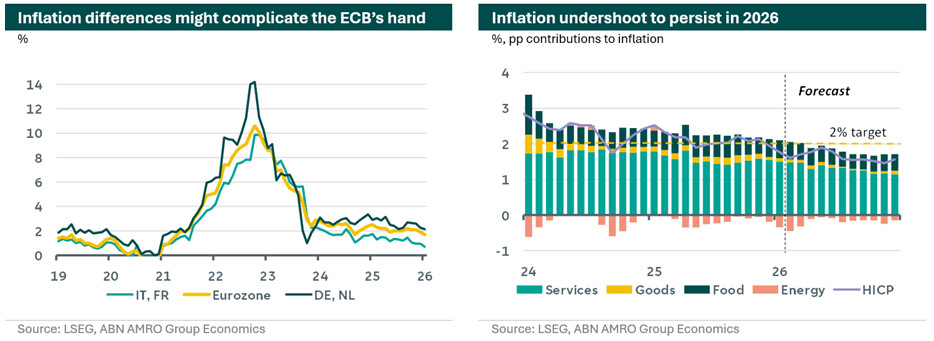
The preliminary estimate for January Eurozone HICP inflation eased to 1.7% y/y compared to 1.9% in December, in line with our and consensus expectation. Core inflation fell to 2.2% y/y from 2.3%. The slight drop in headline inflation was already signalled by regional inflation releases. We saw inflation easing in Spain (2.4% y/y, down from 2.9%) and in Italy (1% y/y from 1.2% in December) and in the Netherlands (see below). French inflation hit a trough at 0.4% y/y (0.7% in December). Germany on the contrary saw inflation slightly picking up pace to 2.1% y/y (2% in December).

Today’s release at 1.7% y/y marks the beginning of a period where eurozone headline inflation is set to fall below the 2% target. For roughly the past year, headline inflation remained well behaved around target. In 2026 we expect falling energy prices, helped by a stronger euro to drive an undershoot of inflation of the ECB’s 2% inflation target. Core inflation, now at 2.3%, is set to move closer to target in the coming months on the back of easing services inflation.
ECB expected to stay on hold tomorrow, and look through the inflation undershoot
At tomorrow’s Governing Council meeting the ECB is widely expected to keep interest rates unchanged. Following today’s inflation reading, President Lagarde will likely face questions about how and when the ECB might respond to an inflation undershoot, as well as questions about the euro’s recent appreciation. She is expected to reiterate that the ECB is “well positioned,” supported by resilient GDP growth at the end of 2025 (see here), and to restate that the ECB does not target a specific exchange rate, though it recognizes that currency movements can influence both growth and inflation. If those effects become significant, the ECB stands ready to act.
We expect the ECB to also keep rates on hold for the foreseeable future. The Governing Council appears inclined to look through the undershoot on the assumption that inflation will return to target in 2027. While near‑term risks to our view still tilt toward another rate cut due to the undershoot, by 2027 those risks may shift back toward a hike, with upside pressures likely to build from higher domestic demand, among other reasons stemming from German fiscal spending.
Netherlands — Inflation eases, partly on seasonal effects
The flash estimate for Dutch CPI inflation fell more than expected in January, coming in at 2.4% compared to 2.8% in December (HICP inflation 2.2%, 2.7% in December). While the full breakdown is not yet available, food inflation has decreased considerably from 3.1% in December to 2.0% in January. Services inflation, which is still far above the 2% target, saw slight easing, dropping to 3.9% from just above 4% before. Two offsetting forces are at work here. On the one hand, we expect a continued disinflationary trend in services, driven by gradually normalizing wage growth. Indeed, annual wage growth in 2026 is expected to fall to around 4%, from 5% in 2025. On the other hand, higher VAT rates for certain services, such as hotels, will exert upward pressure on prices.
Looking ahead, although the January figure may be flattered by seasonal factors, we expect Dutch inflation to continue easing and narrow the gap with Eurozone inflation. Dutch inflation is projected to remain above the 2% target this year and average 2.4% over 2026.