Eurozone PMIs signal a slower pace of contraction

The eurozone composite PMI came in higher than expected in December, rising to 48.8, up from 47.8 in November. At its current level, this is still consistent with GDP contracting noticeably during the final quarter of this year, although it seems that the risk to our own forecast of -0.6% qoq are now tilted to the upside.

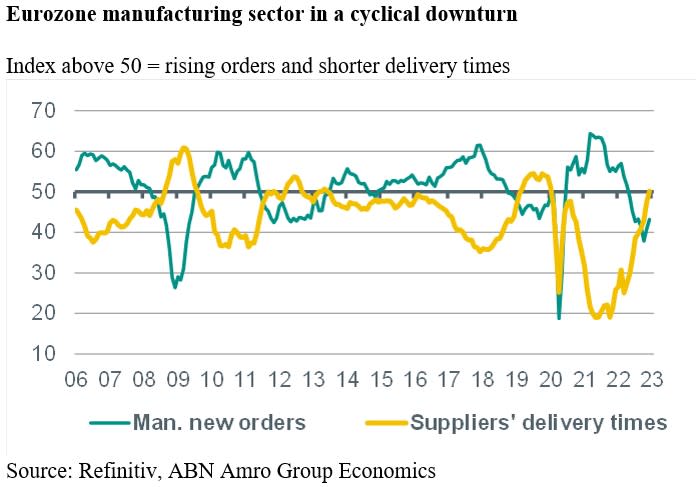
The eurozone composite PMI came in higher than expected in December, rising to 48.8, up from 47.8 in November. At its current level, this is still consistent with GDP contracting noticeably during the final quarter of this year, although it seems that the risk to our own forecast of -0.6% qoq are now tilted to the upside. The details of the report show that that the Manufacturing PMI increased to 47.8, up from 47.1, which was mainly due to increases in the output index as well as the new orders index, albeit that at 47.9 and at 43.2, respectively, both indices remained well below the 50-level that separates contraction from expansion. Meanwhile, the Services PMI increased to 49.1 in December, up from 48.5 in November, though the forward looking New business index stabilised at a low level of 47.8. Finally, the employment component of the Manufacturing PMI and the employment component of the Services PMI each were almost unchanged at 51.9 in December; at this level they are consistent with only modest job growth.The details of the PMI reports also showed that price pressures eased further in December. Indeed, the input price indices of the Manufacturing and the Services PMIs each dropped by more than three points in December, while the output price index of the Manufacturing PMI fell by almost two points and that of the Services PMI by more than one point. That said, all price indices remained well above the 50-mark, indicating that prices are still rising, but at a much more moderate pace than before. Another element of the PMI report that is signalling easing price pressures, is the fact that the index measuring suppliers’ delivery times in manufacturing moved into the ‘shorter’ territory (i.e. 50.1 in December) for the first time since the start of the pandemic. The combination of low new manufacturing orders and shortening suppliers’ delivery times clearly indicates that the eurozone industrial sector has moved into a cyclical downturn, which is consistent with a contraction in activity in the coming months.