US - Jump in services inflation piles pressure on the Fed
An expected fall in still-elevated retail volumes should help drive a cooling in goods inflation. However, this won’t be enough to bring inflation back to 2%, given the surge in stickier services inflation. This will keep pressure on the Fed to hike in 50bp steps in June and July – and perhaps for longer.

This is part of the Global Monthly, see here.
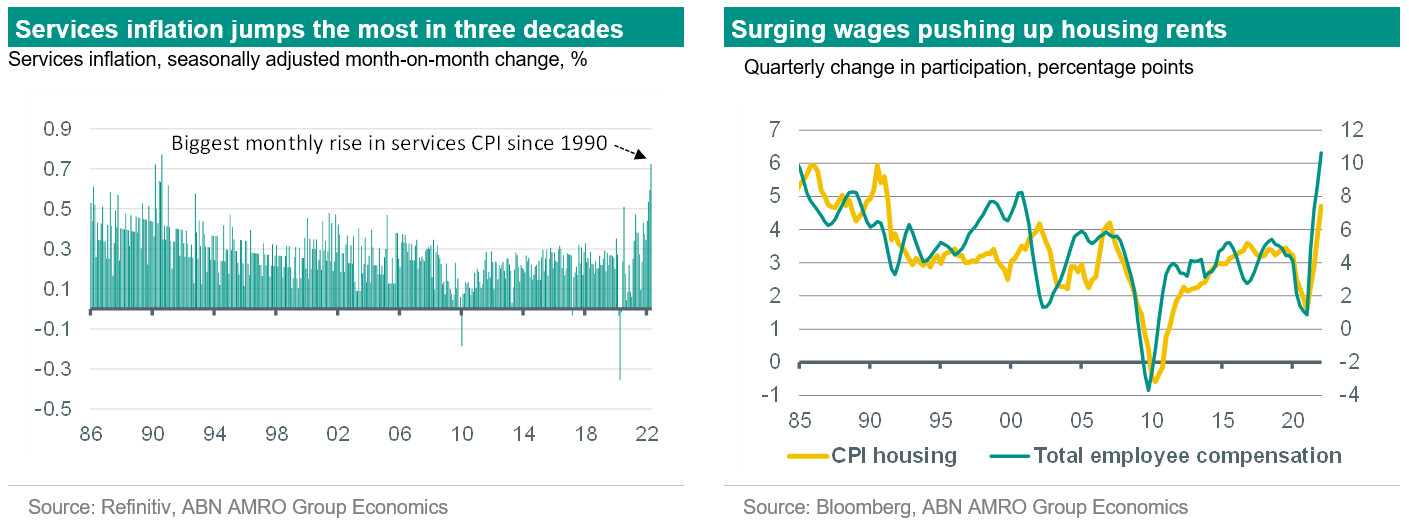
Equity markets in the US received a rude awakening over the past week, when major retailers reported a significant shift from high-margin discretionary consumption towards essentials, as consumers adapt to the surge in inflation. Retailers reported write-downs on excess inventory, suggesting there had been an expectation for the extraordinary growth in goods consumption seen last year to persist into this year. In contrast, our view has been that the above-trend goods consumption is unsustainable, and a correction would be vital to bring inflation back down. Despite falling in real terms for much of 2022 so far, goods consumption is still much too high in the US, and we expect the hit to real incomes to drive further modest declines in retail volumes over the coming months. This will likely help to drive a cooling in goods inflation, which has already fallen back somewhat, driven by declines in elevated used car prices. However, this will not by itself bring inflation back to the Fed’s 2% target, given that stickier services inflation has become a much bigger driver over the past few months. Indeed, while overall inflation cooled in April, services inflation registered the biggest monthly gain in over three decades. A significant driver of the strength in services came from airfares – a knock-on effect from the run-up in oil prices – but housing rents, medical and other services costs also continued to rise sharply, at around double the pace that we typically see in these categories. We view this as a spillover from on-going elevated wage growth, which although cooling a touch in recent months, remains elevated, with hourly earnings continuing to rise at around a 5% annualised pace. We significantly raised our inflation projections on the back of the April reading, with headline inflation now expected to average 8% in 2022 and 4.1% in 2023 (previous forecasts: 6.9% in 2022 and 3.3% in 2023). Alongside firming services inflation, energy inflation – a major drag in the April report – is set to rebound significantly in the coming months. Aside from higher oil prices, a shortage in refining capacity is raising the margin between crude oil and gasoline and jet fuel prices. Meanwhile, higher natural gas prices – something the US had been relatively immune from until recently – will also drive a rise in household energy bills.
Continued upside inflation surprises all-but seal a 50bp hike taking place at both the June and July FOMC meetings, and raises the risk that the Fed continues hiking at this pace in subsequent meetings. A key question mark over the outlook remains the extent to which the hit to real incomes will drive a decline in demand, and the timing of this. While we have seen some decline in goods consumption of late, it is still not nearly to the extent that is likely necessary to bring demand back into balance with disrupted supply in the economy. The run-up in services inflation also suggests we will need to see a significant easing in labour market tightness to bring wage growth back down to more normal levels. The excess savings from the pandemic are providing some buffer to the real income hit for the time being (see this month’s Global View), but this will not last forever, certainly for lower income groups. In the meantime, the risk is tilted towards the Fed stepping even harder on the brakes.