A rapid energy transition and cheap gasoline. Can it be done?
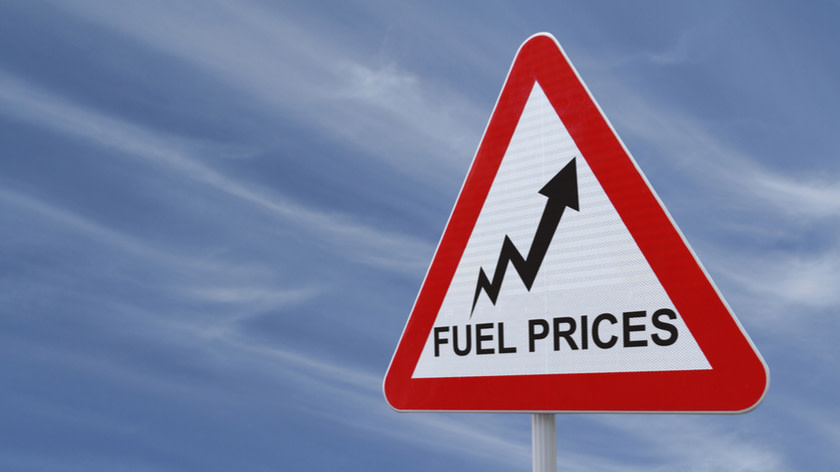
Recently, due to high energy prices, we have seen initiatives from national and European leaders to promote the energy transition. Hans van Cleef thinks these are laudable ambitions and acceleration is now actually visible. However, it sometimes happens so fast that it is technically impossible to keep up. It also leads to the realisation that we cannot do without fossil fuels for the time being. In fact, the Western policy of pushing Russia off the world market, combined with the insufficient investment in energy transition (too little in sustainable energy and/or too little in fossil fuels), are leading to a serious disruption of global supply and demand, resulting in higher prices.

ABN AMRO Group Economics
Author has left Group Economics, see text
Author: Hans van Cleef
A rapid energy transition and cheap gasoline. Can it be done?
Last week President Biden sent a letter to the largest American oil and gas companies. In this letter, Biden admitted that the tight supplies resulting from Russian aggression are leading to high prices. But Biden also accused these oil and gas companies of making too much profit at the expense of Americans. He also called for more production of oil products such as gasoline and diesel. The industry association, The American Petroleum Institute, responded by referring to the policies of recent years that were aimed precisely at reducing American oil and gas production. Older refineries were closed because investing in sustainability would not pay off, and other refining capacity has already been converted so that it is now suitable for the production of, for example, biodiesel. This was at the expense of capacity for the production of traditional fossil fuels such as gasoline and diesel.
From worries over output to worries over capacity
Although most of the tightness is currently in the downstream activities and less in the upstream for the time being, we are also seeing more anxiety emerging in that area. After the last OPEC+ meeting, in which higher crude production was announced, the reaction in the oil price remained very limited. The announced increase in production for July and August was mainly a bringing forward of an already planned increase in September. It also appears that OPEC+ is less and less able to actually increase production by the amounts announced. But the main reason for the lack of market reaction was a shift in focus. Whereas previously the focus was on production levels, it has since shifted to spare capacity. In other words, the diminishing spare production capacity that can be used at short notice during a new market calamity.
Traditionally, this spare capacity was around 2-2.5 million barrels per day, largely held by Saudi Arabia. Spare production capacity is again approaching this level, but the extent to which it can be deployed is uncertain. Large reserves lie with Iran (but is not available due to sanctions), Libya (unreliable due to local unrest), Iraq (potentially deployable), and the two major OPEC producers the United Arab Emirates and Saudi Arabia. These two countries did continue to invest substantially during the pandemic, and the spare capacity of these two countries is currently about 2.2 million barrels per day. But these two countries also work closely with Russia in the OPEC+ coalition. The US has also sometimes been labelled a swing producer, or a producer that increases production when market conditions are right. This was already debatable in the past. But US oil companies are currently primarily looking at the profitability of production and not just focusing on growth, in addition to other problems such as labour shortages, and can therefore not be considered a swing producer anymore.
From the investment phase to the substitution phase
Anyone who has taken economics classes at university is familiar with the concept of the ‘pork cycle’. This is a cycle in which investments are made to increase supply when prices are high, and inventories or production capacity is actually reduced when prices are low. In oil and gas markets, this is no different. In the period 1990-2000, we experienced relatively low oil prices. There was sufficient supply and the market was reasonably balanced. The average price was between USD 15-20 per barrel. Between 2000 and 2010 prices rose sharply. This was partly because financial products were developed that made the markets accessible to every investor, but also because stocks became tighter. So there was a need to invest heavily in new sources. And yes, the prices shot through to a record of over USD 149/barrel in 2008 before plummeting during the financial crisis. But even if you leave out these large movements, you could see that the average price had risen from USD 15-20/barrel to USD 80/barrel. It turned out to be a good breeding ground for the development of shale oil. The beauty of shale oil was that the lead time of projects was not the usual 8-12 years, but only 1-3 years before an oil well could be brought into production. It pushed US production up, and thus resulted in lower oil prices.
Meanwhile, prices are back well above USD 100/barrel due to scarcity. Accelerated partly by the sanctions against Russia, and partly by OPEC(+)'s inability to further increase production. International oil companies are already investing less in oil exploration under pressure from shareholders and policymakers. As a result, 90% of the world's oil reserves are now in the hands of national oil companies. Normally, the current high prices would lead to another investment phase, as we saw so often in the past. This time it is different. We have entered the ‘oil substitution’ phase. Or rather, we hope we have entered a substitution phase. A phase in which it would no longer be necessary to invest in new oil sources, as we slowly but surely shift to other energy sources in industry, transportation and chemicals. The fact is, however, that our consumption behaviour has not yet entered this phase – a development that increases the tightness in the market.
High prices lead to an accelerated energy transition, don’t they?
It is often said that the energy transition is accelerated when there is a price incentive. Well, one thing is certain – that incentive will increase significantly in the coming period. I don't see the resulting tightness in the market disappearing any time soon and it will keep prices high for a longer period of time. How high will depend on how quickly the demand for oil and gas will decline. And there too we are seeing the first signs. Recently we have seen initiatives from national and European leaders to promote the energy transition. Commendable ambitions and accelerations are now making sure that acceleration is actually visible. However, things are sometimes moving so fast that it is technically impossible to keep up. A shortage of materials, manpower and insufficient infrastructure sometimes hinders further acceleration (see previous column). It also leads to the realisation that we cannot do without fossil fuels for the time being. On top of that, many emerging countries are striving to achieve similar levels of prosperity to ours, and this is accompanied by rising global energy demand, both in the form of renewable energy and fossil fuels.
Disruption of supply and demand
Tightness in the oil and gas markets is leading to very high energy prices. Europe, and the Netherlands in the lead, is stirring in the global markets to get enough gas in the form of LNG our way so as not to run out in the coming winter. We, as wealthy countries, can afford this. But in countries like Pakistan and Sri Lanka, the problems of shortages are already emerging. Their economies are grinding to a halt, with power outages more the rule than the exception. Food and fuel shortages are keeping tourism away and poverty is on the rise. And further price increases or supply shortages cannot be ruled out. The Western policy of pushing Russia out of the world market, combined with the insufficient investment in the energy transition (too little in renewable energy and/or too little in fossil fuels), are primarily leading to a serious disruption of global supply and demand, resulting in higher prices.