Eurozone - Growth to slow after temporary pick up
After a weak start of the year, GDP growth should pick up somewhat in the next few quarters, but slow down again moving into 2023. Further rises in inflation(-expectations) have raised the sense of urgency at the ECB to hike policy rates soon. We still expect a pause after the first two rate hikes as the economy slows down.

This is part of the Global Monthly, see here
Growth to pick up temporarily but slow down moving into 2023
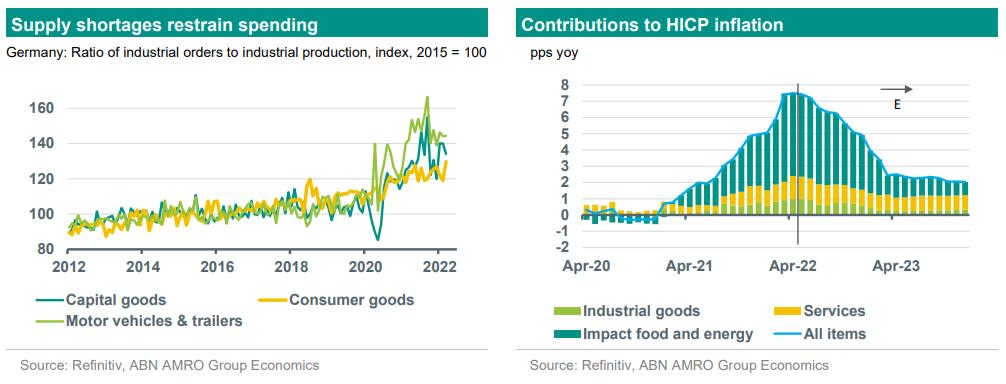
Eurozone GDP expanded by 0.3% qoq in 2022Q1. The details have not yet been published but it seems that a major factor behind the expansion in GDP was a rebound in the part of the services sector that had been in lockdown during winter. In contrast, consumption of goods probably contracted in Q1, with retail sales and new car registrations combined falling by more than 1% qoq in Q1. Serious shortages in supply seem to have been the main factor behind the drop in goods consumption. Indeed, the gap between orders and production for German consumer goods has soared to historically high levels (see graph). The gap between orders and production of capital goods suggests that similar supply shortages probably also weighed on fixed investment growth in Q1. Although the falls in consumer and producer confidence since the start of the war in Ukraine should limit growth in consumption and investment spending, we do not expect this weakness to show up in the actual growth numbers until around the end of the year. First, the easing of supply chain bottlenecks should result in a temporary bounce in production and spending in the second half of this year. As mentioned in this month’s Global View, we expect consumers to spend part of the excess savings that they have accumulated during the pandemic, which means that the volume of consumption should continue to expand despite the high level of inflation. Moving into 2023, we expect GDP growth to slow to somewhat below the trend rate, as the temporary catch-up effects fade. In addition, we expect global growth to slow due to policy tightening by the main central banks, including the ECB.
Inflation to remain elevated for a considerable time
Inflation stabilised at 7.4% in April. The rise continued to be driven by energy and food prices (see graph below). Moreover, core inflation was lifted by the post-COVID normalisation of holiday and leisure prices, and the pass-through of high energy inflation into transportation services. Finally, supply chain disruptions have raised the prices of industrial goods. Inflation is expected to remain elevated for a considerable time, but it should drop lower next year as the impact of past rises in energy prices dissipates. We expect inflation to be close to the ECB’s 2% target by the end of 2023. The expected slowdown in growth implies that underlying inflationary pressures should remain contained.
The sense of urgency at the ECB to hike rates has increased
The sense of urgency at the ECB to hike interest rates has however increased. We now expect a first 25bp rate hike in July and another in September. Although the risks are skewed toward a further rise in December, we have not pencilled in any rate hikes in the months beyond September. This is because we remain of the view that the window for rate hikes will close around the turn of the year. This mainly reflects that the hit to economic growth will increasingly become visible in the data, and we expect a weak outlook for 2023. In addition, the US Fed’s rate hike cycle will probably also come to an end around the end of the year, which will ease downward pressure on the euro. Finally, we think headline inflation will be on a significant downward trend from early next year.