Eurozone inflation slightly higher despite drop in energy price inflation

Eurozone inflation rose from 7.4% in March to 7.5% in April, despite a fall in energy price inflation. The downward impact of energy inflation on headline inflation was more than eliminated by rises in food price inflation and a further increase in core inflation. Looking ahead overall inflation should remain close to current levels until around the middle of the year, and gradually fall thereafter. By the end of the year it could still be around 5-6%. Next year, inflation should fall sharply, as the temporary factors that currently lift core inflation will ease and the impact of past rises in energy prices dissipates. We expect underlying inflationary pressures to remain subdued against the backdrop of weak economic activity next year.

Eurozone inflation rose from 7.4% in March to 7.5% in April. The rise occurred despite a fall in energy price inflation (from 44.5% in March to 38.0% in April), which was due to wide-spread cuts in excise duties and taxes on car fuel that were implemented in most eurozone countries around mid-March. Still, the downward impact of energy inflation on headline inflation was more than eliminated by rises in food price inflation (unprocessed food price inflation from 7.8% to 9.2% and processed from 4.1% to 5.5%) as well as a further increase in core inflation (from 2.9% to 3.5%). The rise in core inflation was a combined result of higher non-energy industrial goods price inflation and higher services price inflation.
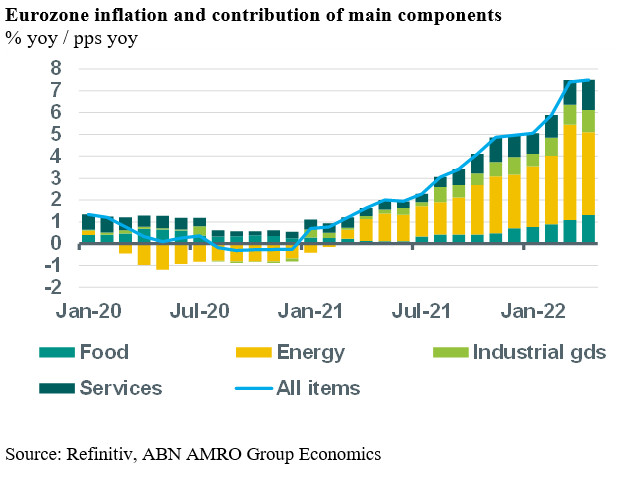
The rise in core inflation is due to a number of factors at the moment. First, high energy price inflation tends to filter through quickly to the price of transport services. Inflation for holiday and leisure-related services is temporarily elevated at the moment, due to the normalisation of prices following lockdowns. Finally, supply chain disruptions have also raised inflation for global industrial goods. These disruptions have been intensified by the Ukraine war and sanctions on Russia. Looking ahead, we expect energy price inflation to continue to fall gradually in the coming months, whereas food price inflation could increase further, and core inflation will probably remain elevated until around the middle of this year. This means that overall inflation should remain close to current levels until around the middle of the year, and gradually fall thereafter. By the end of the year it could still be around 5-6%. Next year, inflation should fall sharply, as the temporary factors that currently lift core inflation will ease and the impact of past rises in energy prices dissipates. We expect underlying inflationary pressures to remain subdued against the backdrop of weak economic activity next year.