FX Weekly - Euro under pressure

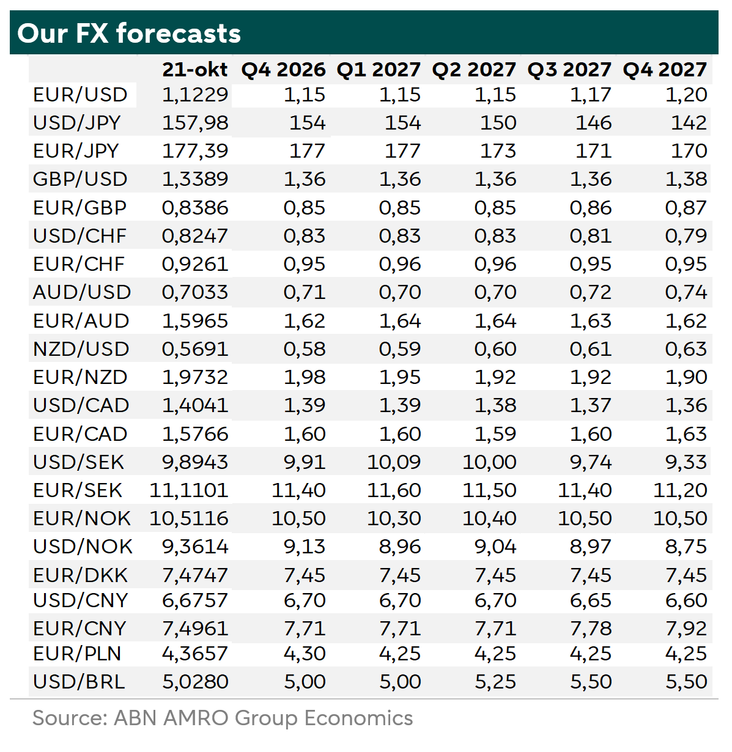
The euro has weakened since September, especially against the yen, US dollar and Norwegian krone. Wider interest rate spreads favour US dollar and sterling over the euro. Fiscal and political concerns in France, together with high energy prices, have added pressure on the euro. We expect the euro to recover against the US dollar and sterling as current market expectations adjust.

Rate spreads, risk concerns and high energy prices weigh on the euro
Since the beginning of September, the euro has been one of the weakest major currencies. It has fallen by around 2% against a basket of currencies, with the largest declines against the Japanese yen, US dollar and Norwegian krone. EUR/JPY has dropped by more than 4.5%, EUR/USD by 3.5% and EUR/NOK by more than 3%, with EUR/NOK reaching a level last seen in January 2023. Speculators now hold their largest net short position in the euro since January 2016 (see graph below).
Why has the euro been so weak? As noted in recent FX Weekly publications, interest rate spreads have been the main factor. For a start, expectations for rate increases have risen across major central banks, but they have increased more for the Federal Reserve and the Bank of England (see graph below) – particularly after the UK’s employment data and higher inflation reading this week – than for the ECB. What is more, concerns about France’s fiscal position, political uncertainty and civil unrest have also widened the yield spread between French and German government bonds, as investors demand more compensation for holding French debt. Because France is a major eurozone economy, markets are concerned about the possible negative impact on the eurozone including a more negative stance towards eurozone institutions (in the event of a Le Pen victory in next year’s election). Finally, high energy prices have weighed more heavily on the euro than on the currencies of energy-exporting countries such as Norway and the United States.
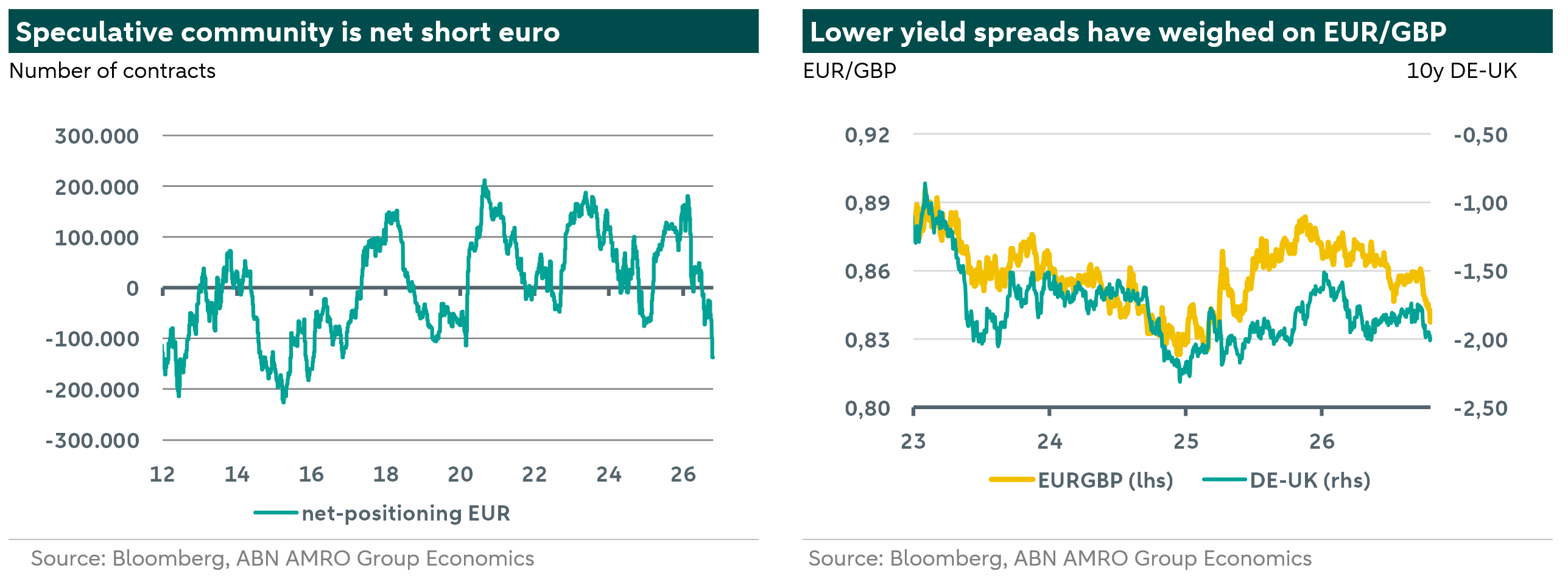
Together, these factors have pushed the euro lower across the board. EUR/GBP is below 0.84 and is approaching its May 2025 lows. Markets currently price in 67 basis points of Fed rate increases by the end of 2027, 65 basis points for the ECB and 110 basis points for the Bank of England by September 2027. By contrast, we expect two rate increases from both the ECB and the Bank of England, and one 25-basis-point increase from the Fed. Overall, we believe markets are too optimistic about future rate increases by the Bank of England and the Fed so when rate markets adjust, this could support the euro versus the dollar and sterling. If the budget in France is gets passed (as we expect) there is room for near-term euro relief. But currency markets could become nervous on higher political risk in France again towards the French elections in April 2027. This could weigh again on the euro.