Location choice datacenters constrained by power, water, space and public support

Data centers are an indispensable pillar of the digital economy, but their rapid growth also raises questions. And this growth continues, including in the EU. This analysis shows which European countries are best positioned to attract new data centers. To that end, we examine both current and future data center capacity. We address the challenges, both in terms of power grids and investments and costs. This analysis shows how the AI boom, high costs, fragmented EU regulations, and increasingly scarce space are making the choice of location for data centers increasingly complex. We provide insight into the factors that determine data center developers’ site selection, and which EU member states are relatively well-positioned based on these criteria.

The center of gravity for data centers lies in the US, with the EU a close second
There are approximately 12,000 data centers worldwide. Most of them (nearly 45%) are in the US, and a quarter are in Europe. China is home to 15% of all data centers.
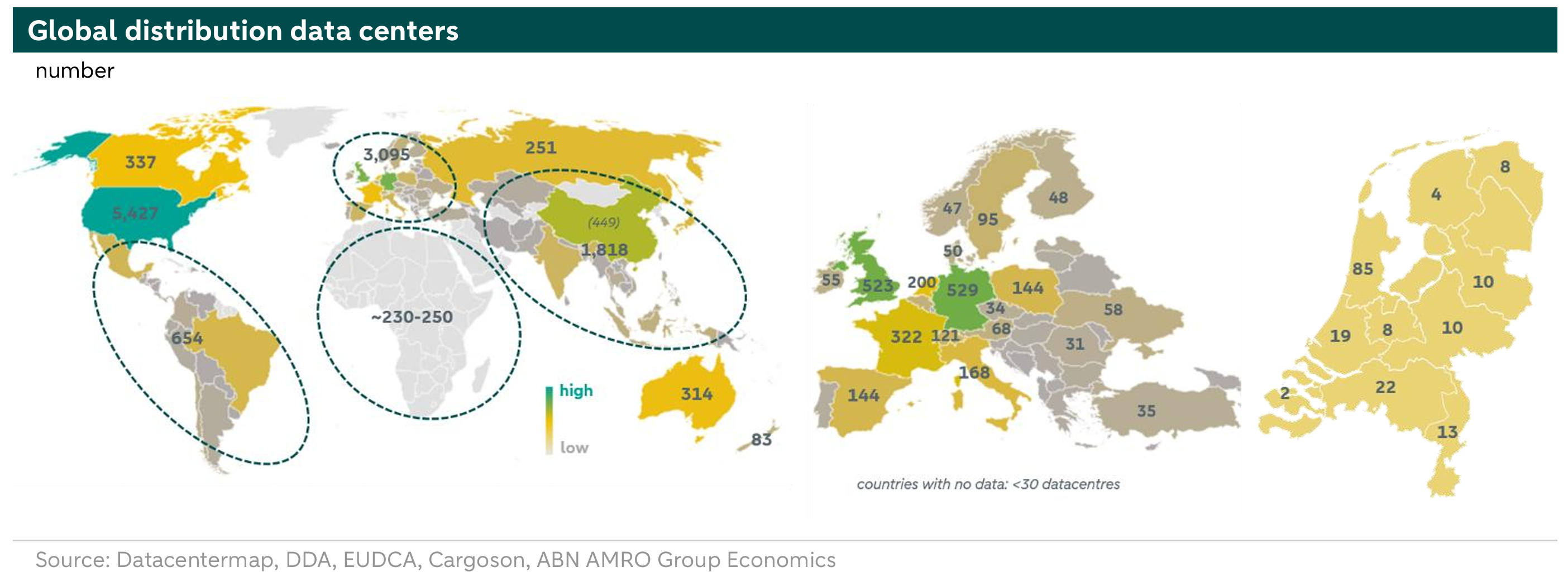
In terms of capacity (installed capacity in gigawatts, GW), the proportions are slightly different. In this case, 48% of the total capacity is in the U.S., 24% in China, and 12% in Europe. This indicates that China primarily hosts large data centers.
Most of these data centers (about 90%) are so-called “colocation” (Colo) data centers. These are facilities where companies rent physical space, power, and cooling for their own servers and network equipment. A hyperscale data center is a much larger facility designed to support heavy-duty cloud computing and artificial intelligence (AI). Globally, there are approximately 1,100 such facilities. Finally, some companies and institutions (such as hospitals and universities) operate their own on-site data centers.
Germany is home to the most data centers in Europe, followed by the UK and France. The Netherlands ranks a solid fourth, with a concentration of data centers primarily in North Holland (Amsterdam, Haarlemmermeer, and Wieringermeer). However, sources vary considerably regarding the exact number of data centers. What is clear, in any case, is that their number has increased significantly over the past ten years and will continue to rise.
Data center capacity is expanding rapidly worldwide
According to BloombergNEF, global data center capacity stood at 84 GW in 2025. This represents an annual increase of approximately 36% over the previous ten years. The International Energy Agency (IEA), however, estimates a global capacity of 114 GW. This discrepancy stems from the fact that the two organizations measure capacity differently. Despite these differences, both organizations agree on the growth in capacity through 2030. From 2025 through 2030, capacity will increase by approximately 95%, or nearly 20% per year. These growth figures are driven primarily by the sharp rise in demand for computing power for artificial intelligence (AI).
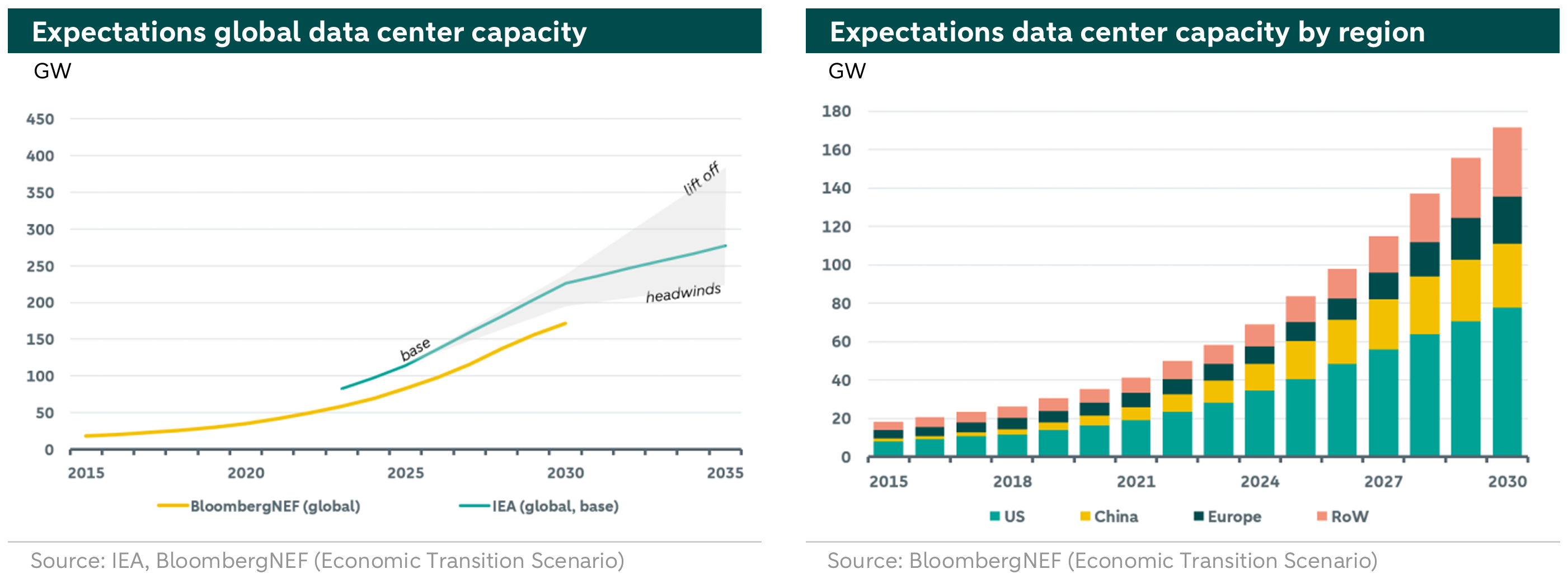
According to the IEA’s baseline scenario, capacity growth will level off after 2030 to about 5% per year. If conditions for data center development are favourable, growth could reach an average of about 13% per year. BloombergNEF expects capacity growth in Europe to be strongest during the 2025–2030 period, averaging about 30% per year to reach nearly 25 GW. With this stronger annual growth, Europe’s market share will most likely increase in coming years.
More data centers pose a major energy challenge
Due to the rapid global expansion of data centers, demand for electricity is also increasing. Between 2015 and 2025, this demand grew spectacularly worldwide by nearly 40% per year. The rapid rise of electric vehicles has had an even greater impact on electricity demand: it increased by approximately 63% annually during the same period. Between 2025 and 2030, both electric vehicles and data centers will continue to place a heavy strain on electricity capacity. According to BloombergNEF, the average annual growth in electricity demand for data centers during the period 2025–2030 will be nearly 28%, and for electric vehicles, nearly 40%.
The electricity must come from somewhere. This often requires a connection to the existing grid. However, connecting to the grid has become challenging due limited grid capacity and increasing congestion in most EU-countries, thus, data center developers sometimes also opt for “behind-the-meter” (BTM) generation. This is a system in which a dedicated power plant is built directly on the data center’s premises and operates independently of the existing grid capacity. These power plants generate electricity that is largely consumed on-site. BTM-generation can alleviate pressure on the grid, but it is not a complete solution to grid congestion as long as permits, emissions requirements, fuel security, and backup provisions remain limiting factors. BTM-generation is possible with a gas peaker plant and the Combined-Cycle Gas Turbine (CCGT).
In its forecasts, BloombergNEF assumes that gas-fired power plants—including gas peaker plants and CCGT-facilities—will continue to play a significant role in the electricity supply for data centers alongside coal, while renewable energy—particularly solar and onshore wind—will continue to gain importance, see also right graph below.
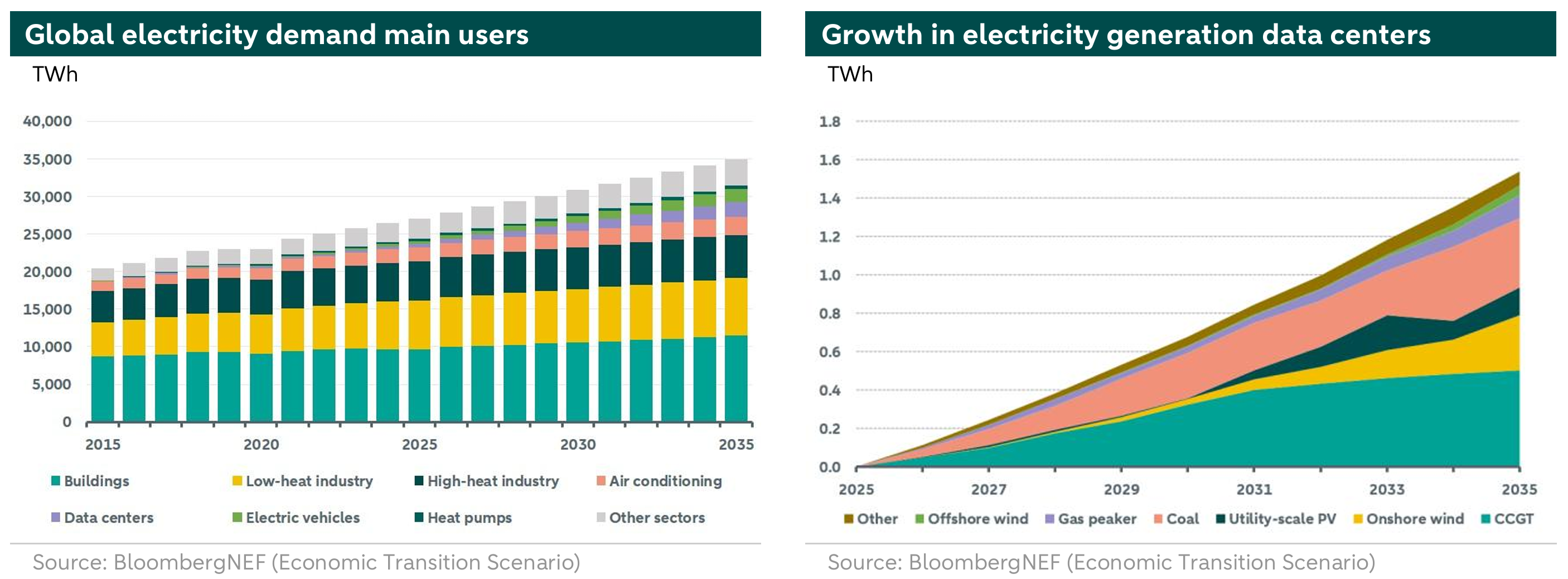
The technology widely used in BTM-generation is the Single-Cycle Peaker (also known as a gas peaker). These plants burn natural gas, for example, to drive a turbine and generate electricity. However, the Single-Cycle Peaker cannot utilise waste heat. This is possible with a CCGT, which combines a gas turbine and a steam turbine to convert fuel (usually natural gas) into electricity. CCGT power stations utilise the residual heat to drive cooling systems, which can reduce overall operating costs. According to BloombergNEF, CCGT power stations are set to grow in importance in the coming years, just like coal-fired power stations.
Rising cost of data center construction
Building a data center is capital-intensive right from the start. For example, the purchase of a site and/or land, the construction of buildings and the necessary equipment all require high initial investment.
Estimates vary regarding the construction of data center buildings. Broadly speaking, the construction of the foundations, structure and buildings accounts for around 10% to 15% of total capital expenditure. In many EU Member States, relatively strict building and environmental regulations result in higher base costs.
Land prices are highest on average in Western Europe and lowest in Northern and Eastern Europe. Land prices in Western Europe are, on average, twice as high as the average land prices in Southern Europe. Given the scale of data center (particularly the hyperscalers), land prices in EU Member States have a major influence on investment decisions. In some countries, however, lower land prices are sometimes agreed to attract new data centers.
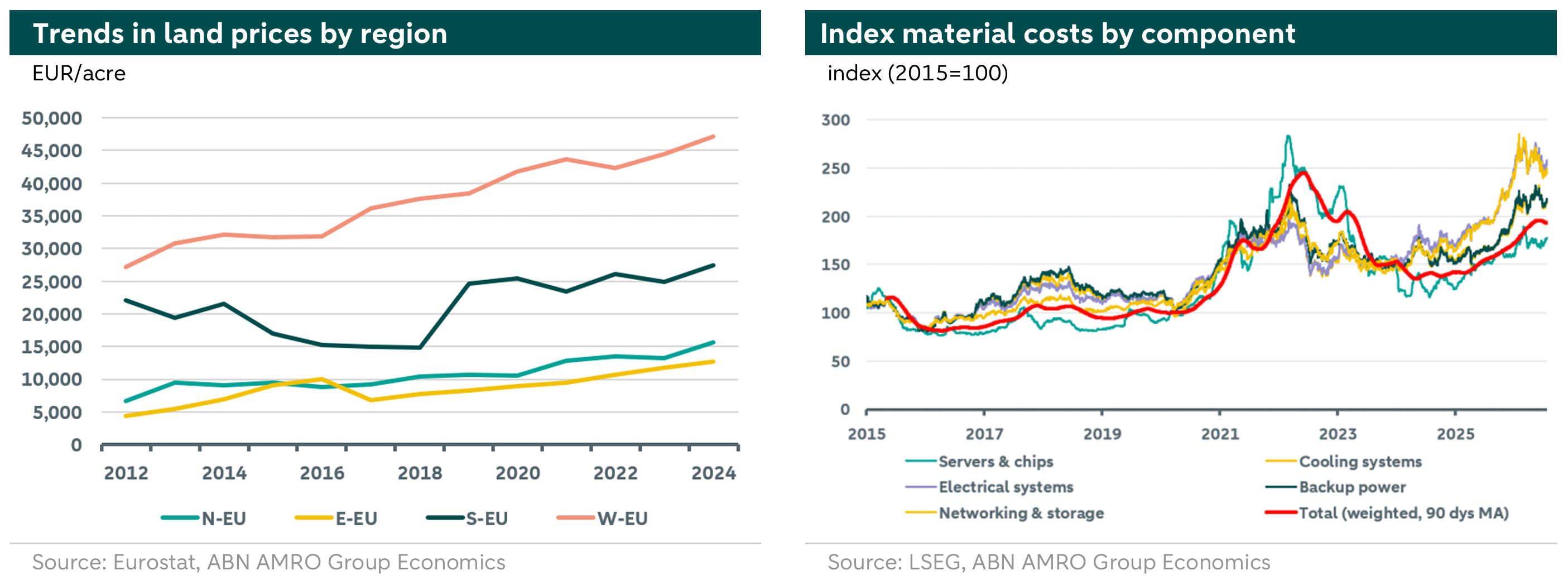
In addition to the site and construction, the necessary equipment also requires substantial investment, such as in servers, chips, cooling, power supply, connectivity and emergency power supply. According to the World Economic Forum, every megawatt (MW) of a data center accounts for approximately 60–75 tonnes of metals. The material costs for manufacturing all the necessary equipment for data center have risen by 33% in 2025. And up to the end of July this year, material costs have risen by 9%. Whether this trend will continue remains uncertain: if geopolitical tensions persist, price pressures may continue.
It remains important to monitor trends in these material costs. With mounting pressure on the supply of materials and rising prices – because of the continuing AI boom – initial capital costs may rise more sharply than anticipated. This puts pressure on the economic viability of projects. Furthermore, it also partly exposes bottlenecks in the supply chain, particularly regarding the critical materials that are indispensable in many technological applications. In the current fragile geopolitical context, sudden restrictions on exports from resource-rich countries could cause significant price volatility and severely delay the construction or development of essential digital infrastructure.
Expansion of data center capacity in EU offers potential in north-western Europe
Choosing a location for the construction of a new data center is a crucial decision. Underpinning every decision, however, is a stable electricity market, a robust digital infrastructure and reliable connectivity. Operating costs, power supply, cooling and network connections are decisive not only for quality, but also for the long-term efficiency and cost control of data center. The decision depends also largely on how electricity demand from other sectors will evolve and whether scarce supply (given grid limitation) will be sufficient to incorporate additional data center demand.
Ultimately, the location has a significant impact on investment costs, operating costs, growth opportunities and sustainability targets. Every location has its own advantages and challenges. For example, a location or region with an abundance of renewable energy may come at a higher cost, whilst urban areas can offer greater connectivity. At the same time, however, urban areas have relatively limited scope for expansion and often higher land prices
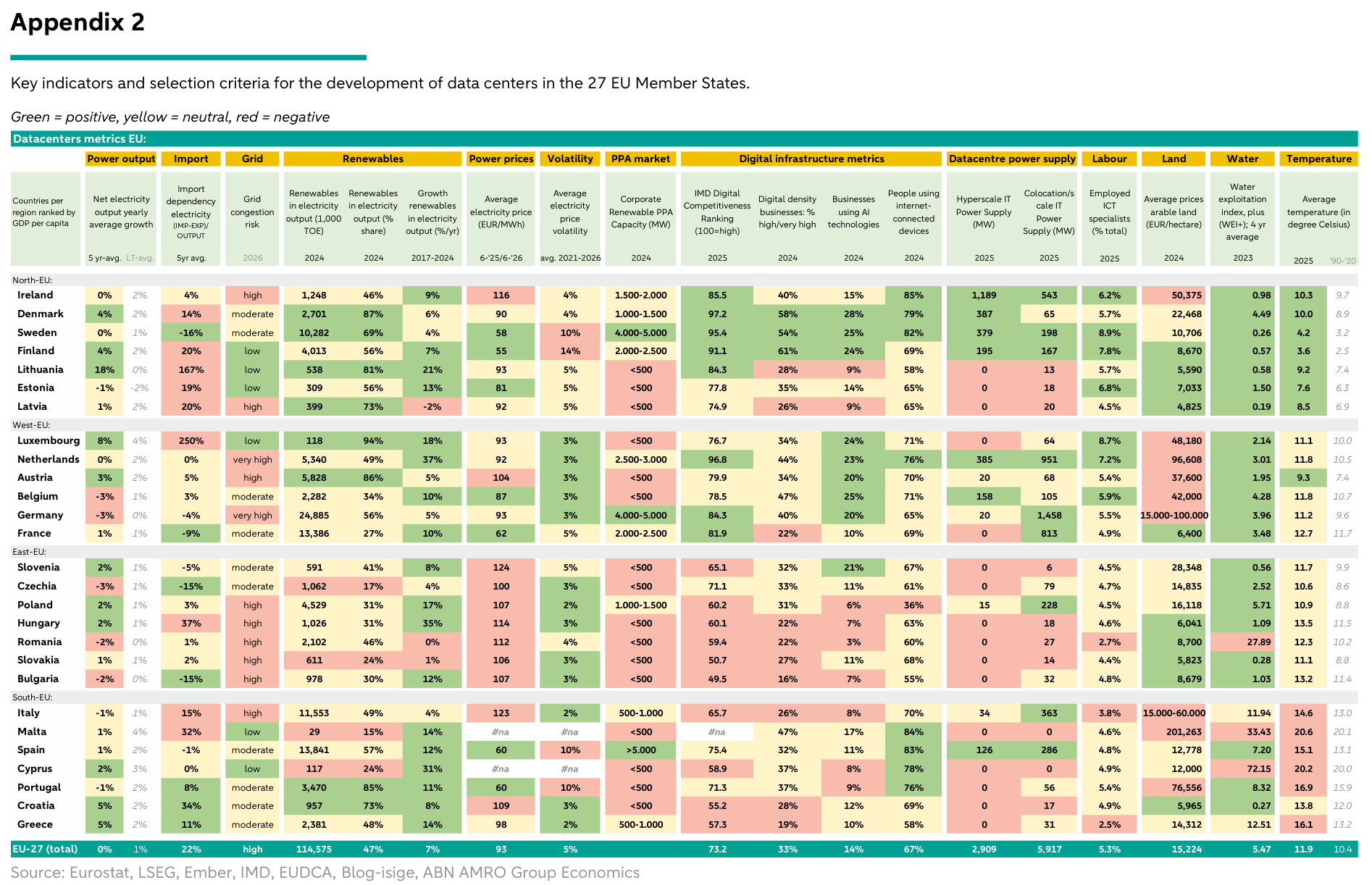
In Appendices 1 and 2 of this publication (see download), we have summarised a set of selection criteria for the development of new data center. Appendix 1 lists the selection criteria and the rationale behind them, whilst Appendix 2 ranks the EU Member States against a number of these criteria. We briefly outline the key selection criteria here.
Energy and price risks
Two key factors in the choice of location are the level of electricity prices and their volatility. These are relevant for determining the feasibility of projects and their ultimate competitiveness. We have plotted both factors by EU country in the figure on the left below.
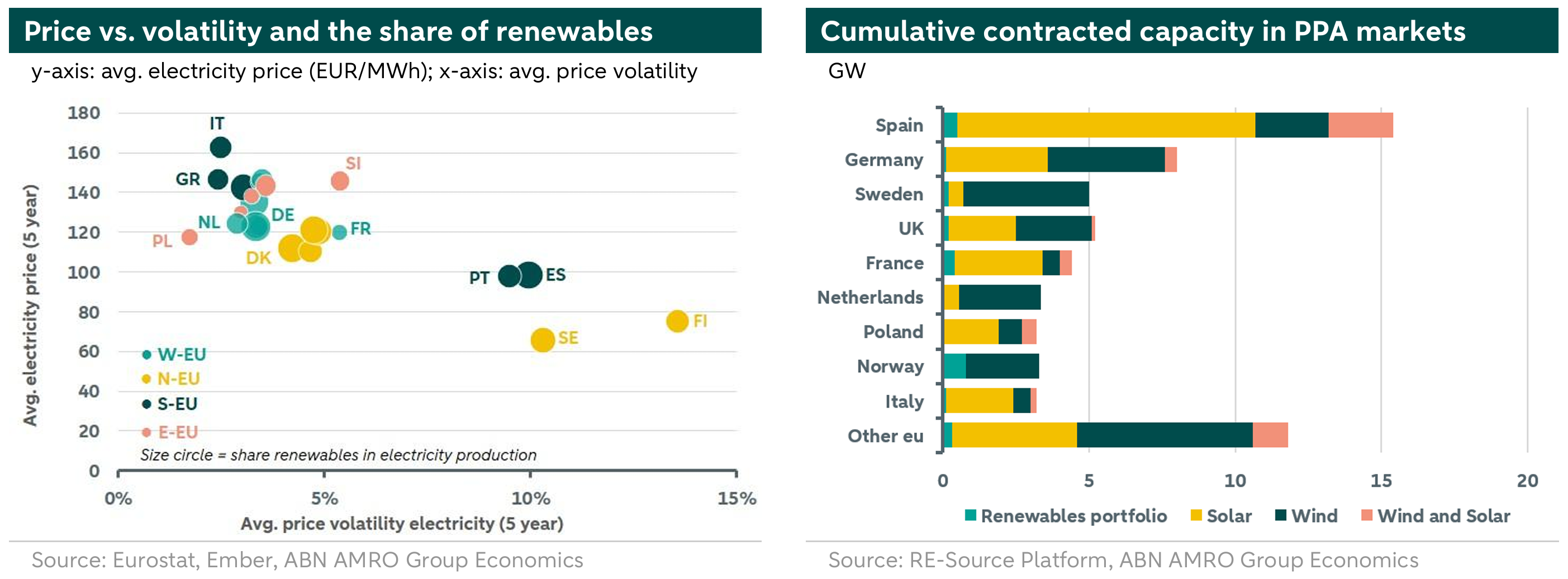
In Western Europe in particular, electricity prices are relatively high, but price fluctuations are low. This contrasts with Spain, Portugal, Finland and Sweden. In those countries, electricity prices are relatively low compared with the rest of Europe, but they experience relatively large price fluctuations. This is largely due to the sharp increase in generation from renewable sources in recent years, combined with a rapid shift away from fossil fuels. This results in a lack of flexibility in the electricity grid. Furthermore, these countries have relatively limited interconnection capacity with the rest of Europe. In north-western Europe, grid interconnection with neighbouring markets is generally stronger due to the more favourable geostrategic location, which helps to mitigate price fluctuations.
Power Purchase Agreements (PPAs) help data center to hedge against some of the price risks. Such long-term contracts offer greater predictability regarding electricity costs, although volume, profile and network risks remain. Spain is the European leader in PPAs for data centers, followed by Germany and Sweden. This is due not only to demand from established major hyperscalers (notably Amazon, Google and Microsoft), but also to the relatively low generation costs of solar and wind energy (particularly in Spain). The major hyperscalers account for the lion’s share of data center PPA activity in Europe.
Institutional and social factors
The state of the digital infrastructure is less favourable in Eastern Europe, whilst it is rated as the best in Northern Europe. For example, the extent to which organisations, households and devices are connected to one another and exchange data is highest in Northern Europe, and most countries in this region score highly in the IMD Business School’s Digital Competitiveness Ranking. Having a high-quality digital infrastructure gives countries a competitive edge. As most business activity is concentrated in Western Europe and population density is highest there, most data center are in the so-called FLAP-D markets (Frankfurt, London, Amsterdam, Paris and Dublin). These markets are situated in the heart of Europe, where connectivity and demand for data center services are highest.
Network congestion is likely to be one of the most important factors in choosing the location of data center. Data center developers must take into account the available network capacity in the region where they wish to establish themselves. In doing so, they prefer to avoid overloaded regions where network capacity is severely limited (such as urban areas) and focus more on regions outside these cities where network congestion is less of an issue.
The public debate surrounding the emergence and rapid growth in the number of data center is intensifying in some countries. For example, new data center projects are subject to ongoing tensions between available space, economic versus environmental considerations, water consumption, the ‘concretisation’ of the landscape and current network congestion. It is therefore important that every data center project takes the local community and its concerns into account. Developers can, for example, actively build clean energy generation facilities, reduce water consumption (by reusing more wastewater and investing in dry cooling or closed-loop systems) and upgrade the (local) electricity grid.
Finally, regulations and planning permission procedures also complicate decisions regarding the development of new data center. According to the European Commission (EC), investment decisions in Europe are hampered by fragmented regulations and policy measures across the various Member States. This fragmentation leads to differences in the processing times for permit procedures and access to electricity supply, as well as stricter regulations on data sovereignty and caps on capacity and floor space per data center. For investors, this may be a reason to be less inclined to establish themselves in traditional tech hubs such as FLAP-D. As a result, developers are increasingly looking to the Scandinavian countries, as well as Spain and Portugal. These locations often offer more renewable energy, space and less stringent local energy policies.
Final assessment: which EU countries are well positioned?
In the figure on the left below, the EU Member States are ranked based on the balance between positive and negative scores. The components used for the ranking can be found in Appendix 1 and 2. The scores are unweighted. This means that a score for grid congestion carries the same weight as a score for land prices, climate and water stress. As each data center developer has their own priorities when it comes to selection criteria, we have not applied any weighting to the results.
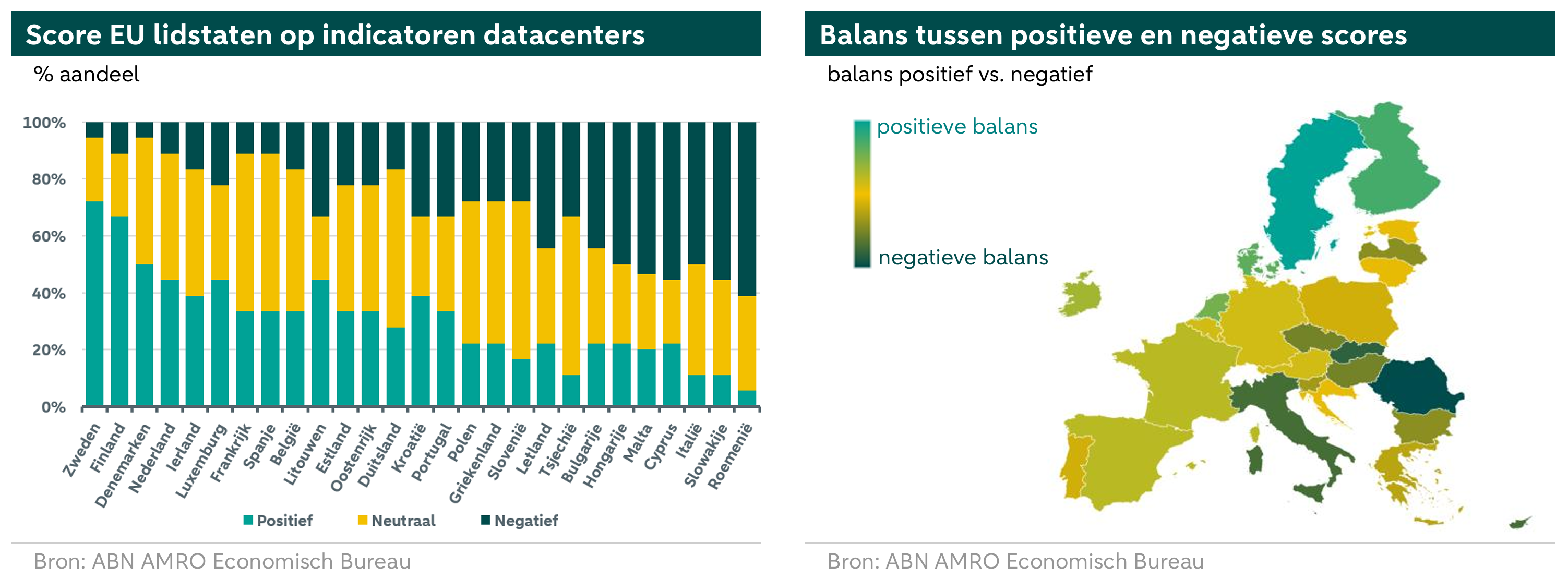
This shows that countries in north-western Europe are well placed to develop new data center. The top seven countries are all from this region. The frontrunners are Sweden, Finland and Denmark. These countries score most highly across a wide range of criteria and have relatively few negative aspects. Among other things, they have sufficient low-carbon renewable energy and lower ambient temperatures, which reduce cooling costs. The Netherlands is in fourth place, and Ireland rounds off the top five.
The countries with a less favourable baseline are often those with high electricity prices, more complex bureaucratic licensing procedures, inadequate digital infrastructure and greater constraints on the electricity grid. However, it should also be noted that other selection criteria which cannot be quantified still carry significant weight in the decision-making process. More favourable national licensing policies, regulations and subsidies can be decisive factors in the choice.
A favourable score on location criteria indicates, in our analysis, that the country in question is attractive, but it is no guarantee that a country will also attract the newest capacity. It also depends on factors such as the combination of the scale of demand, existing digital clusters, the level of water stress and proximity to major markets. In this case, the FLAP-D markets are well positioned. In case of the Netherlands, the Dutch government’s basic stance is positive regarding the increase in the number of data center, if these can be integrated sustainably into the energy system and there is clarity regarding data responsibility and security.
The number of data centers in Ireland, Spain, Sweden, Italy and Finland is also set to rise more sharply, enabling these countries to gain greater market share in the coming years. In most cases, growth here will be partly driven by the relatively low constraints on the electricity grid and shorter lead times in licensing procedures. In the case of Italy, in particular, many improvements have now been made to regulations and licensing procedures. For some data center developers, this is a strong argument for choosing Italy as a location. Furthermore, data centers in Italy are increasingly viewed as projects of strategic national importance, thereby creating a more favourable business climate.
Conclusion
New data centers provide a country with digital sovereignty, drive high-tech innovation, provide economic growth, and advanced technological capabilities like AI. Especially due to the global AI-boom – which is a key driver of both investment and data center capacity expansion – the global data center sector is entering a new phase of growth. However, the growth of the number of data centers also has a negative impact on countries. This relates mainly to their enormous energy consumption, the strain they place on the (often overloaded) electricity grid, their huge water consumption and the space they require. The public debate on this issue is intensifying, particularly due to serious concerns about higher energy bills for consumers, the availability of water and the strain on the environment. New data center development needs to address these issue proactively and provide solutions.
Three factors will be decisive for future data center locations. Firstly, access to affordable, reliable and sustainable electricity is increasingly determining the feasibility of projects. The strong growth of AI and data processing is putting greater pressure on electricity grids and making grid capacity, price stability and energy security more important than ever. Secondly, capital and material costs are growing in strategic importance. Data centers are metal- and capital-intensive, meaning that higher raw material prices, vulnerable supply chains and geopolitical tensions can slow down the development of new capacity or make it more expensive. Thirdly, institutional factors are playing a greater role: planning permission procedures, regulation, digital infrastructure and public support are increasingly determining where projects are implemented.
The strategic challenge for the EU is not primarily to build more data centers, but to create a favourable environment in which digital growth goes hand in hand with energy security, public acceptance and competitiveness. Countries that invest in grid reinforcement, renewable energy, efficient permitting processes and digital infrastructure increase their chances of attracting a larger share of future capacity. For the established data center clusters (FLAP-D markets), this means that their current strong position is no guarantee of further growth: countries in Scandinavia and countries such as Spain, Portugal and Italy are also attracting more attention. On balance, the expected growth within the EU will offer a unique opportunity to further strengthen the digital economy and the data sovereignty of the EU.
Below is Appendix 2, which is the ‘heatmap’ for the selection of datacenter location in the EU-27. The indicators are explained in Appendix 1 (see download).