Saying farewell to gas
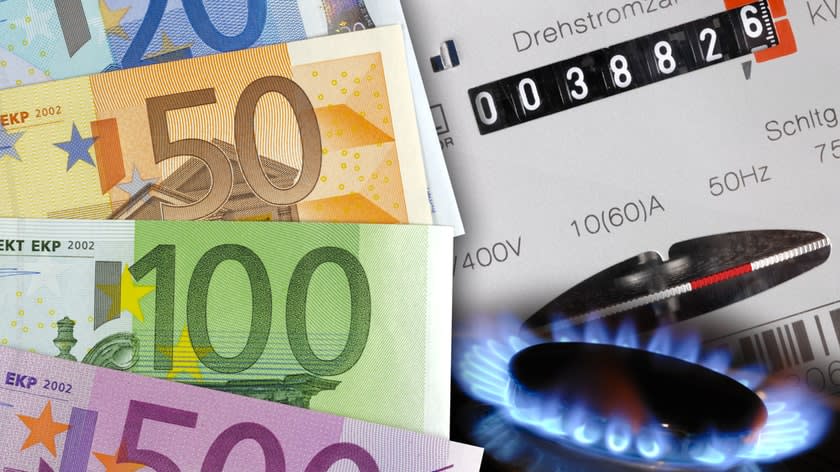
The awareness that has grown due to the high energy prices and the dependence on Russian gas can lead to an acceleration of the energy transition, according to Hans van Cleef.

ABN AMRO Group Economics
Author has left Group Economics, see text
Author: Hans van Cleef
The Russian invasion of Ukraine has already caused much misery. My thoughts go out to the many victims of this conflict. A conflict that has far-reaching consequences and that will ultimately have no winners. The consequences will also last much longer than the actual conflict. After all, the sanctions against Russia will remain in place for much longer, the resistance to do business with the Russians will not recover overnight and some of the shifts that have now been accelerated will not be reversed. In any case, this crisis has led to the emergence of three interlinked movements: increased awareness of costs and consumption, a desire to lower consumption, and an acceleration of the energy transition.
Raising awareness accelerates
On Sunday 27 March, the ‘Dag-tegen-gas' ('Day against Gas’) campaign was held. The campaign was set up to use less gas for a day, to make us extra aware of our gas consumption, and to emphasise the need for energy savings. This awareness-raising action was motivated by a desire to accelerate the reduction of the Dutch dependence on gas from Russia and to be less geopolitically dependent, but it naturally has as its ultimate goal of the complete elimination of the use of fossil fuels. The initiative bore similarities to prior awareness-raising moves such as Earth Day, “Warm-Sweater-Day” and the government's 'turn the switch off too' campaign announced last week.
As is often the case with these initiatives, it is mainly about raising awareness. Sometimes, one initiative is more successful than the other and sometimes this approach is more constructive than others. But the underlying idea, creating awareness and stimulating/encouraging less consumption of fossil fuels or reducing CO2 emissions, is always worthwhile.
Consumption slows down
As a result of high energy prices, we are seeing a decline in consumption. It is often mentioned in the news: offices and swimming pools that turn down the heaters, horticulturists who leave their greenhouses empty because it is cheaper than producing, and motorists who have started to cycle more often due to the high petrol prices. The increase in energy costs has more causes than just the Russian invasion, of course, but the extra price increases of recent months are certainly directly linked to it.
For instance, gas prices have risen as a result of possible shortages. First there was the fear of shortages for last winter, and now there are concerns about whether stocks will be sufficient for the coming winter. As a result of these high gas prices, the price for coal have also risen, given that coal-fired power plants are now also running harder to generate electricity. The EUETS/carbon price fell as a result of profit-taking by hedge funds. Still, the price for EUETS allowances now hovers around EUR 80/tonne. And in line with high gas, coal and CO2 prices, electricity prices have also risen sharply. As a result of high energy prices, awareness of energy costs and consumption has come sharply to the fore, and has resulted in visibly lower demand for energy.
Higher awareness leads to action
Whether awareness is created because of high costs, or because of campaigns to reduce CO2 emissions, is not important for the end result. Awareness leads to thinking and then to action. In its 10-step plans, the International Energy Agency (IEA) has made suggestions to reduce the demand for oil and gas. From the demand side, to reduce oil consumption the Agency suggests driving at lower speeds, car-free Sundays in the cities, working at home and car-sharing. To reduce the demand for Russian gas, the IEA suggests the installation of heat pumps, energy efficiency improvements in the built environment and industry, and turning the thermostat a degree lower. These measures were also included in the plans of the European Commission and the Dutch government.
The energy transition is accelerating
Ever since Russia invaded Ukraine, the call for a rapid reduction of the European, and Dutch, dependence on Russian gas imports has been growing stronger. That is why actions on the supply side are also being considered. To replace Russian natural gas immediately, the European Commission and the Dutch government have decided to set an obligation to fill gas stocks, to increase imports of Liquified Natural Gas (LNG) and to speed up the issuing of licences for local gas production from small fields. But these measures are for the short term. The government has also indicated that it wants to accelerate the energy transition. The coalition agreement has already reserved a considerable amount of money for this. Last week, the Cabinet also designated three new areas for offshore wind, and confirmed two previously designated areas. This will increase the total amount of offshore wind from an expected 11.5 GW to almost 20 GW in 2030.
Awareness also triggers realism
An energy transition cannot be realised from one day to the next. That is nothing new. It is also a fact that in recent years we have paid too little attention to safeguarding our security of supply and affordability. The positive aspect of the renewed awareness of our energy mix and the consequences that disruptions can have is that we will not only continue to accelerate the energy transition, but will also keep a closer eye on the supply of the energy we need. The phasing out of coal-fired power plants in the mix is well under way, and no one will deny that one day we may say farewell to natural gas. But the fact is that we will need it for some time to come.
This means that we must remain critical about where and from whom we purchase this raw material. This is a lesson that we can extend to the rest of the energy transition. After all, not all the countries from which we will be importing our energy or raw materials in the future are always equally friendly. And yes, the dependence on imports will remain. If not in the form of raw materials for the construction of new energy sources, then certainly in the form of energy carriers. Let us remain aware of that too.