Supply shortage keeps oil and product prices firm

Oil prices have rebounded after tensions escalated and flows through the Strait have declined. The price impact has been limited by alternative export routes, dark transits, ship-to-ship transfers and high US oil production but crucially also lower demand. Oil demand declined by 6.8 million barrels per day between end-2025 and June 2026, with China and Asia accounting for most of the fall. A near-term deal to reopen the Strait of Hormuz could temporarily lower oil prices, but the market is still expected to remain tight. Later in the year, recovering Asian demand, higher refinery activity and the need to rebuild low inventories are expected to support higher oil prices before a more sustainable decline next year. Because of a near-term deal some refinery capacity will likely come back online. But constrained refinery capacity, and higher demand for products will keep prices elevated.

Oil price developments
In June, the US and Iran signed a memorandum of understanding, agreed to a ceasefire and temporarily reopened the Strait of Hormuz. Oil prices fell sharply in response. At one stage, prices appeared to reflect the oversupply expected in 2027 rather than the tight market conditions anticipated for the rest of 2026. Since the conflict escalated again in July, traffic through the Strait has declined, while tankers in the Red Sea have also come under attack. Iran and Oman have discussed reopening the Strait, but US-Iran negotiations appear to have stalled. These developments have pushed oil prices higher, although several offsetting factors have limited the increase.
Offsetting factors
Several factors have softened the impact of lower supply on oil prices. Saudi Arabia, the UAE, Iraq and Syria have increased pipeline flows, reducing the decline in exports. Oil has also continued to leave the Persian Gulf through dark transits and ship-to-ship transfers. In a dark transit, a tanker crosses the Strait with its automatic identification system switched off. In a ship-to-ship transfer, crude oil is loaded onto a smaller tanker inside the Gulf, carried through the Strait without transmitting its location and then transferred to a larger vessel outside the Strait. Around 70% of the 18–22 million barrels per day exported before the conflict is still reaching markets through these alternative methods. The US has also maintained oil production close to maximum capacity and exported a large share of its output, despite falling domestic inventories.
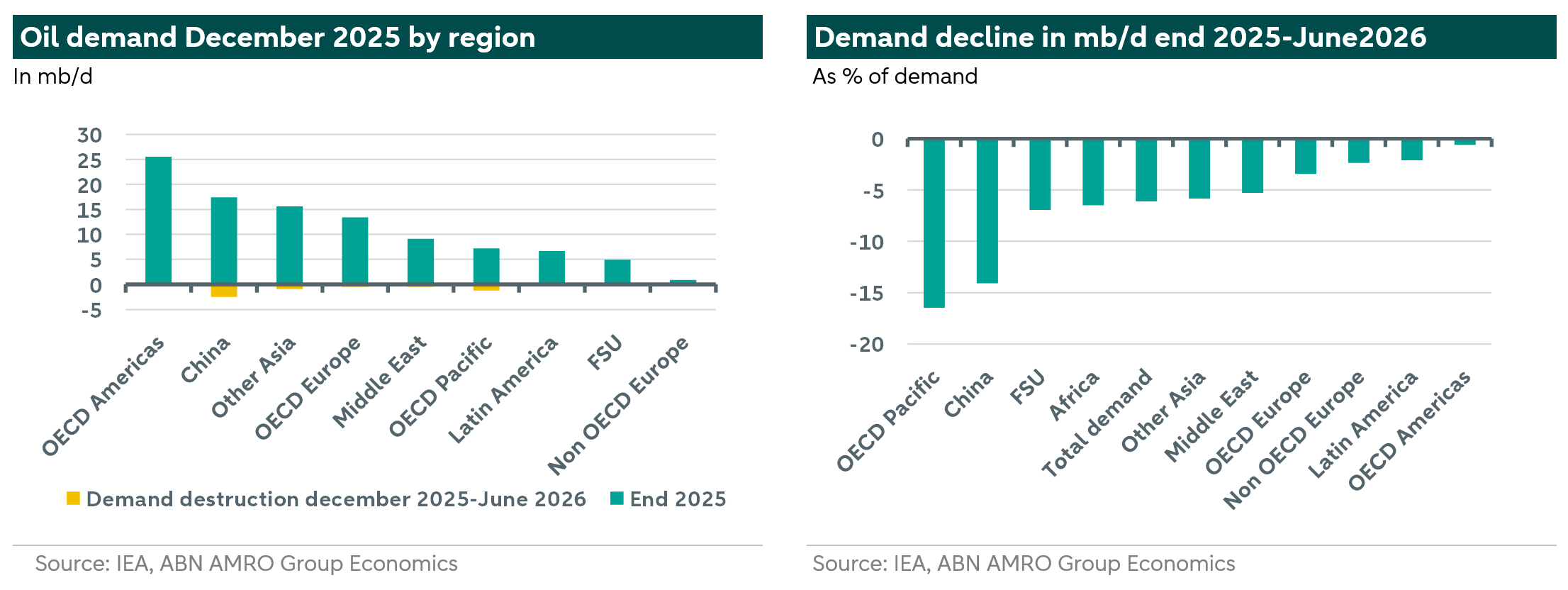
On the demand side, oil demand fell by 6.8 million barrels per day between the end of 2025 and the end of June 2026. The chart below on the left shows oil demand by region at the end of 2025. The chart below on the right shows the decline in demand by region between the end of 2025 and June 2026. China, the rest of Asia and OECD Pacific countries, including South Korea and Japan, accounted for almost 70% of the global demand decline. China alone accounted for 36%.
Oil price outlook
Near-term market response
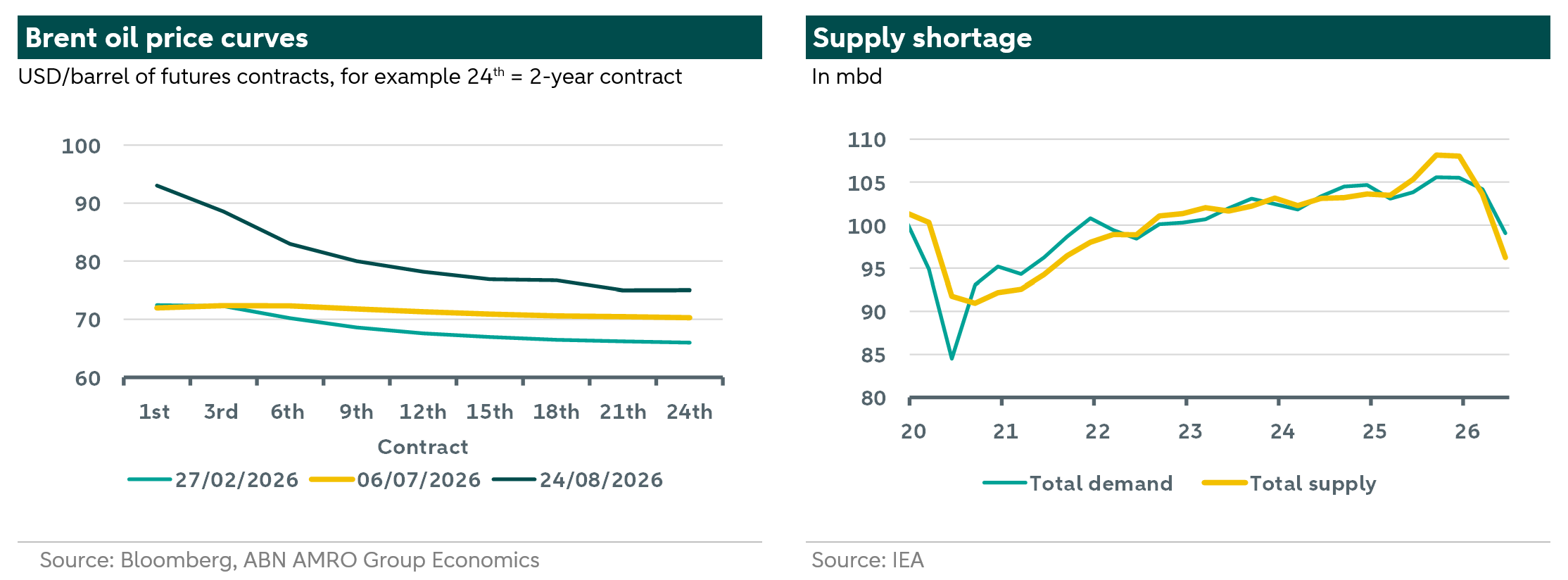
Our base case is that an agreement will be reached to reopen the Strait of Hormuz by the end of the third quarter. Immediately after such a deal, we would expect oil prices to fall to USD 70-75 per barrel. As seen before, the market can quickly price in a future supply glut while underestimating the current shortage. The chart on the left shows what the oil price curve is currently pricing in: prices are expected to remain elevated in the near term and decline further out. After the previous agreement, the curve flattened as near-term prices fell and even moved below longer-term prices, signalling expectations of an oversupplied market. However, this did not reflect the immediate reality. The chart on the right shows that the market shifted from oversupply at the end of last year to a supply shortage by the end of June.
Supply shortage
Once initial optimism fades and the market recognises that supply is likely to remain tight until the end of the year, we expect prices to rise again. There are several reasons for this. First, even if oil starts flowing more freely again, it will take time for production to return to pre-conflict levels. Second, we expect demand to recover, supported by higher Chinese demand, stronger refinery demand and the need to rebuild inventories.
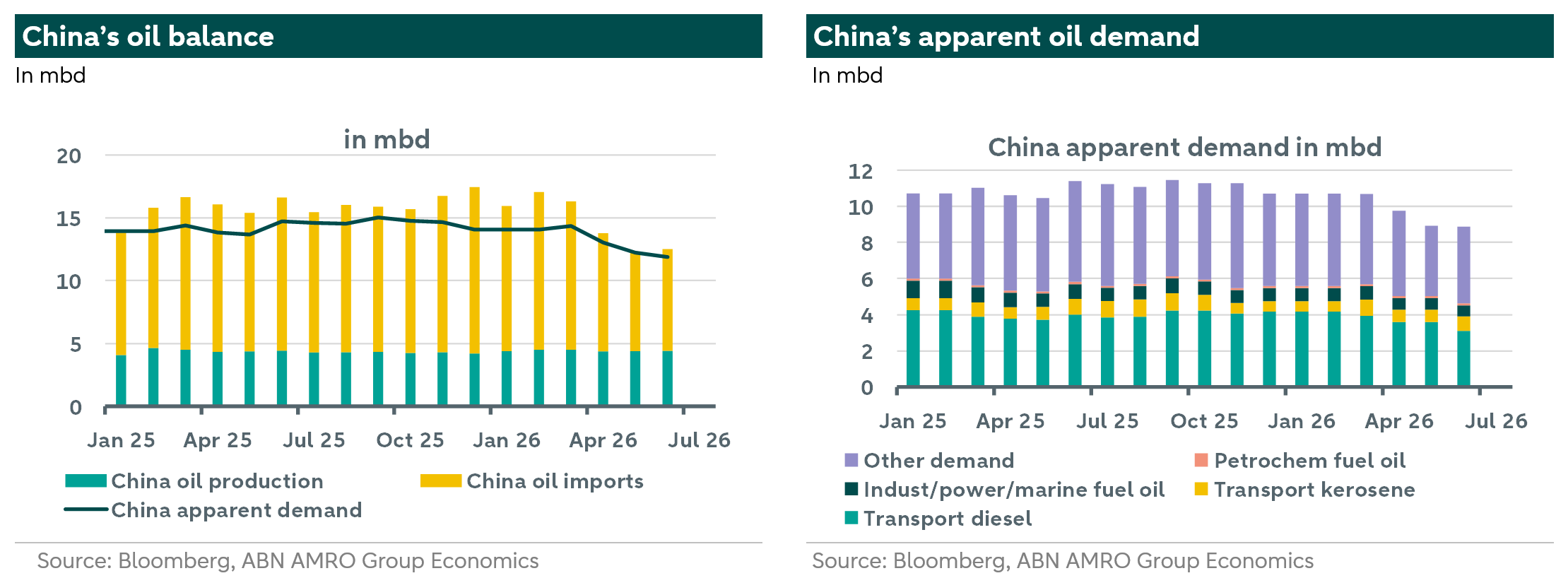
We first turn to China. Chinese oil imports have fallen sharply. Before the conflict, China had been importing more oil than it needed and adding the surplus to its reserves. When the Strait of Hormuz closed, China was still able to secure a substantial amount of oil from the Middle East, unlike Japan and some other Asian countries. China could also draw on its earlier supply buffer, reduce oil refinery output and exports of refined products and encourage domestic demand to shift away from liquid fuels towards coal and electricity, including electric vehicles. The chart on the left shows China’s oil balance, while the chart on the right shows the sectors where oil demand declined. Demand for diesel and gasoline in transport fell, but the largest decline was in “other demand”. It is unclear exactly what this category includes, but it is likely dominated by refined oil products that are normally exported, mainly to the rest of Asia. We mainly expect a recovery in this “other demand” category. Lower demand for diesel and gasoline in China is likely to continue because of the long-term electrification trend. The latest data show some recovery in Chinese oil imports.
US oil refineries are operating close to maximum capacity, and refinery margins are high. This points to a shortage of global refinery capacity. Ukrainian attacks have damaged Russian refineries, product exports of Middle Eastern refineries have been halted because the closure of the Strait of Hormuz, while some Asian refineries have been offline because of limited crude oil availability. We expect more refinery capacity to come back online in the Middle East and in Asia, which should increase demand for crude oil.
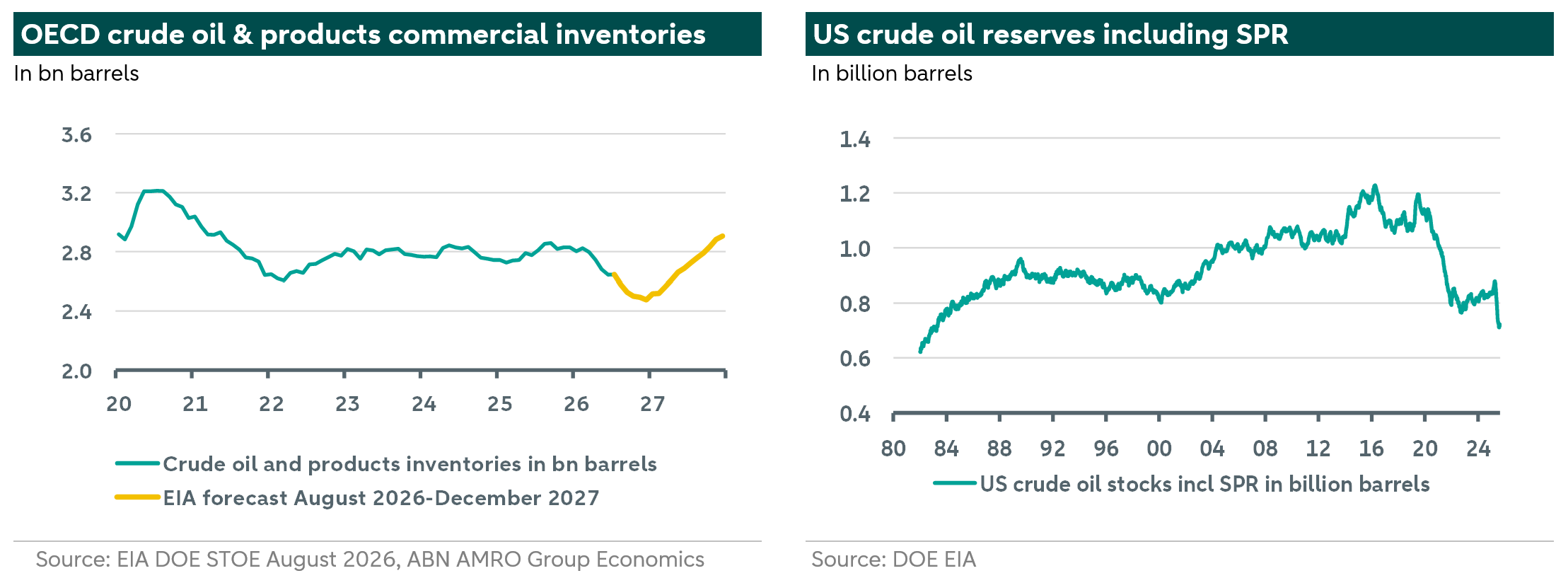
Due to the supply shortage, global oil inventories have fallen substantially. The EIA expects OECD commercial oil inventories to decline further towards the end of the year before rising again next year, as shown in the chart below on the left. In the US, total crude oil reserves, including the Strategic Petroleum Reserve (SPR), are at multi-decade lows (graph below on the right), mainly due to the drawdown in the SPR.
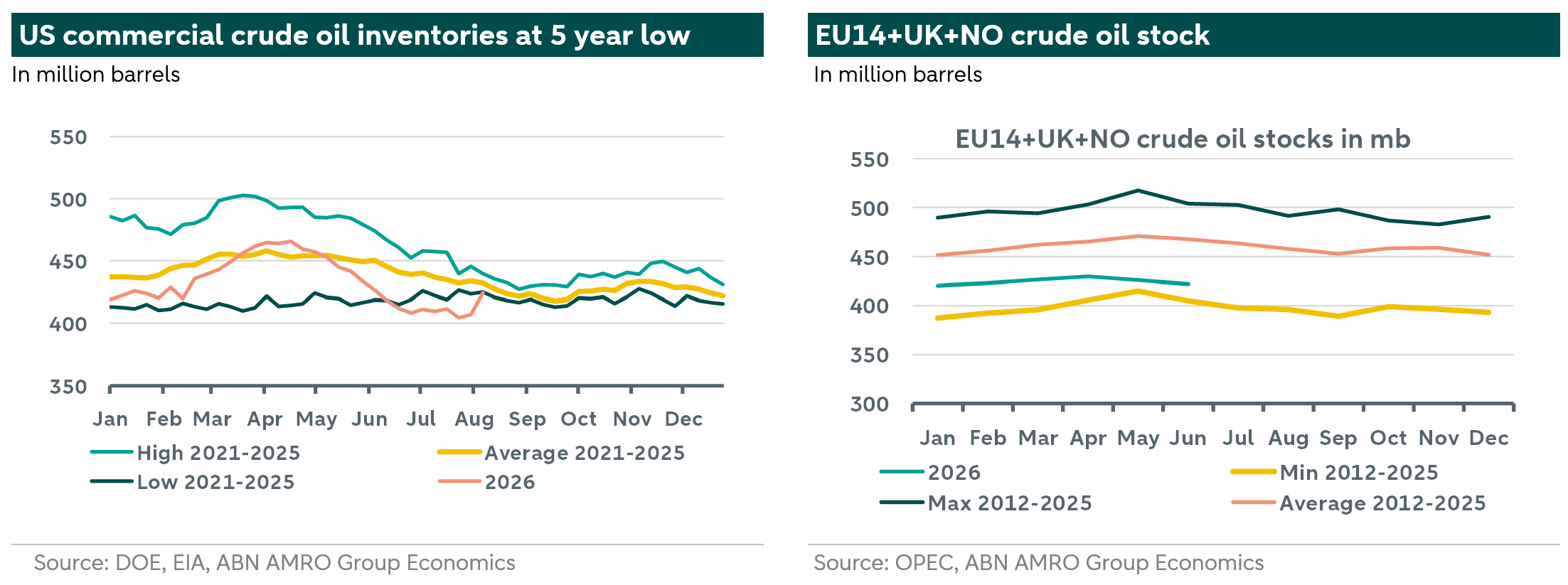
US commercial crude oil inventories are low, although not at a multi-decade low (see graph below on the left). Crude oil inventories in Europe are also low and are close to their lowest level since 2012 for this time of year (graph below on the right).
These inventories will need to be replenished, which should increase crude oil demand. Given the greater uncertainty around oil flows, the need for higher inventories is likely to be stronger than usual.
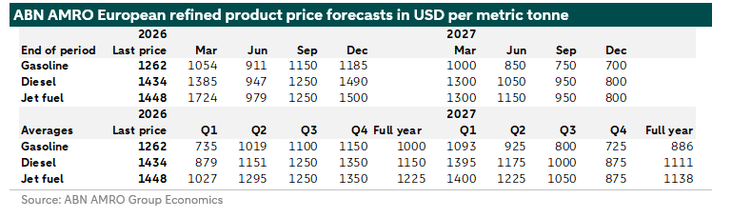
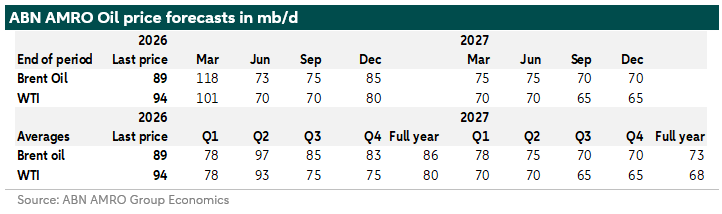
In conclusion, we expect a deal to reopen the Strait of Hormuz, which would likely lead to a temporary fall in oil prices as market sentiment improves. However, once this optimism fades, stronger demand from Asia, higher refinery demand and inventory restocking are likely to keep the market undersupplied and push prices higher towards the end of the year. We expect a more sustainable decline in oil prices next year, as supply recovers more strongly. The table below shows our oil price forecasts.
Developments in refined product prices
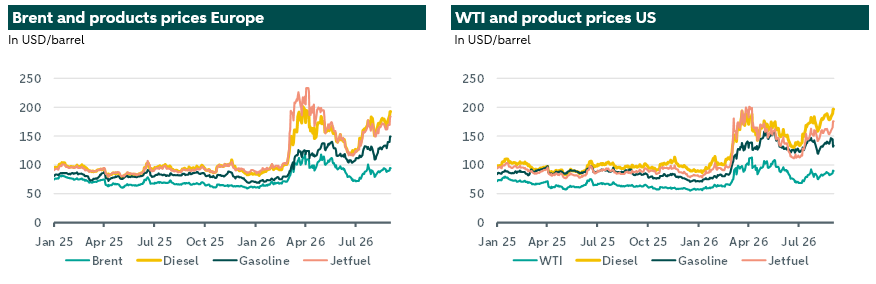
We indicated that the market in crude oil is tight, so supply is lower than demand and inventories are being drawn. What is true for the oil market is even more so for the oil products market. The shortage in oil products is more substantial than in oil. Therefore, prices have risen substantially as the graphs below show. The graph below on the left shows developments in Brent oil prices and product prices in Northwest Europe. In April of this year jet fuel prices surged to the highest level since inception of the data in 2008 due to shortage. Subsequently, prices came down due to higher refinery output. However, since the end of June prices for diesel, jet fuel and gasoline have risen again. Prices in the US have also risen. Higher prices are the result of lower input of crude oil, not enough refinery capacity and high demand for oil products.
Refined products price outlook
We expect refined product prices to remain elevated, even under our base case that a deal is reached by end of Q3. This is because the refined products’ markets are facing several pressures at the same time: tight crude oil supply, reduced refinery capacity, higher demand in Q4 and low inventories. As a result, refinery margins have risen significantly. We also expect the crude oil market to remain undersupplied this year, despite a possible deal, which should continue to put upward pressure on refined product prices. In addition, global refinery capacity has fallen considerably because of several disruptions. Ukrainian attacks have damaged Russian refineries, drone strikes have reduced refinery capacity in the Middle East, and the closure of the Strait of Hormuz has constrained both crude and products supply and logistics. In Asia, some refinery capacity has also been shut because refiners have had limited access to crude oil due to disruptions of the Strait of Hormuz. This is reflected in lower refinery throughput. According to OPEC’s monthly oil report, total refinery throughput fell by 6.5 million barrels per day, from 82.45 million barrels per day at the end of 2025 to just under 76 million barrels per day by the end of the second quarter. Slightly higher refinery throughput in the Americas and Europe has partly offset this decline. The chart below on the left shows global refinery throughput at the end of 2025, while the chart on the right shows the decline in refinery throughput across regions.
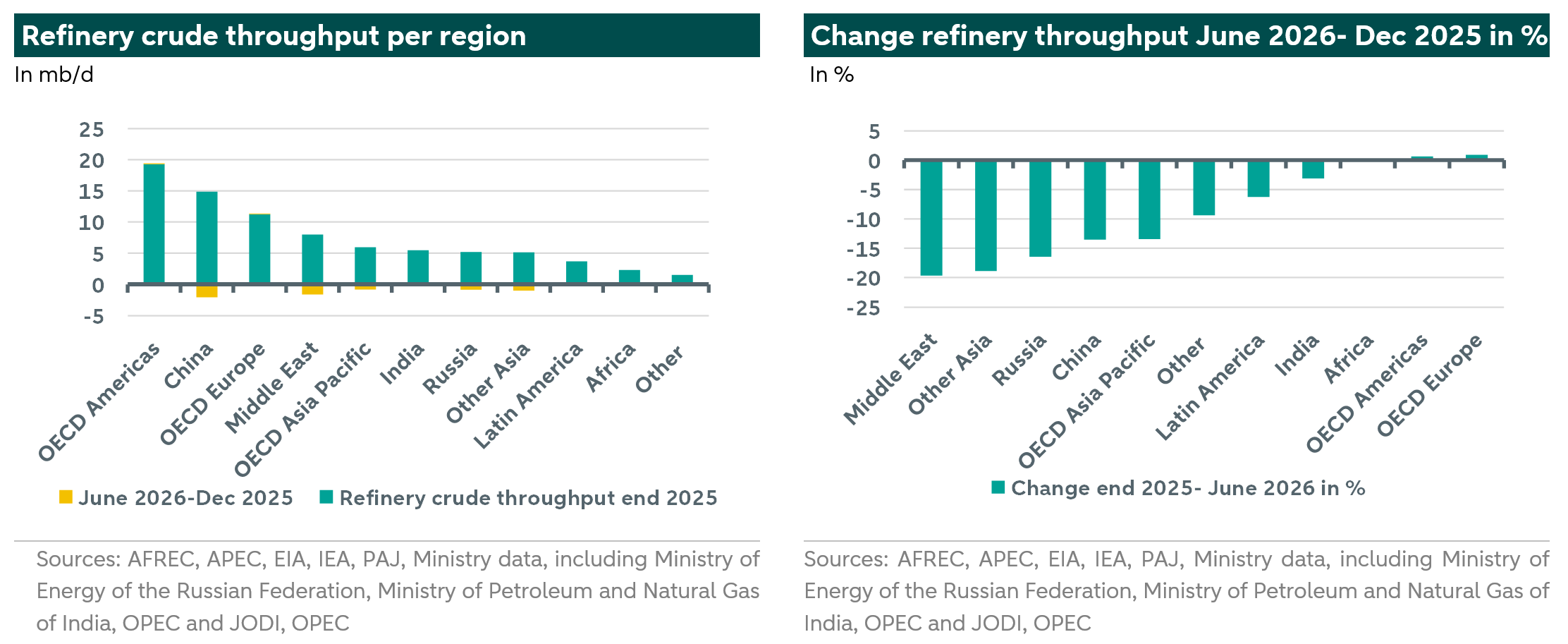
Lower refinery throughput has pushed refinery margins and refined product prices higher. US refineries are already operating close to maximum capacity, leaving little room to increase output further. Even if a deal is reached, it will take time to repair damaged refineries in the Middle East. If the Strait of Hormuz reopens, crude supply and logistics should improve, but repairs and maintenance at damaged facilities could still last until the end of the year. Russian refinery activity is also at a 24-year low, and a recovery is likely to take months. In Asia, refinery capacity has been idled mainly because of crude shortages rather than physical damage. A reopening of the Strait of Hormuz could therefore allow more crude to flow to Chinese and Indian refineries again. Overall, a deal would support some recovery in refinery capacity, but refinery throughput is unlikely to return to pre-conflict levels before the end of 2026.
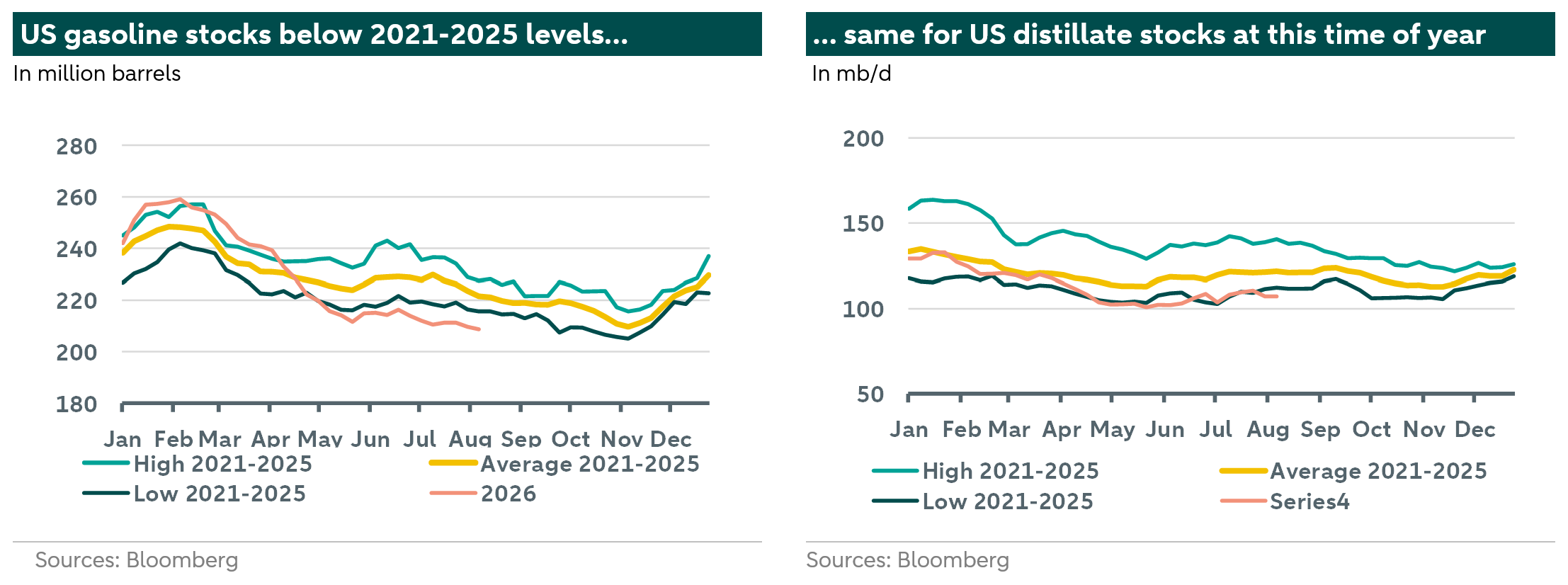
Demand is expected to remain solid especially towards the end of the year. Indeed, the focus shifts to diesel and heating oil - which are closely related products - because of heating season demand. In addition, demand for jet-end is usually high during summer holiday season and during end of year holidays. Because crude oil supply remains tight and refinery capacity is limited, and demand will rise towards Q4, we expect inventories of refined products to fall further from already low levels.
The charts above show that US gasoline and distillate stocks (diesel and heating oil) are below the 2021-2025 range, even though US refineries are processing crude oil close to maximum capacity. This mainly reflects strong demand and higher US exports of refined products.
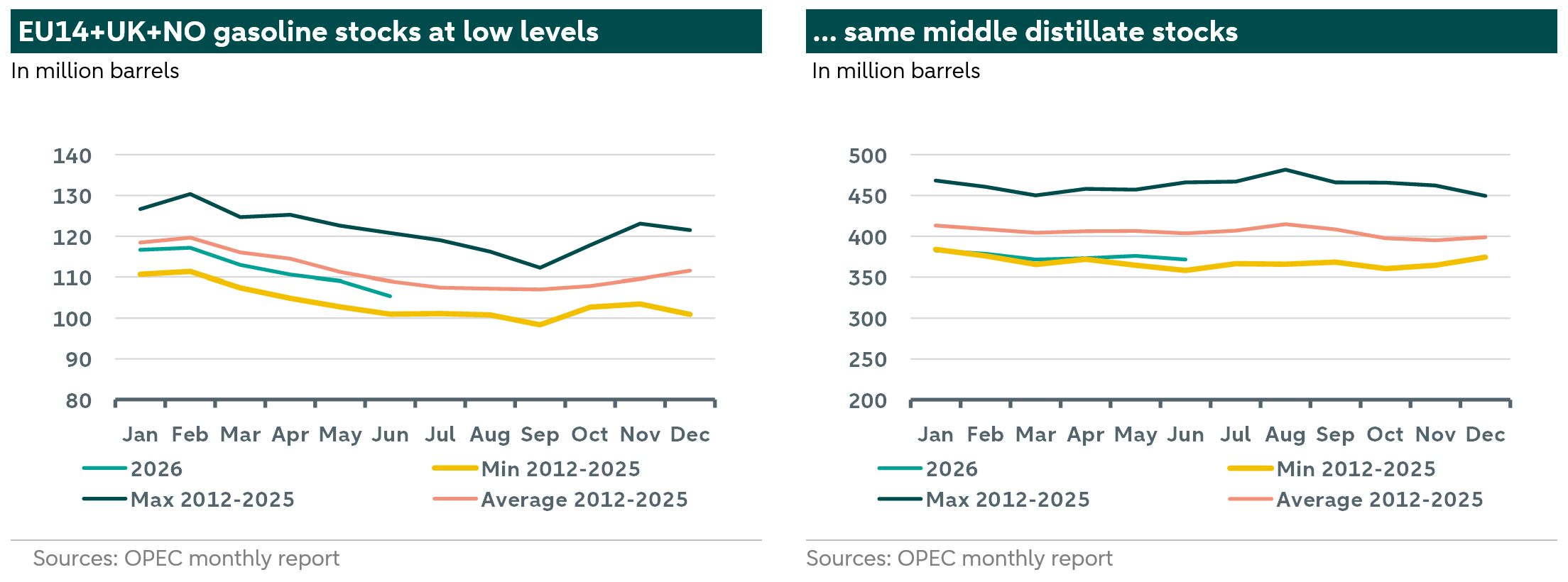
As the graphs below show gasoline and middle distillate stocks are also low in Europe. Although they are not below the lowest levels seen between 2012 and 2025, they remain low by historical standards and will need to be replenished. The summer holiday season may be over, but the heating season is approaching fast.
In conclusion, we expect a deal to reopen the Strait of Hormuz, which would likely to some refinery capacity coming back online as crude oil start flowing again through the Strait of Hormuz in case of a deal. But constrained refinery capacity, and higher demand for products will keep prices elevated.