The Netherlands - Resilient in an uncertain world

In the first half of this year, the Dutch economy grew stronger than previously expected; growth will slow in the second half. We expect growth of 1.3% in 2026 and 1.1% in 2027. The minority government has reached an agreement, and will introduce purchasing power support. Given its minority status, the budget will likely still be amended.


In the first half of the year, the Dutch economy grew stronger than previously expected; despite higher inflation, geopolitical tensions, heatwaves, low water levels in the Rhine and fluctuating energy prices. Growth was driven by domestic spending: households consumed more, the government continued to spend, and investment increased. In addition, the economy temporarily benefited from, for example, stockpiling behaviour: companies built up extra inventories due to concerns about disruptions to international supply chains. The underlying fundamentals of the economy are also solid. The labour market remains tight, households and companies have financial buffers, and the government supports growth. Looking ahead, we expect growth to continue, but at a slower pace. Temporary factors will fade, while higher energy prices will gradually have a stronger impact on the economy and can put pressure on real At the end of August, the Jetten I minority government reached an agreement on its first full budget. The coming weeks, and particularly the General Political Debates following Prinsjesdag (Budget Day), will show how much this agreement is worth. Its minority status in both the House of Representatives and the Senate requires support from opposition parties, which unanimously indicated that they do not yet support the budget.
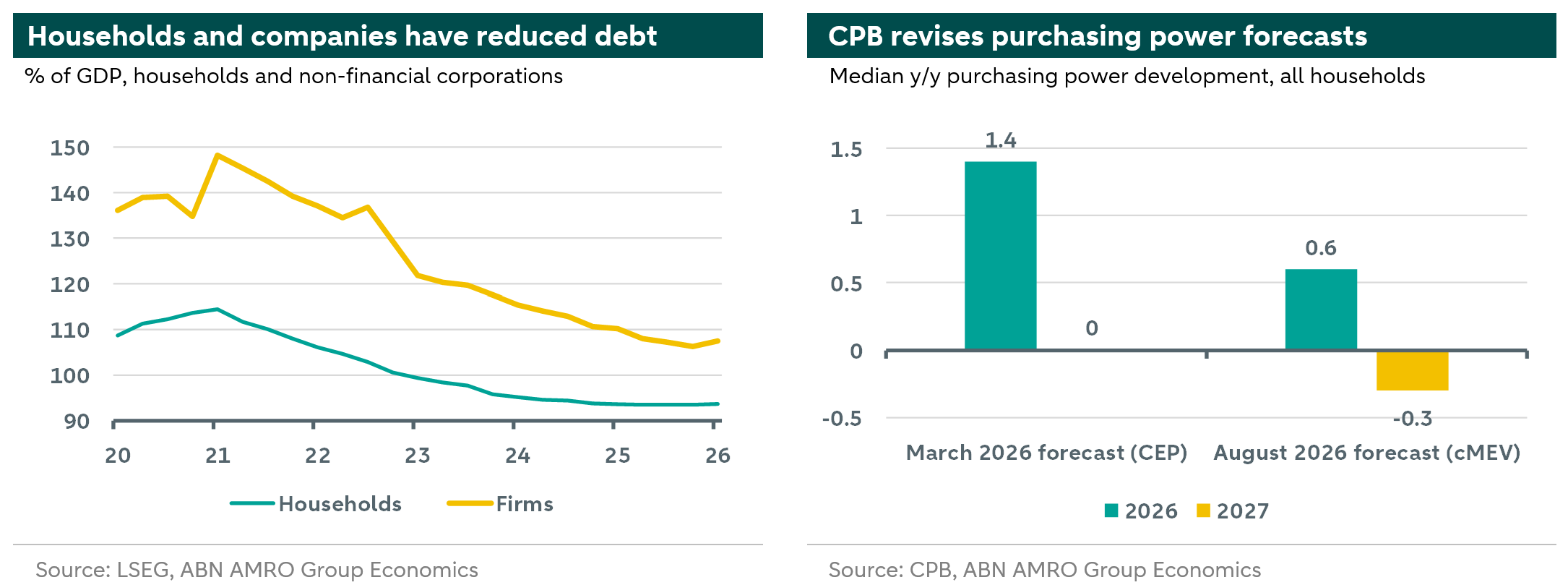
What has already been disclosed? The changing purchasing power situation is forcing the government to introduce purchasing power support (EUR 1.5 billion). When the coalition agreement was concluded at the beginning of 2026, the coalition expected strong growth in purchasing power this year thanks to wage increases. That outlook created room to increase taxes on labour to help finance defence expenditure. The new inflation shock resulting from Iran removes this foundation. Instead of reducing purchasing power support, the government is now increasing it. To secure political backing, cuts to social security, such as raising the state pension age, shortening the duration of unemployment benefits, and reducing the maximum daily wage, are being softened or postponed; . Uncertainty remains in several areas, such as the tax on savings and investments (under the Box 3 system).
The ambitious coalition agreement has been watered down in light of political realities. Adjustments were needed to resolve differences within the minority coalition and to make room for parliamentary demands. It appears that long-term challenges facing the Dutch economy, such as addressing bottlenecks (the shortage of housing and expansion of the electricity grid) and improving labour productivity, currently receive less priority given the limited attention paid to them in the budget, although the additional EUR 4 billion in spending on innovation funds is a promising bright spot. The coming weeks will show whether the balance between short-term and long-term interests, and between consumption and investment, will be restored.