US: In the eye of the inflationary storm

The supply side staged a strong recovery in January, but demand recovered even more. Goods consumption is well above trend once again, defying the plunge in consumer sentiment. The risk is that an inflationary mindset is now taking hold, requiring much steeper interest rate rises.

January activity data in the US was a mixed bag. On the positive side, supply is recovering strongly, with labour force participation and manufacturing registering very strong growth, suggesting that the price signal from higher (wage and goods) inflation is starting to have some easing effect on bottlenecks. On the other hand, the rebound in demand was even greater, with retail sales jumping sharply following their brief flirt with more normal levels of demand in December. Indeed, inflation remained stubbornly high in January, leading us to once again upgrade our forecasts, with 2022 inflation now expected to average 5%, up from 4.6% previously. We were somewhat less alarmed by the January print than market participants appeared to be, given that the bulk of the upside surprise was driven by goods and energy rather than services inflation. Still, the US economy remains in the eye of the inflationary storm, and given the continued acceleration in wage growth – and the possibility of a wage-price spiral taking off – the risk is still that things could get even worse before they get better.
The rebound in retail sales – which rose 3.8% m/m in January, following a downwardly revised -2.5% in December – was broad-based, and stood in stark contrast to the dramatic fall in Michigan consumer sentiment, to a new post-pandemic low of 61.7. With retail sales reported on a nominal basis (volume data comes with a lag), elevated inflation is flattering the figures somewhat. Even factoring this in, we estimate real sales are now around 3.8pp above the pre-pandemic trend, having been just 1pp above trend in December – dashing hopes that demand might just cool by itself. But if we really are back to square one, with goods consumption well above trend again, how do we square this with plunging consumer sentiment?
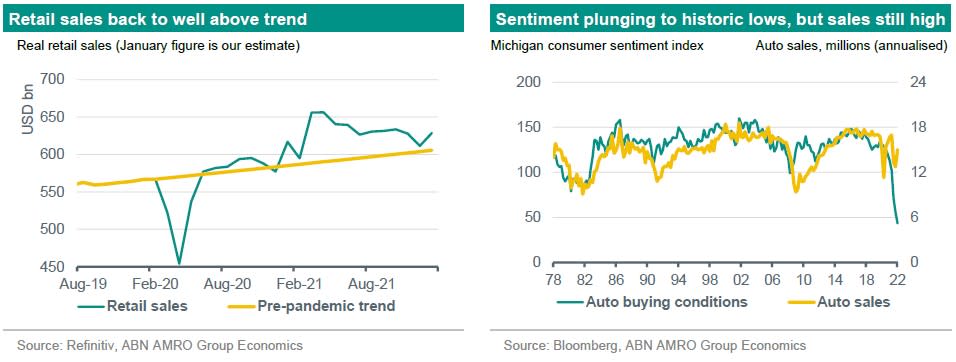
Could an inflationary mindset be taking hold?
One explanation could be that the January rebound is temporary, driven by the Omicron-induced weakness in services, i.e. that there is a substitution element at play. If this is the case, sales are likely to quickly normalise now that the services recovery is back on track. Another – more worrying – explanation is that although consumers believe current buying conditions are bad, they may anticipate conditions getting even worse in future (perhaps on the expectation of higher prices), and so are front-loading their consumption. The latter would be an ominous sign for inflation coming back down of its own accord, as producers could feel emboldened to pass on higher pipeline costs, given continued strong demand even in the face of high inflation. Such a self-fulfilling inflationary dynamic would require a much more forceful policy response from the Fed to contain, implying a much steeper rise in interest rates than we currently have in our base case. While it remains to be seen which of these two scenarios will play out, given the upside risks to inflation also from the labour market, the risk continues to be that the Fed has to raise rates by more than our expectation of four rate hikes in 2022.