Our research
Access all our publications and columns. Use the filters to easily find what content you are looking for.
Filters
All publications
22 results
Transaction Trends - The pension transition - More pension, more spending?
- Macro economy
-
This year, approximately 1.5 million Dutch retirees are noticing the effects of the pension transition in their wallets. Based on anonymized transaction data, we analyze the spending impulse resulting from the “conversion bonus” (invaarbonus), the additional pension indexation due to the transition to the new pension system. Retirees spend on average only 22% of an extra euro of pension income. This percentage declines at higher ages. Retirees with lower incomes or limited financial buffers tend to spend a larger share of the additional income. Despite the relatively small percentage effects, the size of the conversion bonus, combined with a large number of elderly people, still provides a modest boost to the Dutch economy.

Transaction Trends - From Hormuz to the Pump - Fuel Tourism in the Belgian Border Region
- Macro economy
-
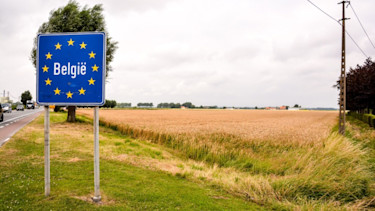
Due to the war in Iran, fuel prices have shot up, while gasoline prices in Belgium are up to 55 cents per liter lower. As a result, about 15% of gasoline consumption in the border region has shifted to Belgium, a change largely caused by a relatively small share of households. This effect is consistent for households living up to 30 kilometers from the border, meaning that not only gas stations near the border but also those further away may experience revenue losses. Nevertheless, the overall nationwide loss of excise tax revenue for the government remains limited.
Transaction Trends - Black Friday eats into Sinterklaas purchases
- Macro economy
-
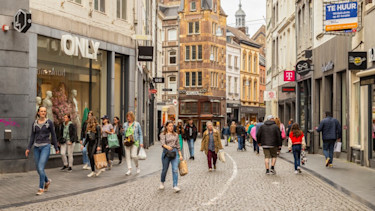
The Black Friday period is used by many Dutch people to make purchases, often with an eye on Sinterklaas and Christmas. During this period, consumers spend significantly more than in the past, when the days around Sinterklaas were still the main shopping days. To avoid peak pressure, more retailers are starting earlier in November with offering deals, primarily attracting customers through the internet.
Transaction Trends - Cost of living improved despite more expensive groceries
- Macro economy
-
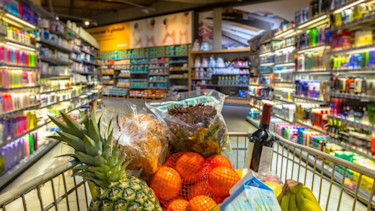
Analysis of 150,000 Dutch households earning a salary provides insight into the development of the cost of living pressures. We examine the extent to which a household’s net income is consumed by fixed expenses and groceries. Grocery prices have increased significantly; households are spending more on them compared to seven years ago. Nevertheless, cost of living is improving because incomes have risen more sharply than fixed expenses and grocery expenses. The percentage of households that spend a large portion of their income on fixed expenses and groceries has decreased.
Transaction Trends -Cost of living pressures for Dutch households
- Macro economy
-
Analysis of 340,000 Dutch households provides insight into the development of the cost of living for the first time. We examine the extent to which a household's net income is consumed by fixed expenses, making basic expenditures and coping with setbacks difficult.
Transaction Trends - Social housing tenants wholly spend lower housing costs
- Macro economy
-
We study the effects of lower housing costs on expenditures by examining the income-dependent rent reduction of 2023. The income-dependent rent reduction is partly offset by a lower housing allowance, and the remaining portion is fully consumed. The net rent reduction thus directly contributes to higher household consumption and is not used to build financial buffers. Our analysis also highlights significant challenges in implementing targeted income-dependent rent policies.

Transaction Trends - The cost of an energy crisis for households
- Macro economy
-
Although extreme gas price increases occurred two years ago, the energy crisis of 2021-2023 is still fresh in our minds. How have household energy costs evolved during and after the energy crisis? It is well-known that not everyone felt the impact of higher energy prices at the same time, but where do we stand now, two years later?
ESG Economist - More consistent climate tax policies are necessary for the transition
- Sustainability
-
On 1 July 2023, the Dutch Government raised the excise tax on fuels, reversing the cut in 2022. The former exacerbated the price difference between Dutch and German fuel by 14 cents per litre. This note examines whether Dutch households living near the German border responded differently to this policy change compared to households in the rest of the Netherlands. The findings reveal that households in the border region decreased their consumption of Dutch fuel more than households in the rest of the country by an additional 3.6 litres, per week. This suggests that people in the border region are more sensitive to relative fuel prices. When policies are not aligned, people (partly) shift their consumption towards the lower tax country. As we approach 2030, the first deadline for EU emissions’ reduction targets, aligning climate tax policies is important for effectively reducing emissions.
Workshop - Pioneering economics with financial transaction data
- Macro economy
-
The goal of the workshop is to share findings, discuss methodologies, and foster collaboration in this exciting field. Are you also doing economic research based on transaction data? Register then for the workshop. By clicking on the button below you will go to the workshops dedicated website.

Ripple effects - Exploring the impact of low Rhine water levels on the Dutch economy
- Macro economy
-
The Rhine, the busiest river in Europe, is of great economic importance. Due to drought, both in 2018 and 2022, there have been episodes where the water level in the Rhine has dropped to critical levels, severely limiting inland shipping. According to the Kiel Institute for the World Economy, in November 2018, low water levels led to a drop in industrial production by 1.5 percent, causing a decline of German GDP by 0.4 percent. 1)