Eurozone - Resilient growth, worrying inflation

Growth is likely to stay resilient despite the resurgent energy shock, but inflation has become a worry. The longer high energy prices persist, the bigger the risk of second round effects… and the bigger the risk the ECB might have to tighten beyond next week’s expected rate hike.


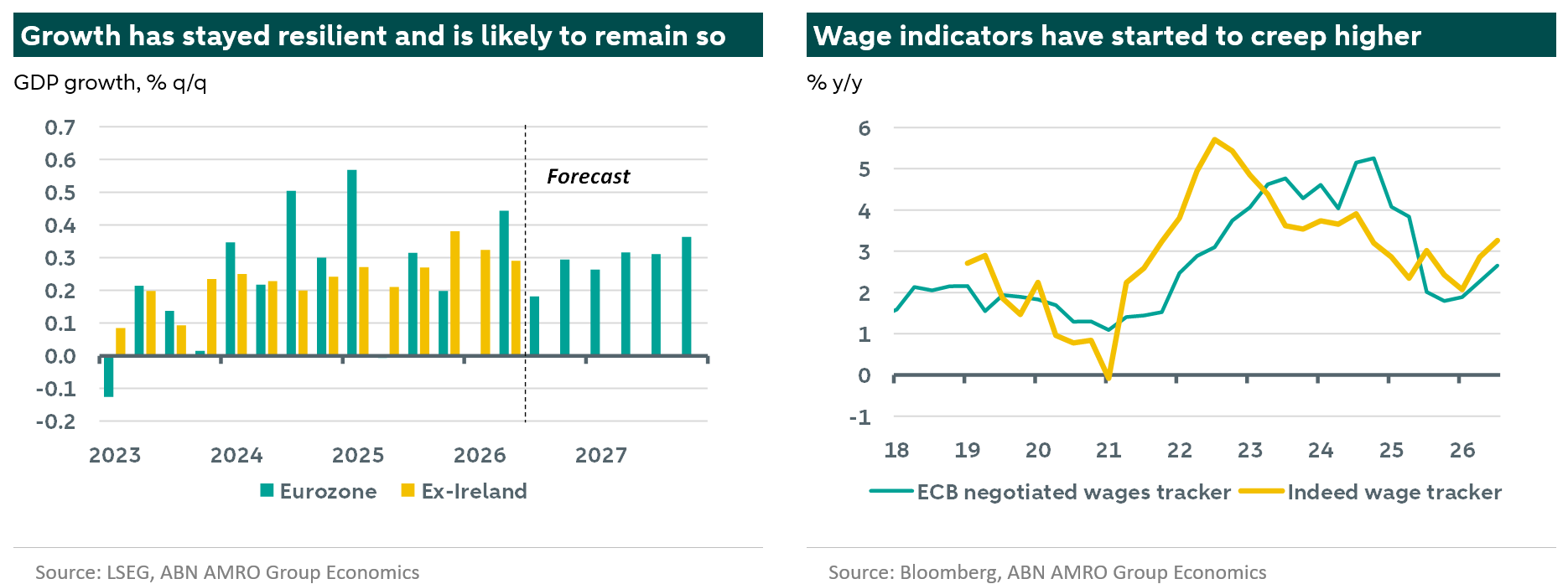
The summer delivered a mixed bag of news for the eurozone. The energy shock – which had started to recede following the US-Iran ceasefire – came back with a vengeance, and this is pushing inflation in the wrong direction again. On the other hand, growth came in stronger than expected, and in the case of Germany, was revised substantially higher (see Germany). While Ireland continues to distort GDP significantly, underlying growth remained solid at 0.3% q/q in the first half of 2026. We expect that resilience to broadly continue in the quarters ahead, despite the renewed energy shock. While the consumption recovery is likely to see renewed headwinds from the hit to real incomes, German fiscal spending is expected to continue to support a recovery in the eurozone’s biggest economy, and this should remain a key pillar supporting the region. All told, the strength in Q2 alongside Germany’s upward revisions have led us to revert back to our 0.8% growth expectation for 2026, while keeping our 2027 forecast at 1.2%.
Indeed, the resurgent energy shock is likely to leave a much bigger mark on inflation. Headline inflation has already rebounded from its June trough of 2.8% to reach a three year high of 3.3% in August. The rise was driven almost entirely by energy, although goods inflation picked up notably as well – something we had flagged in our Monthly just prior to the summer. Inflation has gone from a crude oil problem to a refined products and gas problem, and even assuming a near-term deal to reopen Hormuz fully, inflation is likely to continue rising over the coming months as existing price pressures get passed on to consumers. Inflation is now expected to peak above 3.5% over the coming months, and to average 3.0% in 2026 – 0.5pp higher than our June forecast. The rebound in inflation will sharpen the focus on second round effects, and particularly wage inflation. We saw the first warning signs of a pickup in wage growth with the Indeed monthly data for July, but the ECB’s forward-looking tracker for negotiated wages has also picked up in recent months (see chart below). We continue to think that the much looser labour market will prevent second round inflation effects from taking hold, in contrast to developments in 2022-23 (see Theme 4 in our July Global Monthly here), while the ECB’s more restrictive policy stance also acts as a hedge against more self-sustained inflation and keeping inflation expectations well anchored. Still, the longer elevated headline inflation persists, the bigger the risk that second round effects become a more worrying problem.
ECB path beyond September grows murkier
For now, the path for the ECB is clear, and a rate hike at next Thursday’s Governing Council meeting is fully priced by financial markets. Less clear now is what comes after. Our base case sees the ECB keeping rates on hold for the remainder of the year, and even cutting rates in Q2-Q3 next year. While a back-to-back October hike looks unlikely even in a more negative inflation scenario, December could well be in play if wholesale energy prices have not started to come back down by that point, and/or if second round effects show signs of broadening.