FX Weekly - Dollar struggles despite higher US yields
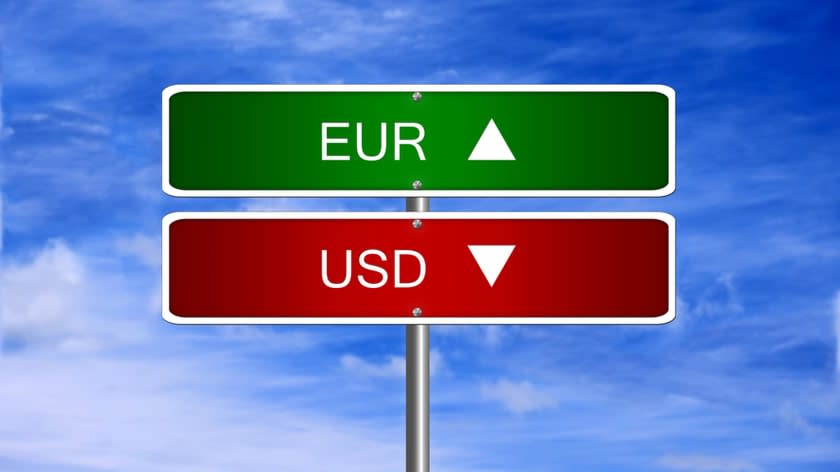
Energy prices are rising due to the US-Iran standoff, supporting oil- and gas-linked currencies such as the Norwegian krone, while the Canadian dollar is held back by tariff concerns. US-Japan yen intervention is still affecting markets, mainly through the US Treasury market rather than the yen itself. US yields have risen partly because investors demand a higher term premium. Higher US yields are not supporting the dollar, because they reflect risk and uncertainty rather than stronger growth. EUR/USD has moved above 1.16 and further dollar weakness is expected.

Multiple drivers at play
Relationships in financial markets can change quickly because several factors are at play. In this publication, we focus on energy prices and currencies, as well as interest-rate developments and the US dollar. Several dynamics are currently unfolding.
The standoff between the US and Iran continues, pushing oil and gas prices higher. Surprisingly, this has not weighed on the euro against the US dollar, while currencies of countries that export oil and gas such as the Norwegian krone have continued to perform well. The Canadian dollar has benefited from higher energy prices, but the prospect of 50% US tariffs has reduced its appeal.
Meanwhile, the effects of the coordinated US-Japan currency intervention in the yen at the end of July are still being felt. This is less visible in the yen itself, which has weakened since the intervention, and more evident in the US Treasury market. It increasingly appears that the US objective behind the yen intervention was to limit the impact of Japan selling US government bonds. This comes at a time when there is uncertainty about the Fed policy direction under Kevin Warsh. In addition, the term premium on 10-year US government bonds has risen, meaning investors are demanding extra compensation for holding longer-dated bonds because of greater uncertainty about inflation, interest rates, policy and future bond supply. US government bond yields have risen. Indeed, today, the yield on the 30-year US government bond stands 45bp above its level on 24 June. Moreover, the difference between 2-year and 10-year US government bond yields has widened more than the difference between 10-year and 30-year yields. This suggests that concerns about US sovereign risk are showing up most clearly in the 10-year part of the bond market.
Usually, higher bond yields and wider rate spreads support a currency when they reflect strong growth. However, when they are driven by policy uncertainty, very large supply, concerns about deficits, a higher term premium and concerns that major investors – such as Japan and Japanese pension funds –may sell US Treasuries, they are not supportive for the US dollar. In this case, higher yields reflect a higher risk premium rather than stronger US economic prospects. Indeed, the dollar has struggled, despite higher energy prices and higher yields. As a result, EUR/USD has risen above 1.16. We expect the US dollar to weaken further, reflecting policy uncertainty, a higher term premium and narrower rate spreads between the US and both the eurozone and Japan. The upcoming rate decisions by the ECB on 10 September, the Fed on 16 September and the Bank of Japan on 18 September will therefore be closely watched.
Riksbank expected to leave rates unchanged
Tomorrow, Sweden’s central bank, the Riksbank, is likely to keep its main policy rate unchanged at 1.75%. At its June meeting, the Riksbank noted that underlying inflation was low and that economic activity was somewhat weaker than normal. At the same time, supply disruptions had increased inflationary pressures and raised the risk that inflation could remain too high. Against this backdrop, the Executive Board raised its forecast for the policy rate slightly but judged that keeping the policy rate unchanged was appropriate for now.
Sweden’s limited reliance on oil means that it is less directly affected by the conflict in the Middle East. Most of Sweden’s energy comes from hydropower, nuclear power, wind, biofuels and waste, while oil products account for only around 20% of total energy supply (IEA 2024). However, Sweden is highly open to international trade, so a rise in global inflation could still feed through to domestic prices.
Looking ahead, we are slightly optimistic for the krona but we do not expect the Swedish krona to strengthen significantly, as there are both supportive and limiting factors. On the positive side, long-term fundamentals, such as the current account, remain strong, and the krona appears undervalued relative to its estimated fair value. We also think the Riksbank has finished cutting interest rates, while financial markets are pricing in one 25bp rate hike before the end of this year. This would probably come after our expected ECB rate hike in September. However, Sweden’s economy is highly dependent on global trade and growth. If the global economy slows, the krona usually weakens. In addition, like the Norwegian krone, the Swedish krona is less liquid than major currencies, which means it can fall quickly when investors become more risk averse.