Germany - Cautious recovery pressured by geopolitical uncertainty
A tentative recovery remains vulnerable as energy and geopolitical uncertainty weigh on the outlook. The sharp rise in factory orders at the end of 2025 has yet to translate into higher industrial production. Still, the allocation of special defence, infrastructure, and climate funds is gathering momentum.

The German economy showed early signs of improvement at the start of the year. Sentiment indicators of the IFO and ZEW rose in the first 2 months but retraced in March due to geopolitical turbulence. The composite PMI came in at 51.9 in March, remaining firmly above the 50 threshold, typically an indication of growth. The key question is whether this momentum can be sustained in light of the escalation of the war in the Middle East. Higher energy prices and increased uncertainty could be yet another blow to Germany’s energy intensive industry which already faced relatively high energy prices and will likely hamper the fragile cyclical recovery. We now expect the economy to grow by 0.7% this year and 1.2% next year, compared with earlier forecasts of 1.0% and 1.3%. Despite improving sentiment, hard data for the manufacturing sector were disappointing in January. Factory orders fell by 11% month on month, though this was distorted by exceptionally large orders in late 2025. Industrial production also declined by 2.5%. The strong surge in orders at the end of 2025 has not yet fed through into higher production, as many of these orders were for the defence sector, where spare capacity is limited. However, defence spending is likely to provide a cyclical tailwind to industry going forward (see here). In contrast, other sectors still have ample room to expand, with average capacity utilisation at a relatively low 77.5%. Consequently, investment in machinery and equipment remains roughly at the same level as ten years ago. Meanwhile, the annual number of bankruptcies has risen to its highest level in a decade. Weakening competitiveness is weighing on export growth, while stronger domestic demand is pushing up imports, resulting in a shrinking trade surplus.
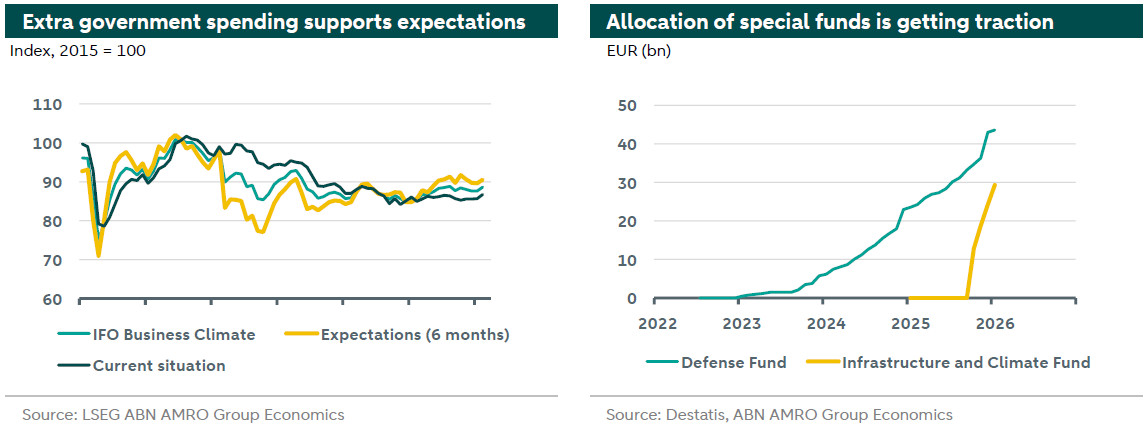
Consumer confidence remains subdued, despite a slight improvement in early 2026. This is reflected in modest retail sales and weak car sales. Indeed, inflation fell to 1.9% year on year in February but is expected to rise again in the coming months due to higher energy prices, putting renewed pressure on purchasing power. The labour market is also softening, with vacancies declining and unemployment is rising, while trade unions have lowered their wage demands to 5-7%. Rising real incomes will support private consumption over the course of 2026 and promote GDP growth. One bright spot for households is the rise in house prices, which strengthens homeowner balance sheets and boosts transaction volumes. Growth is particularly visible in existing home sales, as supply constraints continue to limit the new-build segment. Construction activity remains sluggish due to lengthy permitting procedures and high material and labour costs. Since the approval of the 2026 federal budget, more government funds have begun flowing into the economy. Allocations from the defence fund increased from EUR 35 billion in October to EUR 44 billion in January, contributing to higher public investment in equipment and transport vehicles. Additionally, allocations from the Infrastructure and Climate Fund jumped from zero in September to EUR 29 billion in January. These funds should support civil construction activity, although delays in planning and approvals, capacity bottlenecks, and the diversion of funds to core spending areas may slow progress. Public finances are deteriorating due to rising expenditures and, to a lesser extent, tax cuts. While some taxes are being reduced, the overall burden of taxes and social security contributions on companies and households rose to 42% of GDP in 2025 and is expected to increase further.