Low carbon prices: how far can the transition go?

Carbon pricing plays a central role in climate-transition scenarios by providing financial incentives to reduce emissions and invest in low-carbon alternatives. In practice, however, carbon prices remain too low and too unpredictable to drive the emissions reductions and long-term investment needed to meet climate targets. Even with inadequate carbon pricing, falling costs of clean technologies costs and higher fossil fuel prices have made clean energy more competitive. Subsidies, regulation and public investment in research and infrastructure complement carbon pricing by addressing barriers it cannot overcome alone, and can partly compensate for weak carbon-price incentives. Technological progress can reduce the carbon price needed to achieve a given level of emissions reduction, while higher carbon prices strengthen incentives to adopt clean technologies. As economies approach net zero, the remaining emissions become harder and more costly to eliminate. Carbon pricing provides a broad financial incentive to reduce emissions throughout the transition, which falling costs and complementary policies cannot replace.

Introduction
Carbon pricing plays a central role in climate-transition scenarios. By putting a price on greenhouse-gas emissions, it aligns the incentives of households and firms more closely with the broader social and economic costs of climate change. From an economic perspective, carbon pricing is therefore an attractive instrument. In practice, however, political and geopolitical constraints make sufficiently high carbon prices difficult to implement and sustain. Against this background, this note examines an important question: how far can the transition progress if carbon prices remain far below the levels used in Net Zero scenarios? The analysis shows that the transition can make progress even at low carbon prices, thanks to technological advances, falling costs and complementary policies. However, the limited coverage of carbon pricing, low price levels and uncertainty about the future price trajectory constrain the pace and scope of the transition.
How carbon pricing supports decarbonisation
Carbon pricing plays a central role in most climate-transition scenarios because it addresses a basic market failure: the costs of climate change are not reflected in the prices of fossil fuels and other carbon-intensive goods and services. By putting a price on emissions, carbon pricing aligns private incentives with broader societal objectives and encourages households and firms to limit emissions, switch technologies and improve efficiency (; ; ; ).
In practice, carbon pricing affects behaviour primarily through energy prices. Carbon taxes and emissions-trading systems increase the cost of fossil-fuel-based electricity generation and carbon-intensive fuels used in transport, heating and industrial production. These costs are passed through, to varying degrees, to households and firms through higher fuel prices, electricity prices and production costs. As carbon-intensive activities become relatively more expensive, incentives increase to improve energy efficiency, switch fuels, electrify processes and invest in low-carbon technologies. Carbon pricing therefore works largely by changing the relative costs of high- and low-carbon alternatives.
Carbon pricing allows households and firms to determine for themselves where and how emissions can be reduced most efficiently. Because carbon pricing influences relative prices without prescribing specific technologies or abatement strategies, economists generally view it as one of the most cost-effective instruments for reducing emissions across the economy.
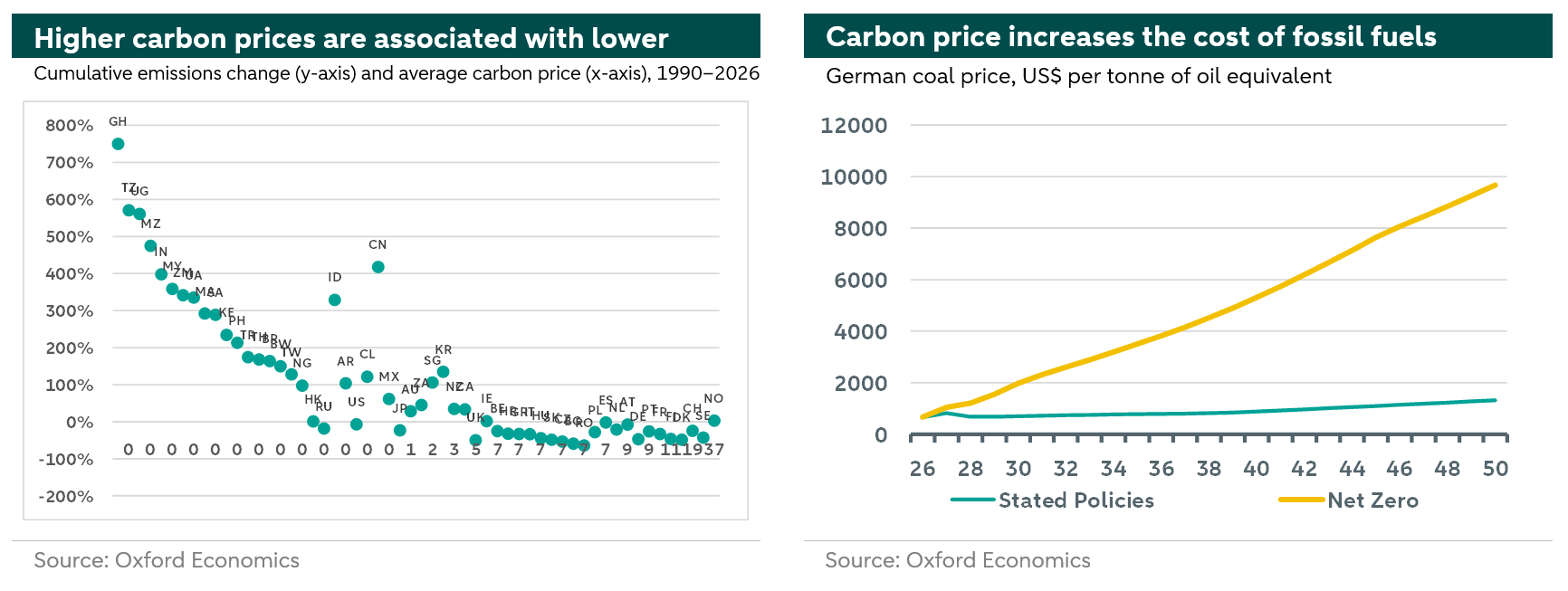
The left-hand chart below illustrates how a higher carbon price can be associated with smaller increases, or even decreases, in emissions. The right-hand chart provides an example of how carbon prices feed through into fossil-fuel prices: model-based projections of German coal prices in the Stated Policies scenario, with low carbon prices, and the Net Zero scenario, with high carbon prices.
Why carbon pricing is currently inadequate
In theory, therefore, carbon pricing is a powerful mechanism for driving decarbonisation. In practice, however, the carbon prices required to achieve climate targets are often politically difficult to implement and sustain. Carbon-pricing coverage has increased globally, but large parts of the world's emissions remain either unpriced or subject to relatively low prices. Even jurisdictions widely viewed as climate leaders have carbon prices substantially below the levels consistent with Paris-aligned and net-zero emissions pathways. A considerable gap therefore remains between actual carbon prices and the levels needed to achieve climate targets.
The scale of this gap is evident in the latest OECD data. Across 79 countries accounting for around 82% of global greenhouse-gas emissions, only 27% of emissions were covered by a carbon tax or emissions-trading system in 2023. Including fuel excise taxes [1] raised the share falling under any carbon price to 44%. Only about 16% of emissions faced a rate above EUR 30 per tonne of CO2e. Even this broader measure confirms that most emissions remain either unpriced or priced at levels too low to provide a strong economy-wide transition signal ().
The OECD also finds that carbon-pricing coverage is expanding faster than headline carbon prices are rising. For example, the expansion of China’s national ETS to aluminium, cement and steel could lift ETS coverage across the 79 countries studied from around 22% of emissions in 2023 to 29% in 2025. Over the same period, the emissions-weighted average permit price across all ETSs covered by the OECD remains broadly stable, rising only from EUR 20.19 to EUR 20.70 per tonne in real 2023 terms. This pattern suggests that governments are currently strengthening the carbon-price signal mainly by bringing more emissions within pricing systems rather than by materially increasing the price paid by covered emitters. All else equal, applying the same positive price to a larger share of emissions still raises the emissions-weighted effective carbon price across the economy.
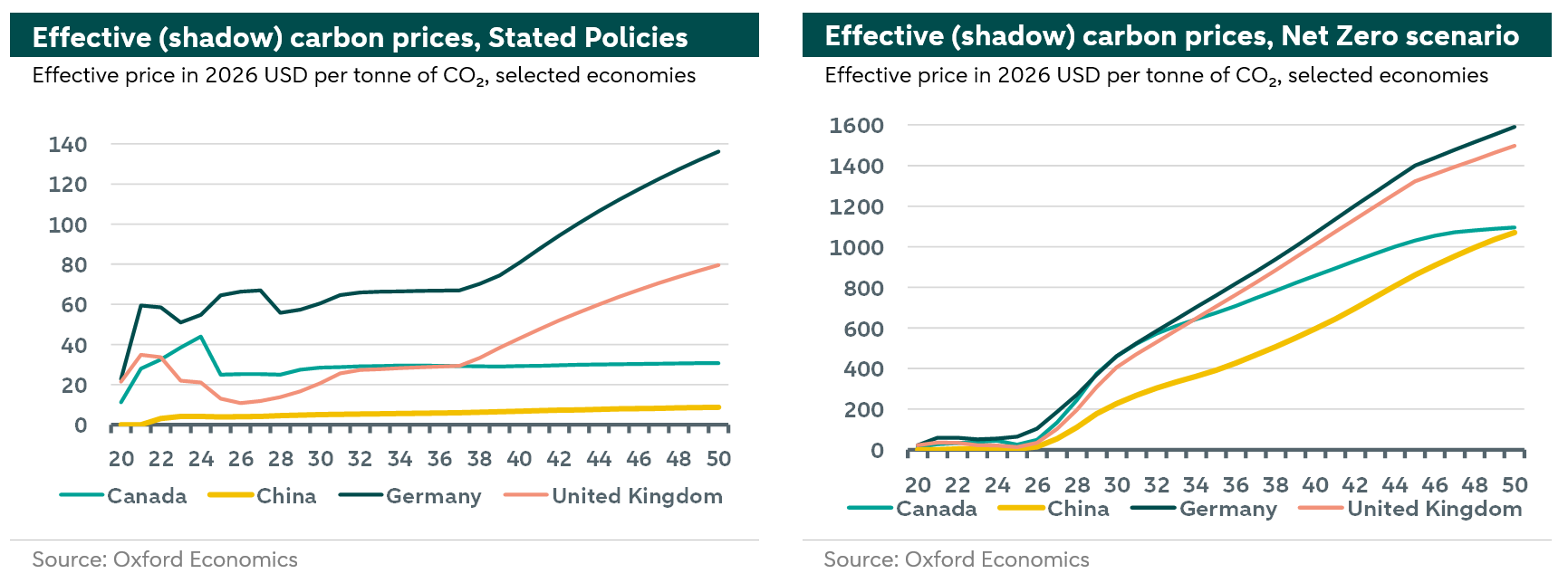
The left-hand chart below shows effective (shadow) carbon prices for selected economies in a Stated Policies scenario, using a broad definition of carbon pricing. The right-hand chart shows the same measure in a Net Zero scenario. The two charts use different y-axis scales.
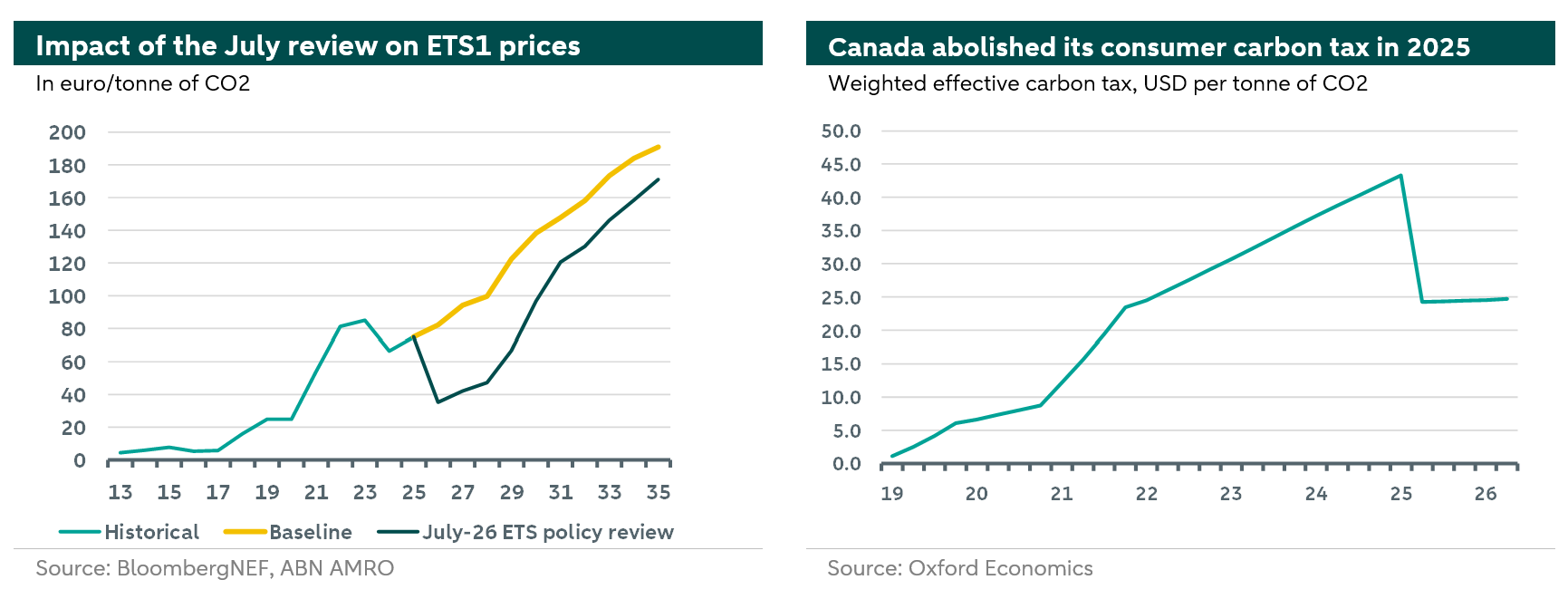
There is no indication that the gap between actual and required carbon prices is narrowing rapidly. Recent policy developments instead suggest that climate goals are increasingly giving way to concerns about competitiveness, industrial policy and political acceptability. For example, ongoing debates about reforms to the EU Emissions Trading System suggest a willingness to slow the planned reduction in the number of emissions allowances if industrial competitiveness is perceived to be at risk, which may lead to lower ETS prices, as discussed here and illustrated in the left-hand chart below. Another example is the abolition of Canada’s federal consumer carbon tax in 2025 (right-hand chart), amid political pressure and concerns about affordability.
These developments highlight another factor limiting the effectiveness of carbon pricing in practice: prices are not only too low but also lack predictability. This is important because the effectiveness of carbon pricing depends not just on the current price level, but also on expectations about its future trajectory. Firms investing in industrial facilities, energy infrastructure and low-carbon technologies typically make decisions over decades rather than years. Uncertainty about future carbon prices can discourage these investments: the adverse effect of uncertainty on investment decisions is well established (examples and ). Predictability strengthens the investment incentives provided by carbon pricing. Even relatively small reductions in expected future scarcity of carbon allowances can weaken investment incentives today and lead to higher cumulative emissions over time.
In addition to uncertainty about future price trajectories, the average carbon price actually paid by firms may be lower than the headline carbon price. Free allocation can preserve the marginal incentive to reduce an additional tonne of emissions, because an unused freely allocated allowance can be sold, while substantially lowering the average carbon price paid. In 2023, around 91% of allowances in the electricity sector and 87% in industry were allocated free of charge across the systems examined by the OECD. The headline permit price and the average price paid therefore capture different aspects of carbon pricing: free allocation can lower firms’ average carbon price paid without eliminating the marginal incentive to limit emissions ().
When carbon prices are low, carbon revenues are low as well. Carbon pricing generates fiscal revenue that governments can recycle to ease distributional effects and support the transition. Revenues can compensate low-income households for higher heating, transport and electricity costs. These costs tend to weigh relatively heavily on low-income households, as energy and transport account for a larger share of their spending. They can also finance clean infrastructure and the deployment of low-carbon technologies. With weak carbon prices, the scope to use revenues for these purposes is correspondingly limited. Higher and broader-based pricing would give governments greater budgetary scope. This strengthens the direct incentive to reduce emissions while also helping to maintain public support for emissions reduction (for instance and here).
If carbon prices are localised and differentiated, this leads to competitiveness and carbon leakage concerns. Carbon pricing functions most efficiently when implemented broadly across jurisdictions and price differences between them remain limited. If carbon prices differ substantially between regions, companies may shift production rather than reduce emissions, a phenomenon known as carbon leakage. In other words, emissions are displaced to jurisdictions with weaker climate policies rather than eliminated globally. There are also concerns that uneven carbon costs can weaken the competitiveness of firms in jurisdictions with stricter climate policies. Competitiveness concerns arise through both direct and indirect channels. Firms covered by carbon-pricing systems incur direct compliance costs, while higher carbon prices can also increase electricity and energy costs throughout supply chains. These effects are particularly relevant for energy-intensive sectors exposed to international competition.
While these concerns are understandable, available evidence suggests that competitiveness impacts at currently observed carbon-price levels are often smaller than is sometimes assumed. Studies suggest that the competitiveness gains from weakening carbon pricing may be relatively small compared with the drawbacks: slower emissions abatement and reduced incentives to innovate and invest in low-carbon technologies (for instance ). Europe’s comparatively high energy prices also reflect fuel imports, energy market design, infrastructure constraints and geopolitical developments. Carbon pricing currently accounts for a limited share of the overall cost picture.
Mechanisms such as the EU’s Carbon Border Adjustment Mechanism (CBAM) seek to address the loss of competitiveness by creating a level playing field for imports. However, such measures only partially solve the problem because they do not fully address export competitiveness. Ultimately, globally efficient decarbonisation requires greater international coordination.
How far can the transition progress without high carbon prices?
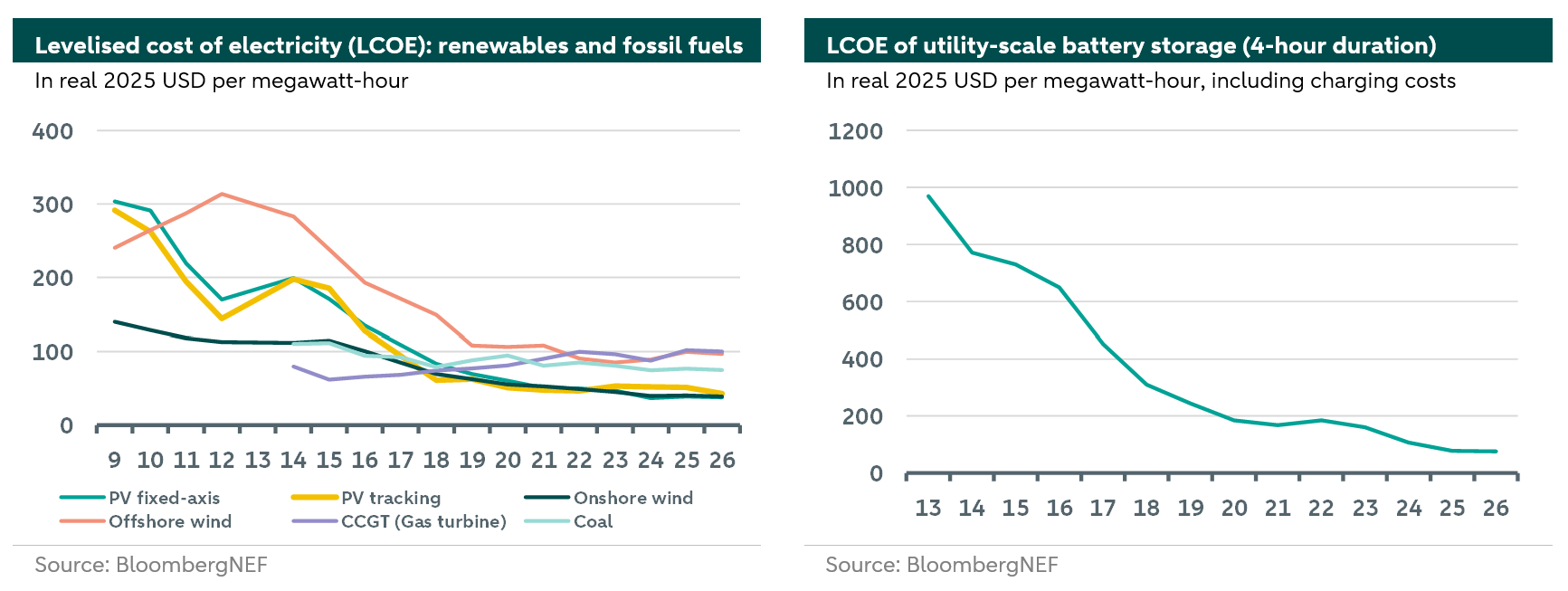
Although carbon pricing remains important, it is not the only force driving decarbonisation. Several powerful trends are reshaping energy systems. Since 2010, the costs of solar and wind technologies have fallen sharply (see left-hand chart below). As a result, renewable electricity is now frequently the lowest-cost source of new power generation in many regions. In 2025, more than 90% of newly commissioned renewable electricity projects generated power more cheaply than the lowest-cost newly built fossil-fuel alternative. Battery costs have fallen dramatically (see right-hand chart below), and electric vehicle adoption continues to expand. Energy-efficiency requirements continue to strengthen. At the same time, fossil fuel prices have increased due to a number of geopolitical developments, such as the Russian invasion of Ukraine in 2022 and military escalation and conflict in the Middle East this year. Taken together, these developments create more economically attractive opportunities to limit emissions, even without high carbon prices.
Carbon pricing seeks to accelerate decarbonisation by making carbon-intensive energy more expensive. Falling renewable-energy and battery costs achieve a similar outcome through the opposite channel: they make low-carbon alternatives cheaper. Both mechanisms improve the relative competitiveness of clean technologies. One increases the cost of emissions, while the other reduces the cost of abatement. As technological progress lowers the cost of clean alternatives, the carbon price required to achieve a given level of emissions reduction also falls. Technological change thus reduces reliance on high carbon prices.
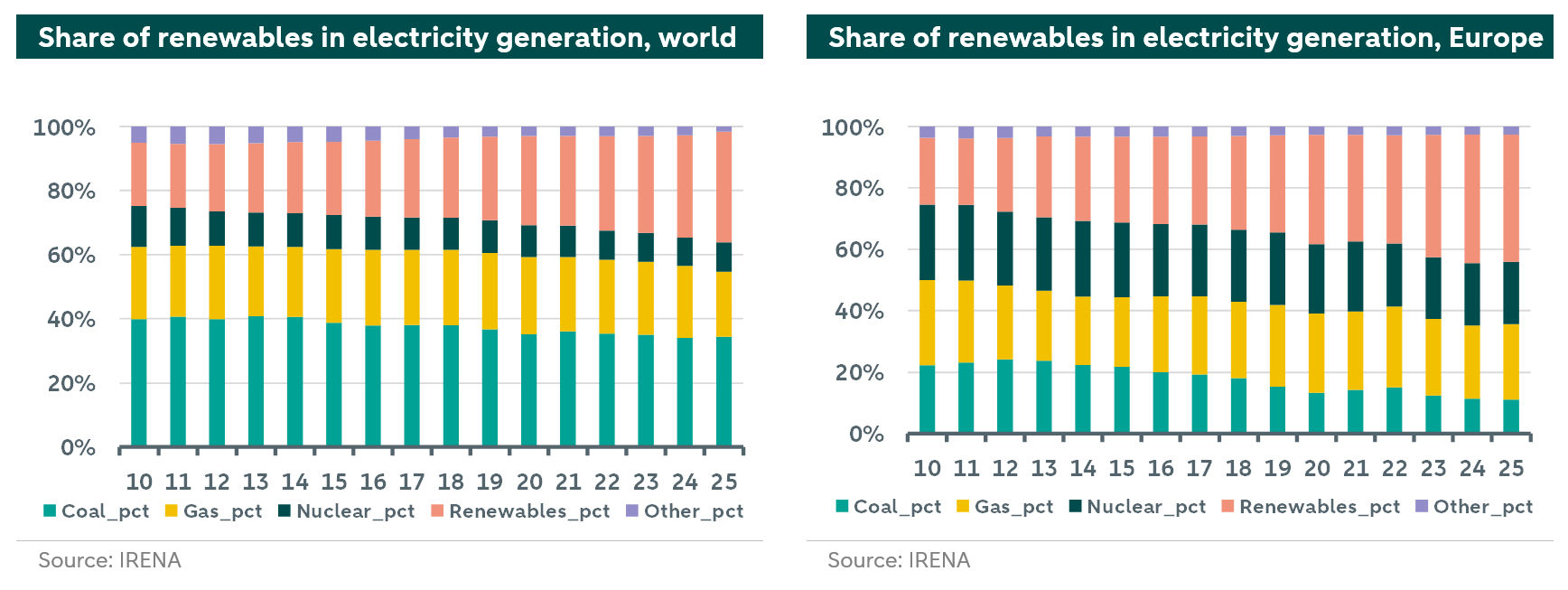
The developments described above have contributed to a growing share of renewables in electricity generation, globally and even more so in Europe, as the charts below illustrate.
Why the transition needs more than carbon pricing
As described above, technological progress and falling costs make clean alternatives more competitive and reduce reliance on high carbon prices. However, taking advantage of these opportunities requires more than a favourable price differential: innovation, infrastructure and regulation are also important for addressing bottlenecks and coordination failures.
Research confirms that carbon pricing cannot remove all transition barriers (; ). Introducing a carbon price can materially shift emissions trajectories, while subsequent price increases may deliver smaller additional gains, according to . Especially when carbon prices are weak, subsidies, standards and public investment become more important. Policy packages such as the European Green Deal and the U.S. Inflation Reduction Act can strengthen clean-energy incentives even when carbon prices remain too low.
Carbon pricing works best in combination with investment, green R&D support and structural policies (; ). Acemoglu et al. (2012) show that combining carbon pricing with research subsidies addresses both emissions and innovation spillovers more efficiently than a higher carbon tax alone. Likewise, finds that emissions reductions in the Netherlands also depend on clean electricity, grid capacity, carbon capture and storage (CCS) infrastructure and predictable policy.
Green innovation requires risk-bearing capital or public guarantees, while complex rules, compliance costs and underdeveloped capital markets deter investment. Alongside these financing and regulatory barriers, the fact that the environmental costs of fossil fuels remain partly unpriced also plays a role. The IMF estimates that this implicit fossil-fuel subsidy amounted to US$6.7 trillion in 2024 (5.8% of global GDP), alongside US$730 billion (0.6% of global GDP) in explicit subsidies ().
Why carbon pricing remains key for achieving net zero
Carbon pricing provides a continuous economy-wide incentive to identify and adopt least-cost abatement options throughout the transition, rewarding efficiency and innovation without prescribing a single technological pathway. As economies move deeper into the transition, remaining emissions become increasingly concentrated in sectors where clean substitutes are costly, immature or difficult to mandate uniformly. This makes carbon pricing progressively harder to replace.
Regulation, subsidies and public investment can accelerate specific technologies and overcome infrastructure or financing barriers, but they cannot easily reproduce a common incentive across all fuels, firms and consumption decisions. A credible carbon-price trajectory, by contrast, provides a broad and predictable price signal that influences both current operating choices and long-term investment decisions, particularly in hard-to-abate sectors (). This is why the IPCC and other international institutions view carbon pricing as a key and cost-effective policy instrument in a broader net-zero policy package (; ).
Conclusion
Carbon pricing plays a central role in Net Zero scenarios, but does not yet adequately fulfil that role in practice. Coverage is limited, prices are generally low and the future price trajectory is uncertain. Technological advances, falling costs of renewable energy and batteries, industrial policy, regulation and infrastructure investment support the transition despite these shortcomings. They can lower the carbon price needed to achieve a given emissions reduction, but do not replace the broad financial incentive provided by carbon pricing.
Inadequate carbon prices constrain the pace and scope of the transition. Carbon pricing encourages the adoption of clean technologies, efficiency improvements and investment in low-carbon alternatives. As economies approach net-zero emissions, the remaining emissions become increasingly costly and difficult to eliminate, particularly in sectors such as heavy industry, aviation, shipping and agriculture. Current shortcomings in carbon pricing coverage, price levels and predictability remain a significant constraint on the transition to net-zero emissions throughout the process.
[1] OECD includes fuel excise taxes in carbon prices as the fuel excise taxes can be converted into a price for emissions