Our research
Access all our publications and columns. Use the filters to easily find what content you are looking for.
Filters
All publications
605 results
Transaction Trends - Higher energy prices; keeping a finger on the pulse
- Macro economy
-
How is the war in Iran impacting Dutch households? In this publication, we analyse how quickly higher energy prices impact household finances, using anonymised transaction data from more than 1 million households. Higher gas prices feed through with a delay, meaning the average household energy bill payment has not yet increased. With regards to fuel spending, we see that rising oil prices filter through much quicker; this effect is already visible in March. We expect energy payments to continue increasing in the coming months, as was also the case in 2022. At that time, it took around a quarter for energy bill payments to increase noticeably. We will therefore monitor household energy payments closely in the coming months, particularly for households that are vulnerable to higher energy costs.

Global economic forecasts as of 22 April 2026
- Macro economy
-
Group Economics writes regularly about developments in the macro economy. Here are our latest forecasts on interest rate and currency developments, energy prices and the economic trend in developed and emerging markets.
Global Monthly - The Hormuz stand-off
- Macro economy
-
The Iran conflict has morphed from a hot war to an economic one, with both sides using the Hormuz chokepoint as negotiation leverage. Energy supply disruptions are bigger than ever, but market worries have subsided, with peace efforts given the benefit of the doubt. We make only incremental forecast adjustments this month, keeping our core view that severe energy disruptions persist to end-May. We also update our more positive and negative scenarios for the conflict.
Key views Global Monthly April 2026
- Macro economy
-
The Iran conflict is triggering a new global energy shock. It remains uncertain how long the disruptions to energy supplies will go on for, but our new base case assumes severe disruptions last until the end of May. The inflation shock will outweigh the growth shock, and this is leading to a hawkish pivot by central banks. The ECB is expected to hike rates while the Fed is expected to delay further rate cuts. Still, advanced economies are expected to stay resilient and to avoid recessions, and ultimately we expect central banks to lower rates again once the inflation shock has dissipated. Against this backdrop, US tariffs will remain a dampener on global trade, but the AI boom is continuing, German fiscal spending is driving a cyclical eurozone recovery, and China continues to take modest to lift demand while keeping its manufacturing growth model intact.
Transaction Trends - From Hormuz to the Pump - Fuel Tourism in the Belgian Border Region
- Macro economy
-
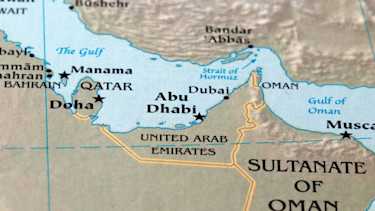
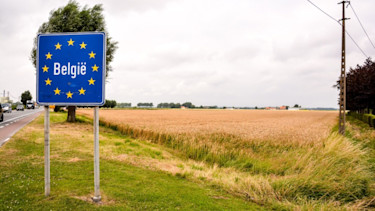
Due to the war in Iran, fuel prices have shot up, while gasoline prices in Belgium are up to 55 cents per liter lower. As a result, about 15% of gasoline consumption in the border region has shifted to Belgium, a change largely caused by a relatively small share of households. This effect is consistent for households living up to 30 kilometers from the border, meaning that not only gas stations near the border but also those further away may experience revenue losses. Nevertheless, the overall nationwide loss of excise tax revenue for the government remains limited.
Iran ceasefire - Is this a turning point?
- Natural resources
-
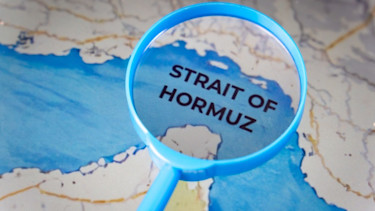
A two‑week ceasefire between the US and Iran offers a welcome pause and the prospect of renewed shipping through the Strait of Hormuz. But much uncertainties remain, leaving risks of renewed disruption firmly on the horizon.
Global industry impacted by Iran conflict
- Macro economy
-
Global manufacturing PMI comes down again in March on escalation of Iran conflict. Relatively strong readings for developed economies flattered by rising delivery times. These are indicative for a broad re-emergence of supply bottlenecks, and rising inflationary pressures.
The Week Ahead: 6-10 April 2026
- Macro economy
-
These are the key macro events for the upcoming week.

The Week Ahead: 30 March - 3 April 2026
- Macro economy
-
These are the key macro events for the upcoming week.
Global Monthly - It takes three to TACO
- Macro economy
-
With the Iran conflict ongoing and the chance of a ceasefire uncertain, we update our base case for growth, inflation and interest rates. We assume severe energy disruptions last until the end of May, and this could happen even if the conflict ends relatively soon. The inflation impact of the energy shock continues to outweigh the growth hit, and central bank responses are therefore likely to tilt hawkish. We now expect the ECB to hike rates twice in Q2, and the Fed to delay cuts to Q4. Both central banks are expected to cut rates in 2027.