Our research
Access all our publications and columns. Use the filters to easily find what content you are looking for.
Filters
All publications
636 results
A new Fed Chair in a more fragile Treasury market
- Macro economy
-
Fed Chair transitions have historically been followed by higher Treasury yields, as markets reprice policy uncertainty and the incoming Chair’s reaction function. This post-transition rise in Treasury yields is still yet to materialize. Any repricing under Warsh may be more persistent than in past transitions because he takes over an already fragile Treasury market. Warsh’s preference for lower rates may support the front-end of the curve, but concerns about political pressure, reduced transparency and conviction-based policymaking could keep term premia and long-end yields under upward pressure. Even a gradual reduction in the Fed’s balance sheet would matter for Treasuries, because it raises free float and shifts more duration risk onto investors with less stable demand. Rising Treasury issuance and a worsening fiscal backdrop mean that higher yields increasingly feed back into debt-servicing costs, rollover risk and term premia. The shift away from foreign and official buyers toward more cyclical domestic investors makes Treasury demand less stable, reducing the market’s ability to absorb growing supply without higher term premia.
Global industry: Still solid, but with more divergence and disturbances
- Macro economy
-
Global manufacturing PMI for May steady at four-year high. However, we see more divergence between countries/regions. The supply side held up better than the demand side in May. Disturbances drive our global supply bottlenecks index further into ‘excess demand’ territory. Cost price pressures from global industry are on the rise.

US - Supply chain pressures are mounting
- Macro economy
-
The labour market remains stable, but the unemployment rate is flattered by a decline in participation. Producer prices show initial signs of the energy shock cascading through the economy.
Global Monthly - The Hormuz clock is ticking
- Macro economy
-
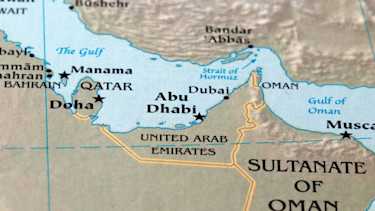
The US and Iran seem close to a deal to reopen the Strait of Hormuz. But even with a full reopening, energy prices are likely to stay well above pre-war levels over the coming quarters. In the absence of a deal, the continued rundown of oil inventories poses the risk of nonlinear price spikes. Still, we expect the growth impact to stay contained thanks to the underlying resilience and flexibility of the global economy.

Key Views Global Monthly May 2026
- Macro economy
-
The Iran conflict has triggered a new global energy shock. It remains uncertain how long the disruptions to energy supplies will last, but our base case assumes severe disruptions last well into Q3. The inflation shock is outweighing the growth shock, and this is leading to a hawkish pivot by central banks. The ECB is expected to hike rates while the Fed is expected to delay further rate cuts. Still, advanced economies are expected to stay resilient and to avoid recessions, and ultimately we expect central banks to lower rates again once the inflation shock has dissipated. Against this backdrop, US tariffs remain a dampener on global trade, but the AI boom is continuing, German fiscal spending is driving a cyclical eurozone recovery, and China continues to take modest measures to lift demand while keeping its manufacturing growth model intact.
Warsh inherits Powell’s unfinished legacy
- Macro economy
-
Tomorrow, Kevin Warsh will be sworn in as the new Chairman of the Federal Reserve. This is the first time in 40 years that the ceremony will be held at the White House. The last chairmen were all sworn in at the Fed, without the attendance of the President. Even if this is not the first time in history, the inauguration at the White House does send a signal, at a delicate moment. Insisting on normal procedure was a chance for Warsh to more cleanly distance himself from the White House, in a time where pressure on the Fed’s independence remains. Indeed, it is for that very reason that the former Chairman, Jerome Powell, decided to keep his position on the Federal Reserve Board until legal attacks on his position are resolved.
Global industry accelerates on stockpiling, rising delivery times
- Macro economy
-
Global manufacturing PMI at four-year high in April, driven by ‘stockpiling’. Delivery times are lenghtening, particularly for developed economies. Our global supply bottlenecks index stays in ‘excess demand territory’. Inflationary pressures from global industry pick up further.
FOMC Watch - The dots move up, and Powell will be one of them
- Macro economy
-
The Fed left rates unchanged as expected. The major headline was that four FOMC members dissented, a number not seen since the early 1990s. This made the final Powell FOMC meeting his most divided, and gives an interesting starting point for his successor, who was already expected to have some trouble building consensus behind him.
US - Two supply shocks, one inflation problem
- Macro economy
-
Demand remains solid in the aggregate, and the labour market stays in its odd equilibrium. All eyes are on the inflation impact of the energy shock, but disinflation prospects were already limited.
Global Monthly - The Hormuz stand-off
- Macro economy
-
The Iran conflict has morphed from a hot war to an economic one, with both sides using the Hormuz chokepoint as negotiation leverage. Energy supply disruptions are bigger than ever, but market worries have subsided, with peace efforts given the benefit of the doubt. We make only incremental forecast adjustments this month, keeping our core view that severe energy disruptions persist to end-May. We also update our more positive and negative scenarios for the conflict.