FX Weekly - Rate spreads drive the euro

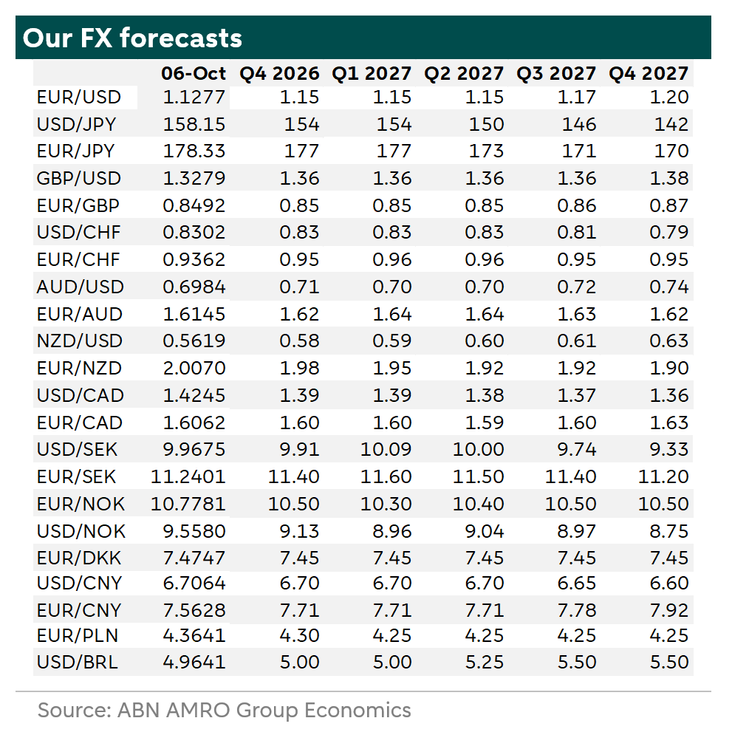
More negative German–US yield spreads continue to weigh on the euro versus the dollar. Markets are pricing in more Fed and ECB rate increases than we expect. Fiscal and political uncertainty in France is adding pressure on the euro. We expect limited further EUR/USD weakness and maintain our end-2026 forecast at 1.15.

Interest rate spreads continue to drive EUR/USD…
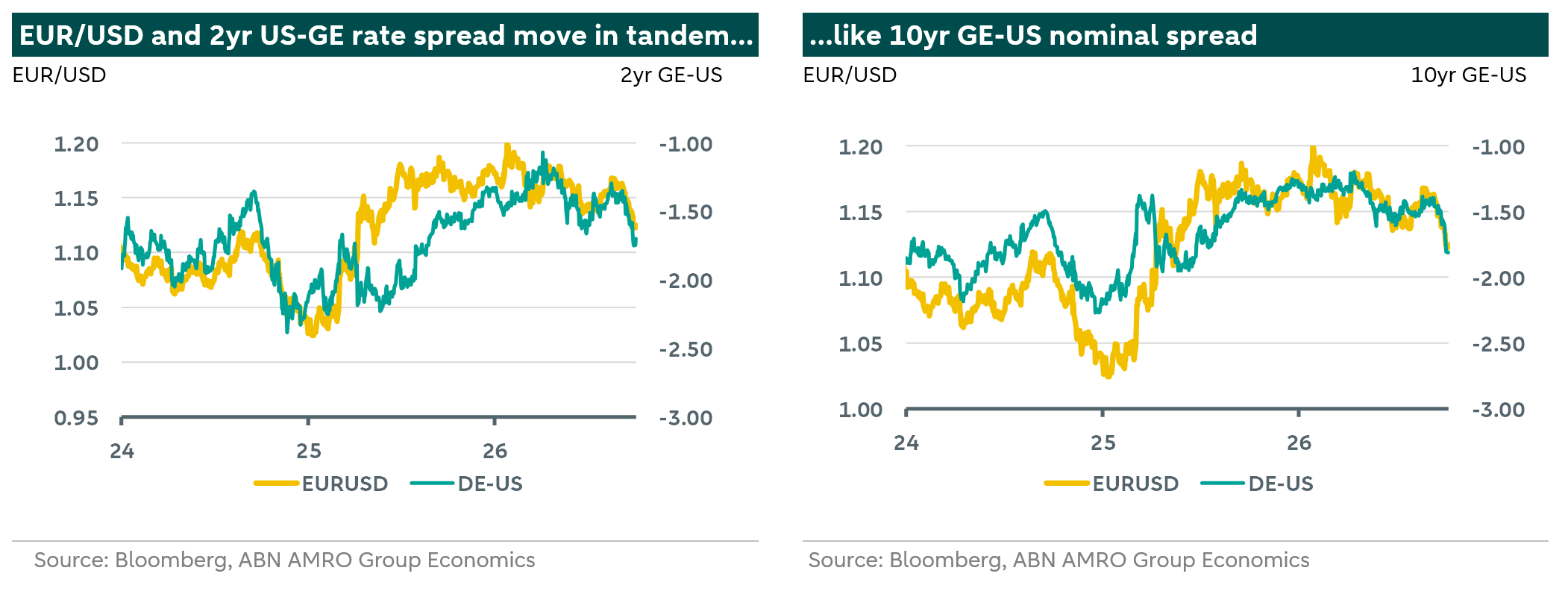
Since last week, expectations for interest rate increases by both the Fed and the ECB have fallen. This followed lower-than-expected US inflation numbers and lower prices for oil products. Oil product prices declined after the G7 decided to release 100 million barrels of crude oil and diesel from emergency reserves on October 2nd. However, the interest rate spread between Germany and the US became more negative, which provided support to US dollar against the euro. This trend was visible in the two-year and ten-year nominal yield spreads, as well as in the ten-year real yield spread between Germany and the US. EUR/USD moved in line with these increasingly negative spreads, as shown in the two graphs below. We continue to believe that financial markets are pricing in too many rate increases by the Fed and the ECB. Markets expect more than three additional Fed increases by 2027, compared with our forecast of only one. They also expect slightly fewer than three ECB increases by September next year, compared with our forecast of two. If market expectations move closer to our forecasts, the adjustment should put more downward pressure on the dollar than on the euro, helping to limit further declines in EUR/USD.
…while fiscal and political risks add further pressure
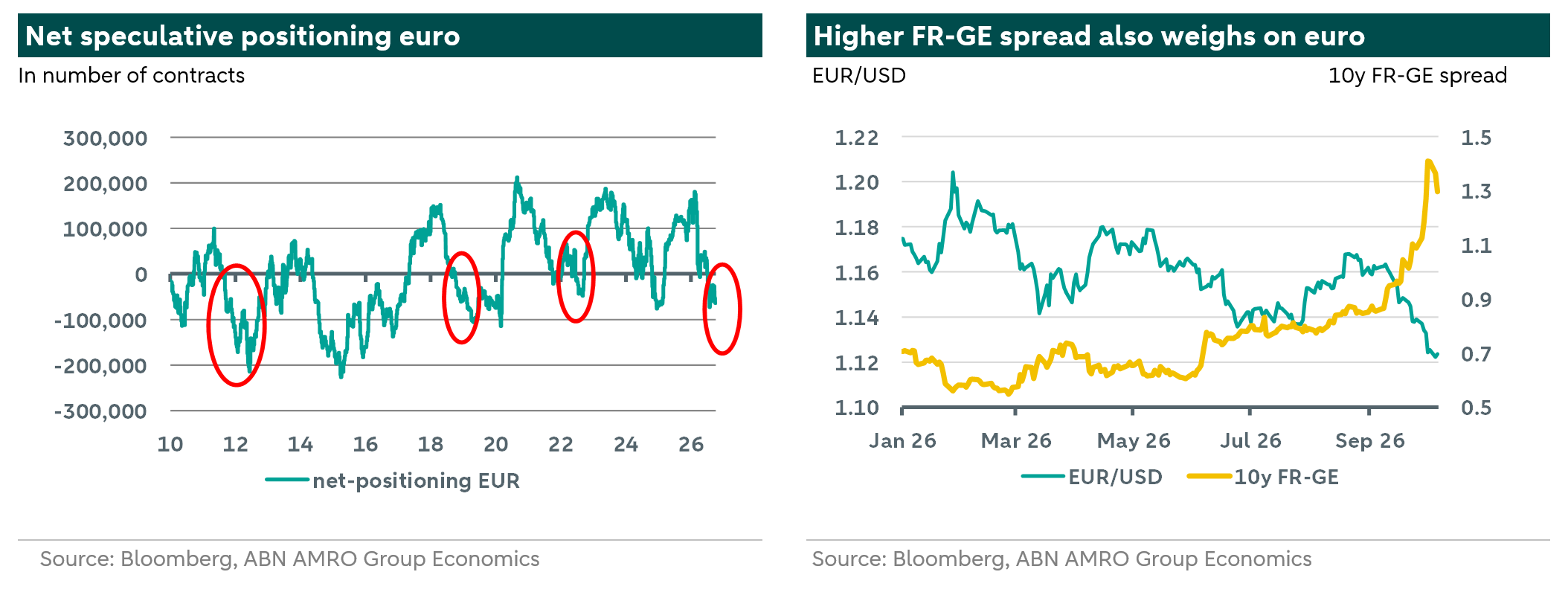
Changes in interest rate spreads have encouraged speculative investors to take short euro and long dollar positions. The graph on the next page on the left shows net speculative positions in the euro. However, other factors have also affected the currency. Since last week, financial markets have become more concerned about fiscal and political developments in France (see here and here). In bond markets, the yield spread between French and German government bonds has widened considerably. The euro tends to weaken when government bond yields in a major eurozone country, or in several countries, rise sharply because of political and/or fiscal concerns. There was to some fear of contagion, and this impacts the currency as well. In addition, Spanish Prime Minister Pedro Sánchez called a snap election on 5 October, with voting scheduled for 29 November 2026. Similar episodes occurred during the eurozone crisis in 2011–2012, from May 2018 to June 2019 and from January to October 2022 (Italy), and from September 2026 to the present (France). In each period, the euro weakened considerably against the US dollar. These episodes are marked by red circles in the speculative positioning graph. This suggests that periods of fiscal and political uncertainty in the eurozone often coincide with speculators holding net short euro positions and a lower EUR/USD. The graph below on the right shows the recent relationship between the ten-year French-German government bond spread and the euro.
In last week’s FX Weekly, we said that political uncertainty would weigh on the euro towards the end of this year and in the first quarter of next year. This pressure has emerged sooner than we expected. Looking ahead, our rates strategists think that rate markets already price in considerable fiscal and political uncertainty in France and that the current rate spread already reflects this. If the situation is not as negative as currently expected, sentiment towards France could improve somewhat and the spread could narrow (see here). For EUR/USD, sentiment may remain negative in the near term, but we do not expect the sell-off to continue. We therefore keep our end-2026 forecast unchanged at 1.15.