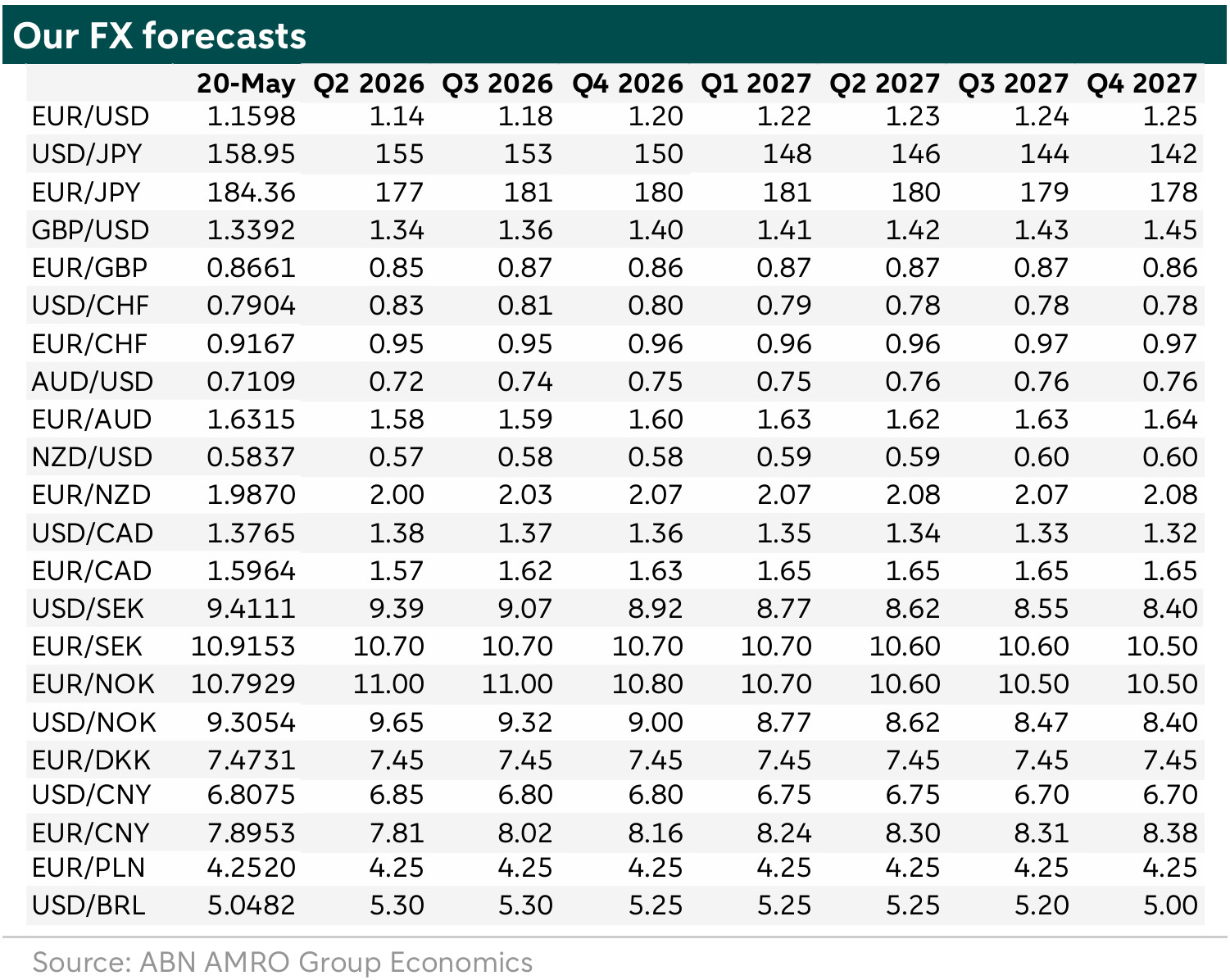
FX Weekly - Sterling and euro under pressure

Sterling and euro both fell versus the US dollar this week. Energy prices drove much of the move. UK politics may raise short-term volatility in sterling. But fiscal clarity could support sterling. Higher US yields have supported the dollar.

Sterling and euro move together
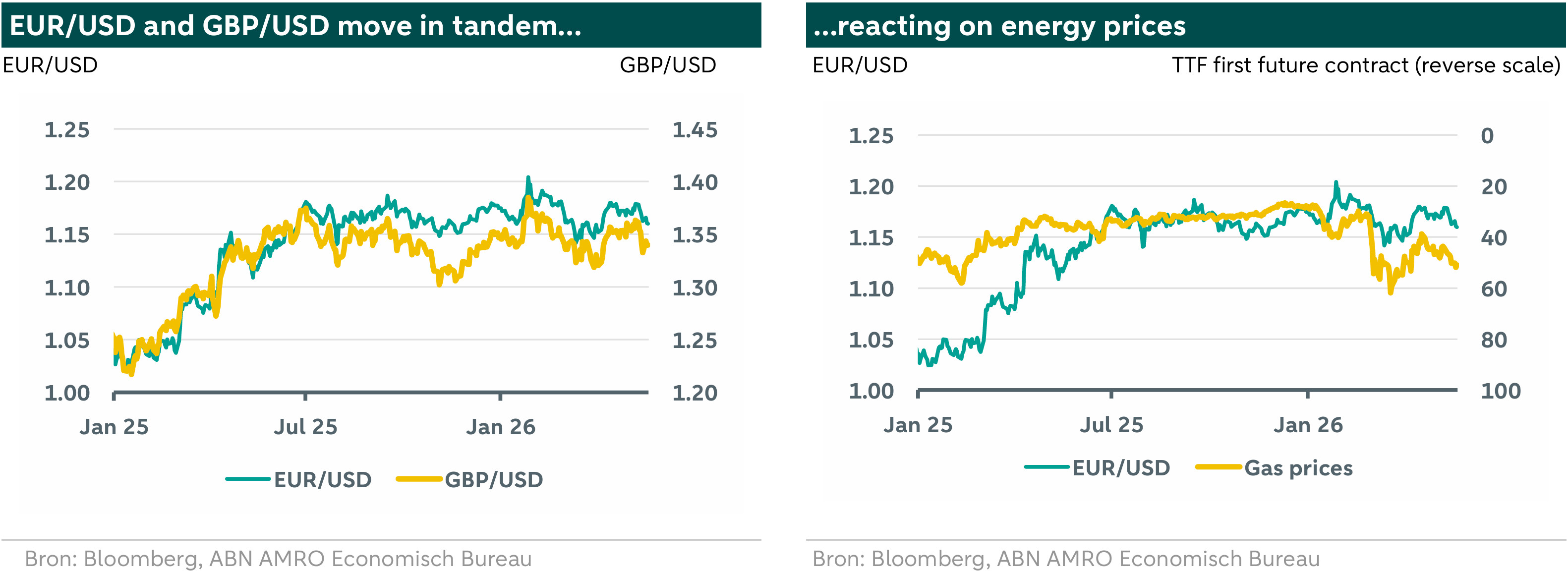
Over the past week, events in the UK have developed rapidly. Although Prime Minister Keir Starmer has not stepped down, the contest for the leadership continues. News reports claim that this uncertainty has caused sterling to weaken. In reality, sterling has declined against the US dollar since the end of last week but so has the euro. Both currencies have dropped by about 0.9% against the US dollar since 13 May (see graph on the left below). Currency markets, including sterling, have been heavily influenced by changes in oil and gas prices. Earlier in the week, these prices rose due to reduced optimism about reaching an agreement to reopen the Strait of Hormuz. As a result, both the euro and sterling performed poorly against the US dollar (see graph on the right below).
Uncertainty and speculation about possible changes in fiscal policy are expected to increase volatility in both gilt and currency markets, especially if a leadership contest takes place. However, we anticipate that this period of instability will be brief. A new government is likely to act quickly to clarify its position on fiscal rules, though normal market conditions may not return until after a complete budget cycle. If Rachel Reeves remains as chancellor, it would demonstrate consistency and a commitment to the fiscal rules that have supported market stability. We believe that, even with political changes, new policies are unlikely to worsen the UK's financial situation. In fact, new leadership may lead to higher government spending while sticking to the fiscal rules, which could strengthen the pound (see ).
Higher bond yields and Fed expectations support the US dollar versus the euro
Currency markets have been influenced not only by changes in energy prices but also by movements in bond markets and expectations about the US Federal Reserve. The market no longer expects the Fed to cut interest rates this year or next; some investors are even predicting a rate increase by the end of the year (with 18 basis points priced in). In contrast, expectations for the European Central Bank have remained unchanged recently, with the market still anticipating 70 basis points of rate hikes this year. US Treasury yields have risen more quickly than government bond yields in the eurozone, putting additional pressure on the euro. In the short term, currency markets continue to be affected by developments in the Middle East, which are impacting both bond markets and the monetary policy outlook of major central banks.