Global Monthly - Deal or no deal: Does it still matter?

The energy shock is back, but its impact more idiosyncratic than before. A lot of energy is getting through Hormuz ‘dark’, and this lowers the importance of a deal to re-open the Strait. Less important ≠ not important, and a deal would still help restore LNG flows, lower inflation and reduce European energy supply risks. Resurgent energy prices and stubborn inflation are keeping central banks on edge. Markets have probably gone too far pricing hikes…but the risk of more tightening than we currently expect has risen.


Global View: Yes, a deal does still matter, but less than before
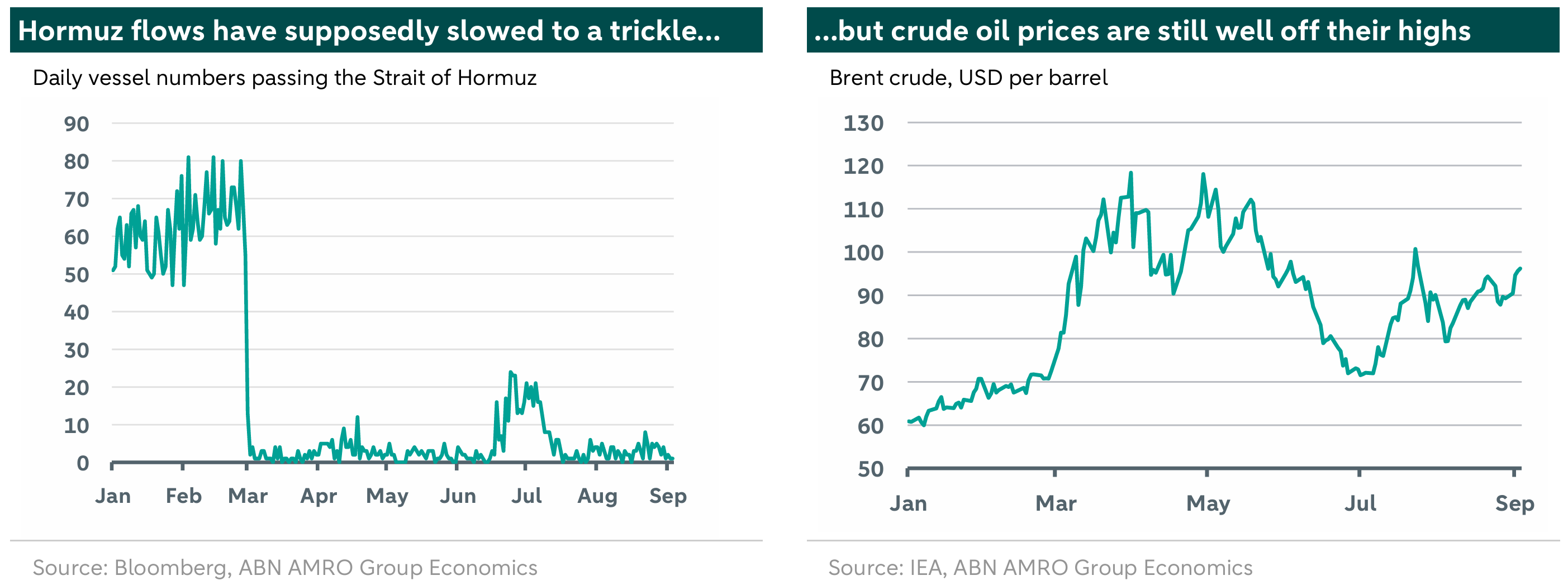
When the summer kicked off, it looked like the worst of the energy shock was behind us. But while the Teflon economy is still thriving, the US-Iran ceasefire is not, with tit-for-tat low level conflict persisting, and the Strait of Hormuz at least nominally still closed. Nominally, because the reality is that a lot of crude oil is getting through Hormuz ‘dark’, and this is in addition to the myriad offsetting factors that were already cushioning the energy shock before the summer. Indeed, we estimate that some three quarters of pre-war Gulf oil and distillate flows have been restored. This would go some way to explain why, despite the continued fighting between the US and Iran, oil prices remain well below their wartime peak seen on 30 April, when Brent crude touched $126 per barrel. This begs the question: does it even still matter if there is a deal or not? Might energy suppliers and consumers continue to find ways to adapt and get around the Hormuz blockage? Perhaps, but the lack of a deal is still posing considerable problems, namely huge bottlenecks in refined products which is leading to outsized price rises in petrol and diesel, and a continued suspension in Qatari LNG flows. These problems are hitting Europe and much of Asia the hardest, where gas prices have hit the highest levels since the 2022-23 energy crisis, while the US and China (among others) are relatively less impacted by the resurgent energy shock. While a deal to reopen Hormuz has lost some of its importance, for Europe and Asia at least, it is still a crucial driver of the inflation outlook.
Offsets to the ongoing Hormuz closure have grown bigger…
Even at the height of the conflict, a significant proportion of the disrupted energy supply was being offset by a combination of alternative trade routes, such as Saudi Arabia’s east-west pipeline to the Red Sea, increased US exports, and reduced China imports. These offsets largely remain, although higher US exports and lower Chinese imports cannot be sustained indefinitely. Still, we now add an additional major offset: dark transit and ship-to-ship transfer through Hormuz. While the official data show that Hormuz traffic has slowed back to a trickle, the reality on the ground is one of considerable flows getting through the Strait unofficially. In a dark transit, a tanker crosses the Strait with its automatic identification system (transponder) switched off. In a ship-to-ship transfer, crude oil is loaded onto a smaller tanker inside the Gulf, carried through the Strait without transmitting its location and then transferred to a larger vessel outside the Strait. All told, we estimate that around 70% of pre-war export amounts (c20mn barrels per day in oil and refined products) is still reaching markets through pipelines and these alternative methods. The US has also maintained oil production close to maximum capacity and exported a large share of its output, despite falling domestic inventories.
…but so have localised shortages of refined products
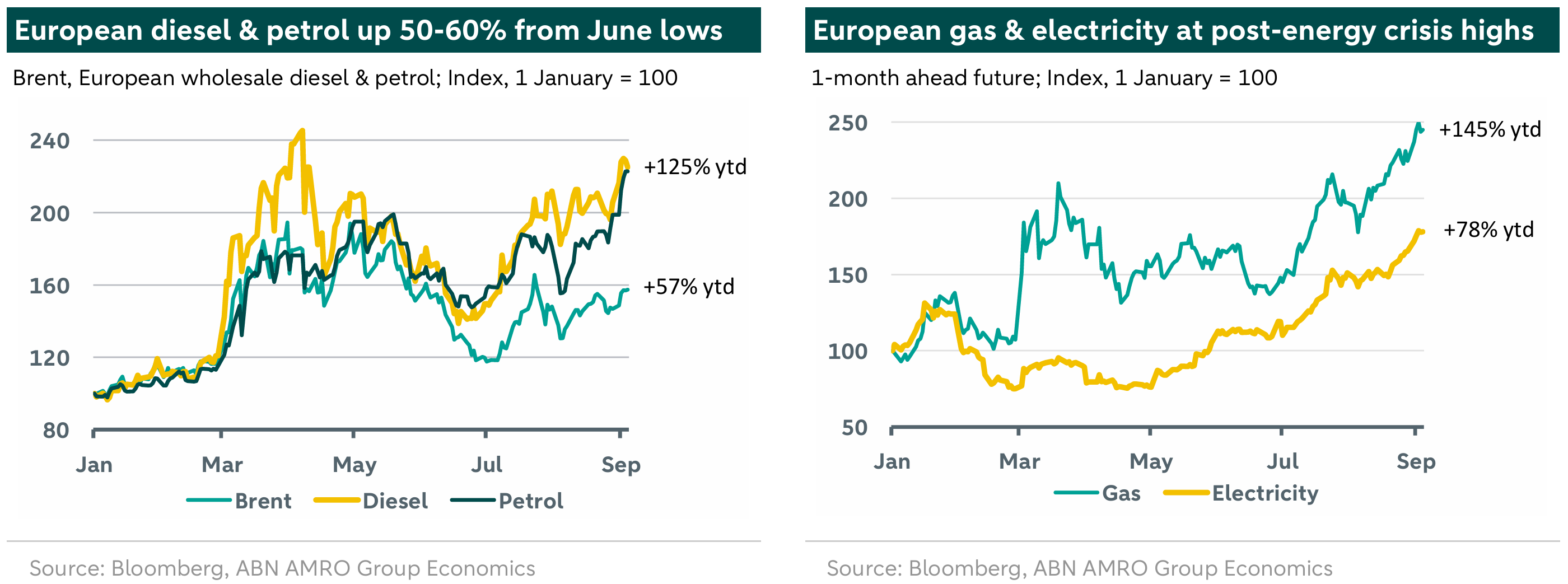
But while much of the pre-war crude oil flows have been restored, the story is not quite so rosy for refined products such as petrol, diesel and jet fuel. Some refined products are getting through Hormuz, but this is being limited by refinery outages in the region from war damage, as well as ongoing threats from the low-level conflict. Many Asian refineries also remain closed where crude flows are still scarce. Reduced refinery capacity is not only linked to the Iran conflict, but also the Russia-Ukraine conflict, with Russian refinery capacity also currently massively curtailed due to Ukrainian drone strikes. All told, global refinery output faced a shortfall of some 6.5mbd per end Q2, a drop of around 8% from end-2025 levels (see here for more detailed analysis on oil and refined products). These shortages are concentrated in the highly import dependent regions of Asia and Europe, and it is in these regions where petrol and diesel price rises have far outpaced that of crude oil. For instance, European wholesale diesel is up over 60% from its June lows, while petrol is up over 50% and has actually surpassed its wartime peak. In contrast, US wholesale gasoline is up only 9% over the same period.
European gas and electricity at new post-energy crisis highs
Unlike oil and its derivatives, LNG is much harder to ship ‘dark’ through Hormuz. LNG tankers are among the biggest in the world, while temperature control requirements make ship-to-ship transfer impractical. As a result, flows of LNG out of the region from QatarEnergy remain essentially halted. Qatari flows represented some 20% of global LNG supply prior to the conflict, and although Europe sourced comparatively little from Qatar directly, it does nonetheless compete with Asia on a global market for LNG. The resulting market tightness from the continued halt of Qatari LNG has therefore pushed European natural gas prices to the highest seen since the tail-end of the 2022-23 energy crisis. While electricity baseload prices continue to considerably lag rises in gas prices, they too have risen recently and have also hit three-year highs.
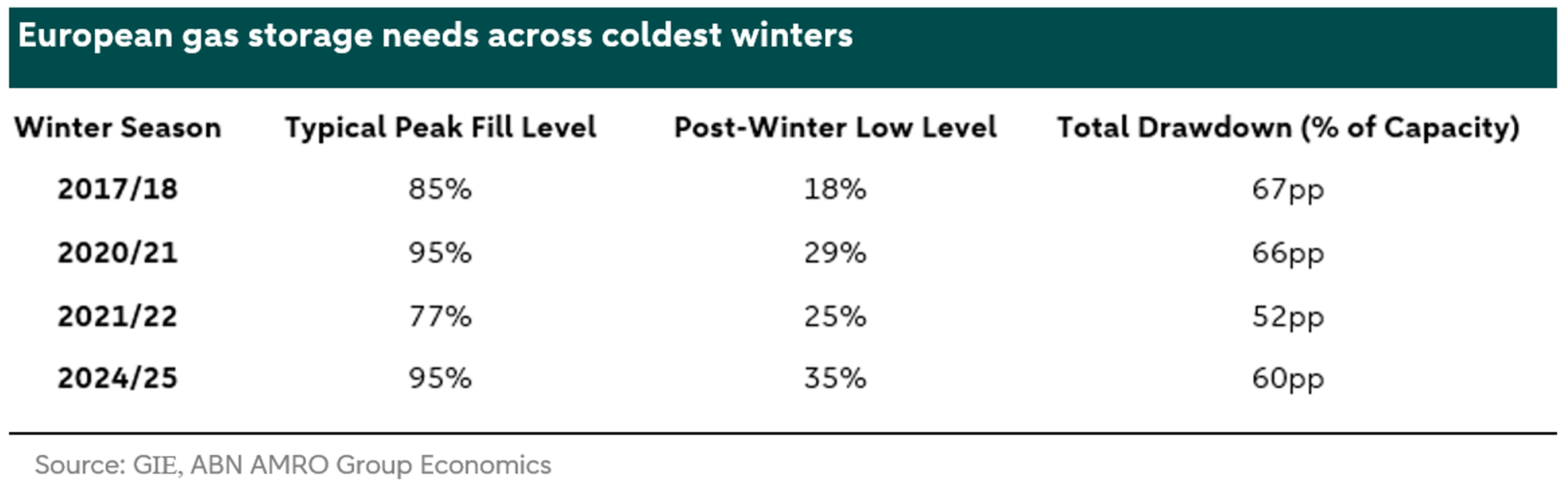
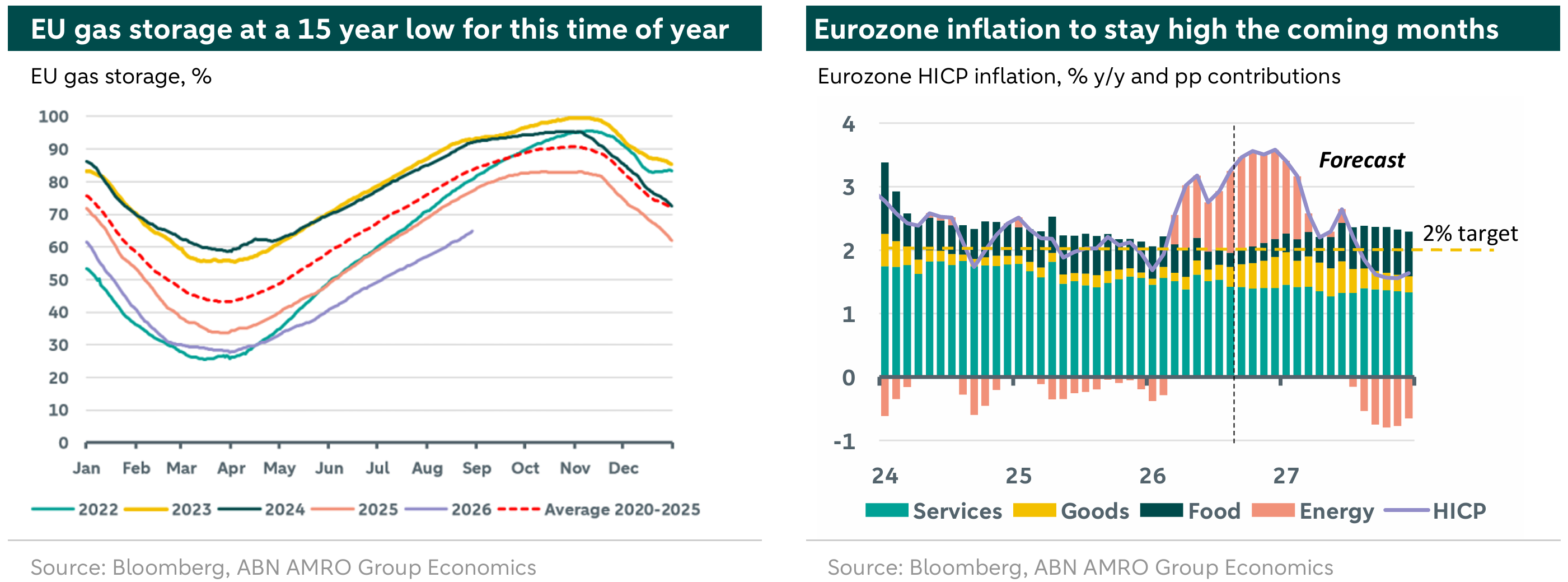
The shortage of LNG is not only a renewed inflation problem, but it also poses greater physical risks to European supply. European gas storage is running at just 66%, far below levels that are typical by the end of summer, and the lowest at this point since 2011. While Europe is likely to manage in the event of an average or mild winter, there would be very little margin for error in the event of a severe winter, particularly if coupled with further supply disruptions. First, storage facilities rely on internal pressure to extract gas, and as levels drop below 30%, pressure declines, limiting the rate of extraction during peak demand. This raises the risk of supply issues towards the end of the winter. Second, storage only supplements Europe’s winter gas needs, covering c30% of total consumption, with the rest via imports. A low starting storage level leaves minimal margin to handle simultaneous cold spells and supply disruptions. See for more detailed analysis on European gas markets.
A deal to reopen Hormuz would still matter, but it is less binary than before
Our base case assumes a deal to formally re-open the Strait of Hormuz to be sealed by end-Q3. Given the considerable amounts of energy managing to get through Hormuz even without a deal, this reduces the importance of a deal to the overall outlook. Reduces, but not eliminates – because a deal would still have a substantial dampening impact on European pump prices and home energy costs, as well as reducing physical risk to European gas supply in the event of a severe winter and/or other supply disruptions. Even with a deal, prices will likely stay somewhat elevated over the coming months, given the prevailing tightness in markets and that it will take time to fully reactivate refinery capacity and LNG flows.
Global economy likely to stay resilient, but eurozone inflation to move higher
Our base case continues to see advanced economies staying resilient through the resurgent energy shock. The US is relatively insulated from the most recent price rises and faces essentially zero physical supply risk, while the growth outlook continues to be largely driven by the AI boom. In Europe, resurgent energy prices are likely to be a headwind to the nascent recovery in consumption, but this won’t be enough to offset the impact of Germany’s fiscal expansion, which continues to be the main driver of the outlook. The story is less positive for inflation. This month we substantially raised our eurozone inflation forecast reflecting the sharp rises in petrol, diesel, gas and electricity prices relative to our early July expectation (see chart below and eurozone for more). An additional driver is an expected pickup in food inflation, driven by the hot summer and drought we have seen in Europe – something we explore in our Spotlight next. Assuming a Hormuz deal is struck, energy prices should unwind and inflation should moderate in the course of next year, but the more prolonged period of elevated inflation now in train has raised the risk of more serious second round effects taking hold.
What does this mean for central banks?
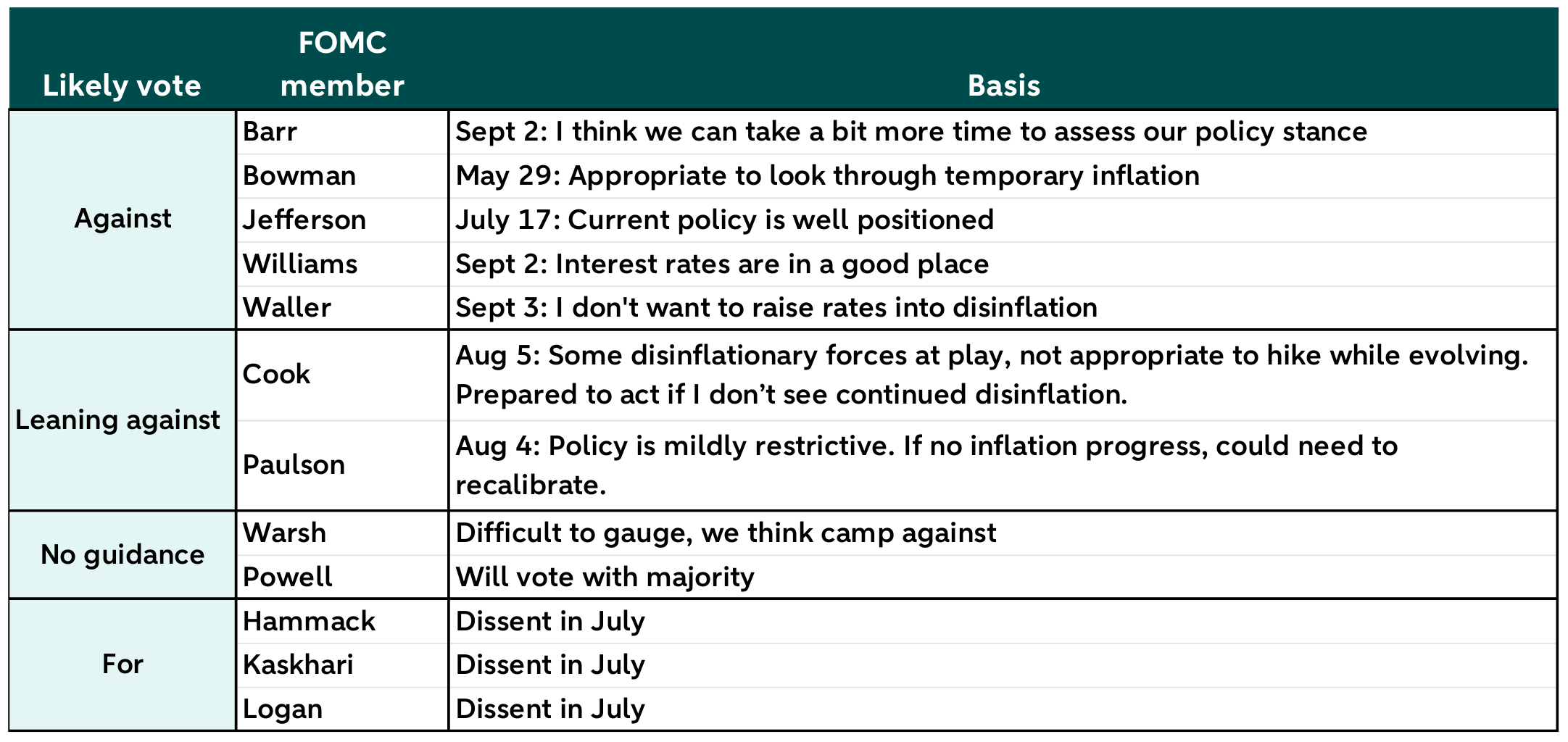
The ECB is expected to raise rates next week, but as discussed in the eurozone, the rebound in inflation is posing risks to our view that the Governing Council will keep rates on hold for the remainder of the year. The Fed meanwhile faces a different problem. While inflation is not being pushed as much higher by the rebound in energy prices, and disinflation is expected to continue, it has been above the Fed’s target already for some time. Meanwhile the economy is running relatively hot thanks to the AI boom, even if that that impulse is narrow. It is clear that this has the FOMC divided. This led to three members dissenting in favour of a hike in the July meeting. We think support for hiking has only increased, but many of the vocal Fed officials are actually not voting members this year. By our count, detailed below, a majority is either against hiking, or comfortable staying on hold as long as inflation continues to make progress towards target. That means the decision will remain contentious for a while, but our base case remains for the Fed to keep its policy rate steady. Should the upcoming inflation reading surprise to the upside, quite a number of FOMC members will likely flip to camp hike, and a September rate hike would become likely. Such upside inflation surprises triggering rate hikes will remain a risk for the foreseeable future.
Will the march higher in bond yields continue?
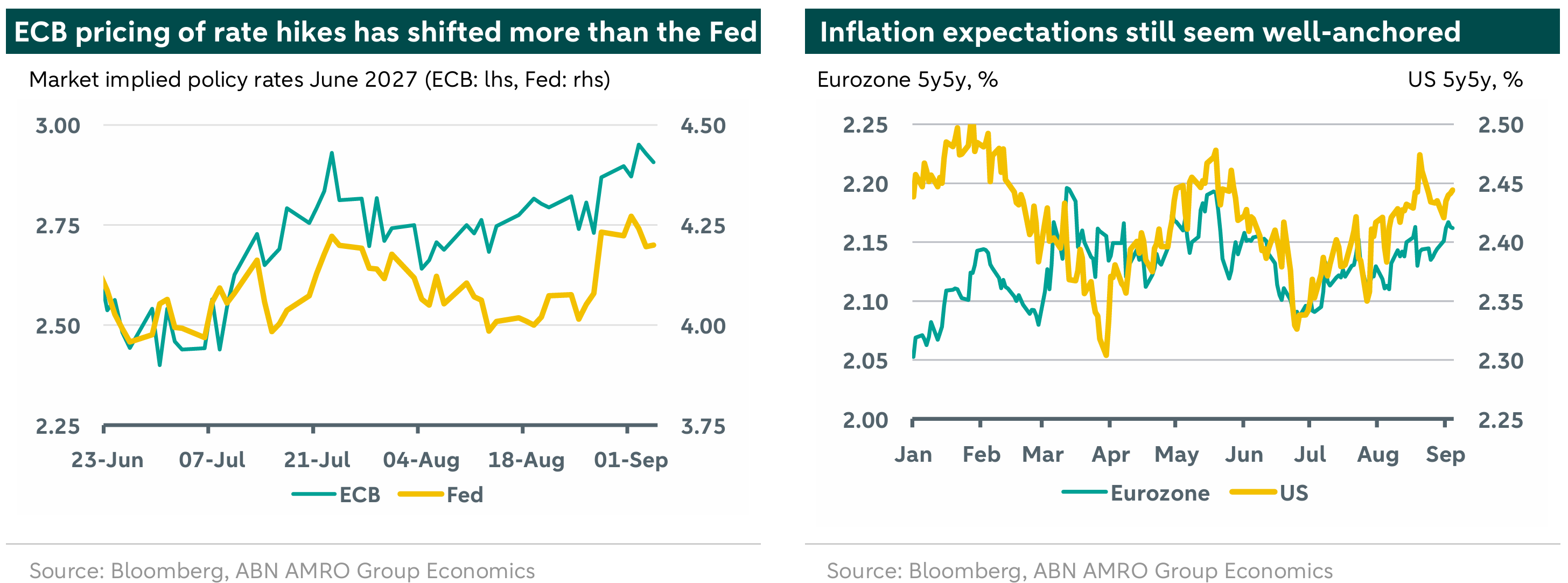
Bond yields have been on a relentless rise in recent months, to the point of triggering an unusual intervention by the US Treasury (see also here). While there are multiple drivers of the rise in bond yields, one of the biggest has clearly been a repricing of market expectations for central bank rate hikes, reflecting at least in part resurgent energy prices. The impact has been bigger for the ECB than for the Fed, with markets pricing in two additional hikes since June, and one additional hike for the Fed. Additional factors have probably been the AI boom, with hyperscalers hoovering up ever more scarce capital on markets, as well as Germany’s fiscal expansion. We have also seen the view that a lack of central bank action has pushed longer term rates higher. However, this would be reflected in rising inflation expectations, and we have seen only modest moves on that front (c10bp in the US 5y5y since June). Our rates strategists continue to think bond yields will moderate over the coming quarters (see Key Views), but they will set out their more detailed views and forecasts in the upcoming Rates Monthly.