Our research
Access all our publications and columns. Use the filters to easily find what content you are looking for.
Filters
All publications
426 results
Global industry and trade quite resilient, partly helped by AI boom
- Macro economy
-
Global manufacturing PMI drops a bit in June, but remains well in expansion mode. Decline in June driven by advanced economies. Global trade accelerated in early 2026, supported by AI boom, slowed during Iran conflict. Delivery times and container tariffs have driven our global supply bottlenecks index higher. Price subindices ease on falling energy prices in June, but stay relatively high for now.

China: Balance of risks improves; imbalances get worse
- Macro economy
-
Hit from energy shock offset by strong exports on the back of global tech/AI boom. China managed energy shock quite well; officially reported oil imports sharply down in April/May. Balance of risks to our growth forecasts is improving, but supply-demand imbalances are rising.

Global Monthly - Teflon economy shaking off another shock
- Macro economy
-
The global economy remains resilient in the face of persistent shocks. The AI boom, defence spending and the energy transition ‘capex troika’ are likely to continue supporting growth going forward. Still, AI bubble risk, and sovereign debt dynamics remain a worry.

Global industry: Still solid, but with more divergence and disturbances
- Macro economy
-
Global manufacturing PMI for May steady at four-year high. However, we see more divergence between countries/regions. The supply side held up better than the demand side in May. Disturbances drive our global supply bottlenecks index further into ‘excess demand’ territory. Cost price pressures from global industry are on the rise.
China - Protecting the fragile US-China truce
- Macro economy
-
Notwithstanding solid Q1 GDP and ongoing strong foreign trade... April macro data are a reminder that China is cushioned, but not immune to the Iran conflict. US-China presidential summit reduces (but not fully takes away) tail risks.
Global Monthly - The Hormuz clock is ticking
- Macro economy
-
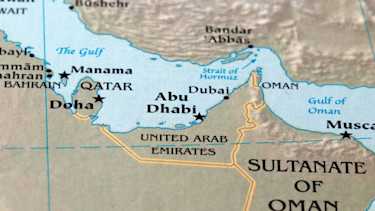
The US and Iran seem close to a deal to reopen the Strait of Hormuz. But even with a full reopening, energy prices are likely to stay well above pre-war levels over the coming quarters. In the absence of a deal, the continued rundown of oil inventories poses the risk of nonlinear price spikes. Still, we expect the growth impact to stay contained thanks to the underlying resilience and flexibility of the global economy.

Global industry accelerates on stockpiling, rising delivery times
- Macro economy
-
Global manufacturing PMI at four-year high in April, driven by ‘stockpiling’. Delivery times are lenghtening, particularly for developed economies. Our global supply bottlenecks index stays in ‘excess demand territory’. Inflationary pressures from global industry pick up further.
China - A tale of resilience, Iran risks and chokepoints
- Macro economy
-
Real GDP accelerated a bit in Q1, as expected, but risks from the Middle East still loom. March macro data already show some impact of the Iran conflict. Blockage of energy chokepoint Strait of Hormuz is a test for US-China relations.
Global Monthly - The Hormuz stand-off
- Macro economy
-
The Iran conflict has morphed from a hot war to an economic one, with both sides using the Hormuz chokepoint as negotiation leverage. Energy supply disruptions are bigger than ever, but market worries have subsided, with peace efforts given the benefit of the doubt. We make only incremental forecast adjustments this month, keeping our core view that severe energy disruptions persist to end-May. We also update our more positive and negative scenarios for the conflict.
Global industry impacted by Iran conflict
- Macro economy
-
Global manufacturing PMI comes down again in March on escalation of Iran conflict. Relatively strong readings for developed economies flattered by rising delivery times. These are indicative for a broad re-emergence of supply bottlenecks, and rising inflationary pressures.